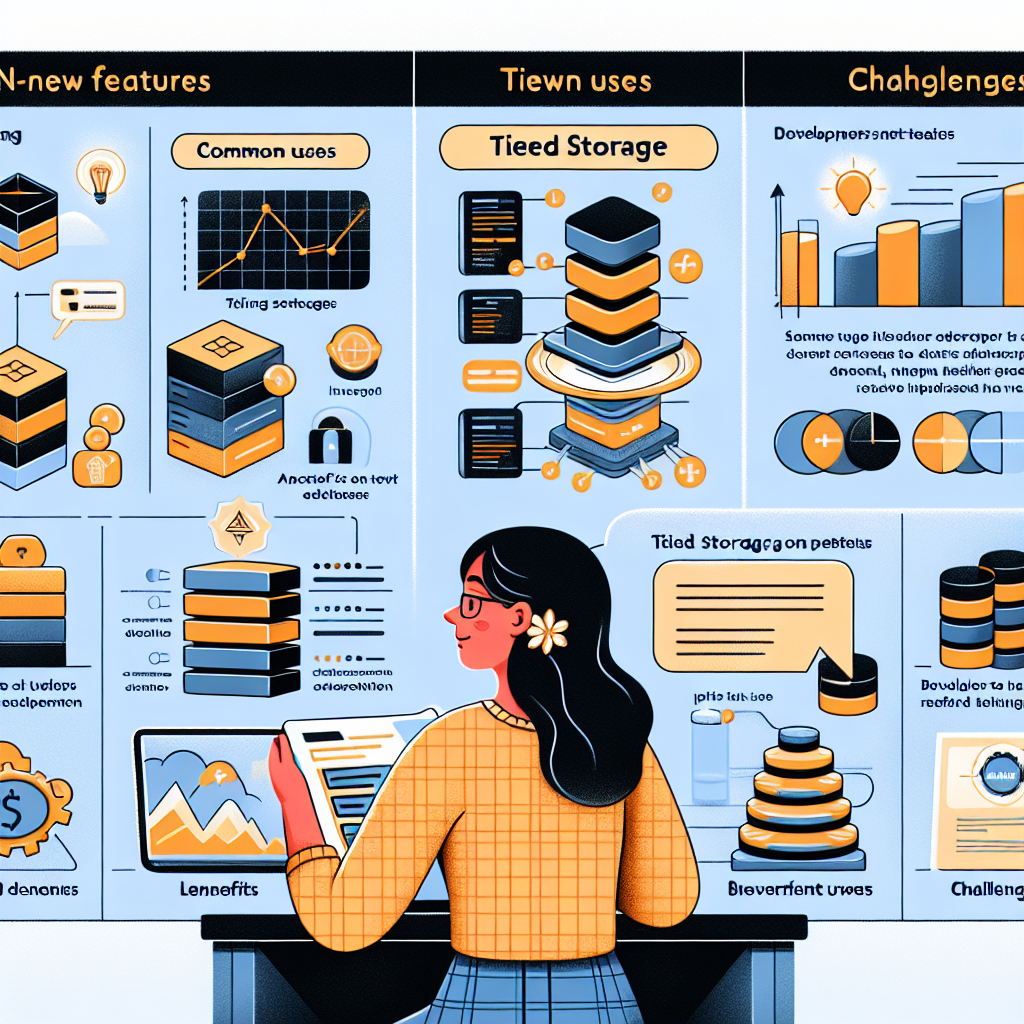
Apache Kafka open source has long been the backbone of real-time data streaming, but it has traditionally come with a trade-off: expanding expensive storage on brokers or sacrificing historical data retention. With Tiered Storage, this dilemma is disappearing.
By offloading older data to cheaper cloud storage while keeping recent information locally for speed, Tiered Storage transforms the economics of Kafka storage and unlocks new possibilities for developers. But how does it work in practice, and what challenges might teams face when implementing it?
At Q2BSTUDIO, a company specializing in development and technology services, we have explored the advantages of Tiered Storage in Apache Kafka and how it can optimize data management for organizations that need to balance cost and performance.
Traditionally, Kafka deployments required expanding broker storage to retain historical data or accepting shorter retention periods, thereby losing valuable information. Tiered Storage solves this problem by separating data into two tiers: recent data remains in local storage for optimal performance, while historical data is automatically transferred to cloud storage.
This approach not only improves cost efficiency but also maintains transparent integration for consumers, who do not need to worry about the origin of the data. Additionally, it allows organizations to access months or even years of information without incurring excessive costs, facilitating the analysis of historical patterns and processing of past data.
From a technical and business perspective, the adoption of Tiered Storage in Kafka is driven by the need to retain more data without increasing infrastructure costs. Using cloud storage like S3 is significantly cheaper than maintaining high-performance SSDs, benefiting both technical teams and finance departments.
In terms of performance, teams must be aware of the differences when reading data from cloud storage compared to local storage. Reading from remote storage can be up to three times slower, and working with small segments can negatively impact performance. To mitigate these challenges, it is recommended to increase the number of partitions, optimize local data retention, and allocate additional resources in the infrastructure.
One of the biggest advantages of Tiered Storage is its impact on the concept of time travel in Kafka. Previously, retaining large volumes of historical data was impractical due to storage costs. With this solution, companies can affordably retain large amounts of data, opening opportunities for retraining machine learning models, auditing past transactions, or even testing new data transformations without risk.
To implement Tiered Storage efficiently, it is essential to rethink capacity planning. Instead of focusing on how much storage is needed, one should analyze access patterns and decide which data should remain local and which can be transferred to remote storage. Adjusting the number of partitions is also key to improving parallel processing capacity.
Beyond traditional uses like compliance and analytics, some companies have implemented Tiered Storage for innovative cases. For example, at Q2BSTUDIO we have worked on Kafka-based digital twin architectures, storing large amounts of historical data accessible for simulations and predictive analytics. We have also seen companies use Tiered Storage for efficient and cost-effective disaster recovery.
Looking to the future, streaming technologies like Kafka will continue to evolve. We expect to see more automated architectures, where infrastructure is managed dynamically based on demand, without manual intervention. We also foresee Kafka becoming a more universal data fabric, integrating advanced query and processing capabilities without losing its real-time streaming nature.
At Q2BSTUDIO, we continue to explore these innovations to offer efficient and scalable solutions for real-time data management. The strategic implementation of Tiered Storage in Kafka is an important step toward more flexible and cost-effective architectures.