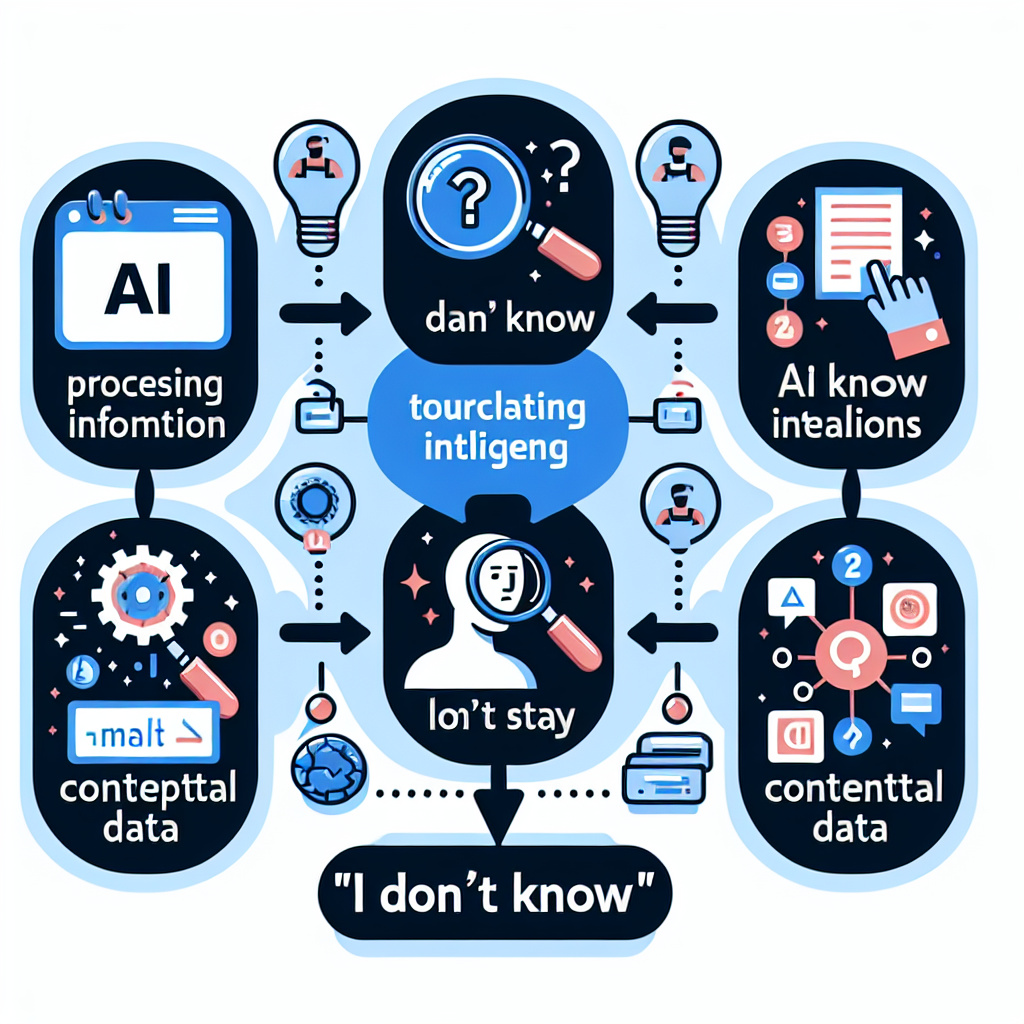
Introduction: Missing data imputation is no longer just about filling cells with means or static rules. In real-world environments, missing information can depend on context, the origin of the row, and the final objective. The CLAIM approach converts tabular data into natural language and then uses an LLM to generate contextual textual descriptors that explain why a value may be missing and what informed alternative would be appropriate, thereby improving downstream tasks such as classification, prediction, and scoring.
What CLAIM does: CLAIM converts rows and columns into human-readable sentences and paragraphs, incorporates metadata and business context, and asks the model to output descriptors such as probable value, uncertainty, or the label I Don't Know when evidence is insufficient. That textual output is translated back into structured imputations or uncertainty markers that preserve model quality and reduce biases from arbitrary replacements.
Step 1 Convert tabular data to natural language: Translate each row into a brief text that includes key variables, temporal context, and source notes. This step improves the LLM's understanding of implicit relationships between variables and helps the model identify when critical information is missing.
Step 2 Generate contextual descriptors with an LLM: Ask the LLM to output structured responses including proposed value, confidence level, and operational recommendation. It is crucial to configure instructions that allow the model to respond I Don't Know or flag uncertainty when evidence is insufficient.
Step 3 Automatic validation and calibration: Compare proposed imputations against business rules, historical distributions, and statistical controls. Reject or smooth imputations when confidence is low and create an I Don't Know signal that preserves the integrity of downstream tasks such as scoring and predictive models.
Step 4 Integration into pipelines and feedback: Incorporate contextual descriptions and uncertainty signals into the data flow so downstream models learn to handle informed absence. Record decisions and results to feed back into the LLM and fine-tune instructions and confidence thresholds.
Key benefits: Improved model accuracy, reduced bias from arbitrary imputations, decision traceability, and the ability to avoid costly errors when the appropriate action is to declare I Don't Know rather than force a prediction.
Practical application with Q2BSTUDIO: At Q2BSTUDIO, we specialize in turning these ideas into productive solutions. We offer custom software and application development that integrate data pipelines and LLM models, artificial intelligence services, and AI agents that incorporate uncertainty logic, as well as cybersecurity solutions to protect sensitive data during the imputation process. We also provide AWS and Azure cloud services to deploy scalable infrastructures, and business intelligence services with Power BI to visualize impact and data quality metrics.
Why choose Q2BSTUDIO: Our experience in custom software and custom applications allows us to tailor the contextual imputation strategy to your use case, combining artificial intelligence, AI for business, and AI agents with cybersecurity best practices. We implement reproducible pipelines on AWS and Azure, and connect results to Power BI dashboards so business teams understand when a value was imputed and when the solution declared I Don't Know.
Services and keywords: custom applications, custom software, artificial intelligence, cybersecurity, AWS and Azure cloud services, business intelligence services, AI for business, AI agents, Power BI. If you need a contextual imputation solution, LLM integration into your data pipeline, or custom application development with security guarantees, Q2BSTUDIO is ready to help.
Contact and next step: We design rapid proof-of-concept tests to evaluate impact on real models and business KPIs. Request a consultation to explore how to teach your AI to say I Don't Know when necessary and to make safer, more explainable decisions with contextual imputations tailored by Q2BSTUDIO.