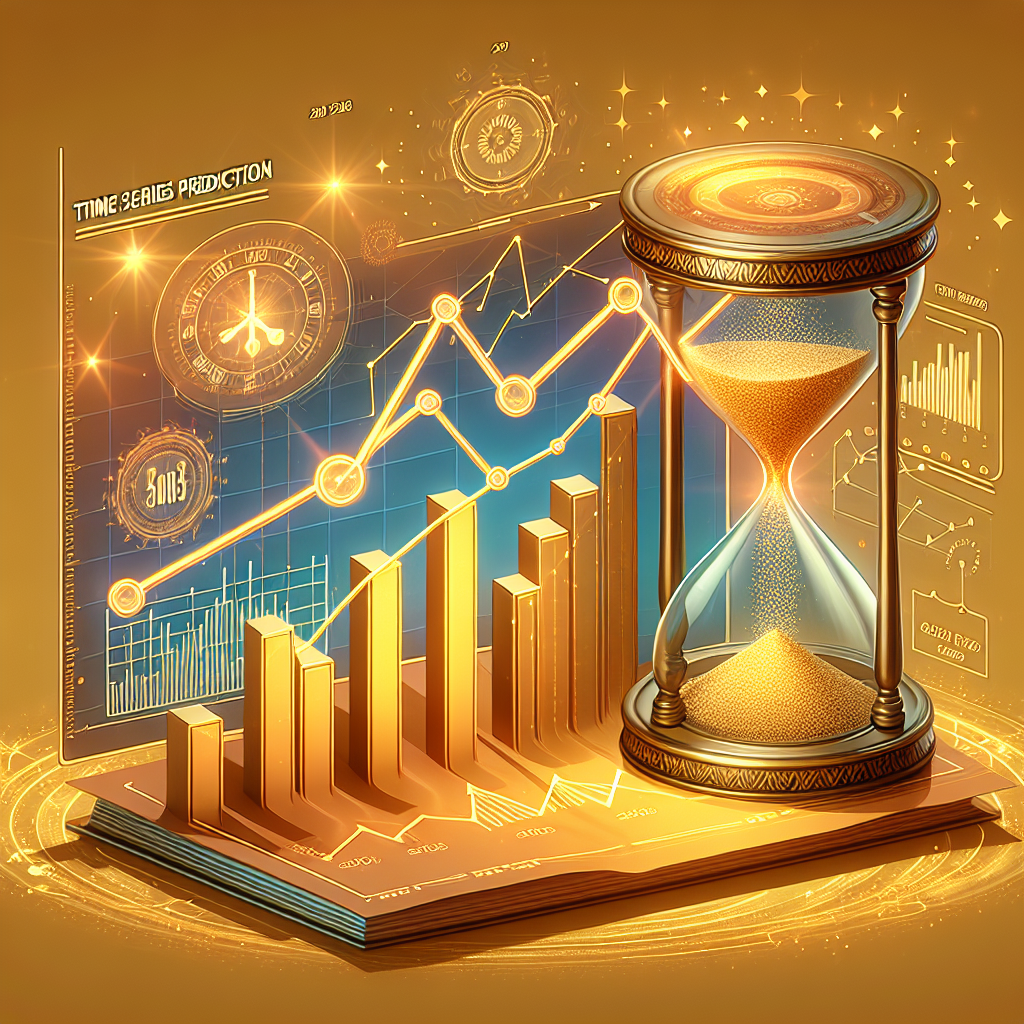
Time series are no longer exclusively synonymous with ARIMA models. Today, LSTM, GRU, and even reinforcement learning techniques such as Q-learning can forecast prices, detect failures, and outperform classic baselines. In this practical article, we explain how these approaches work, why they matter, and how to apply them in real projects.
Why time series prediction matters right now. Sequential data is everywhere: daily sales, industrial telemetry, cybersecurity metrics, energy consumption, and IoT device signals. Beyond fitting an ARIMA, recurrent neural networks and attention-based models can capture nonlinear patterns, long-term relationships, and changing behaviors that traditional methods do not detect.
Traditional models versus modern models. ARIMA and its derivatives are robust when signals are stationary and linear relationships dominate, but they have limitations when facing complex seasonality, trend breaks, or multiple exogenous inputs. LSTM and GRU add memory and gates that learn more complex temporal dynamics. Attention-based models and transformers are raising the bar by allowing models to focus on relevant parts of the sequence without relying exclusively on temporal order.
Q-learning and reinforcement learning in time series. For certain sequential decision-making problems, such as optimizing dynamic pricing or preventive maintenance policies, reinforcement learning is a powerful option. Q-learning and deep variants allow learning policies that maximize cumulative reward, complementing pure predictions with automated decisions.
Data preparation and best practices. Prediction quality depends largely on cleaning, sampling, and feature engineering. Normalizing series, imputing missing data, creating sliding windows, including exogenous variables, and detecting outliers are key steps. Proper temporal splitting between training, validation, and testing avoids information leakage that overestimates performance.
Metrics and evaluation. For time series, it is advisable to use metrics that reflect the magnitude and direction of error, such as MAE, RMSE, and MAPE, and also analyze performance by segment, by hour, or under specific conditions. Backtesting and temporal cross-validation ensure that models generalize in real scenarios.
Concrete use cases. Demand and price forecasting, anomaly detection in supply chains and industrial equipment, churn prediction, and real-time marketing campaign optimization. In cybersecurity, event time series can help identify attack patterns or anomalous behaviors that require immediate response.
How Q2BSTUDIO integrates these technologies. At Q2BSTUDIO, we design custom solutions that combine artificial intelligence, custom software development, and cybersecurity to solve real business problems. We implement LSTM, GRU, and attention-based architectures for forecasting, apply Q-learning when the project requires policy optimization, and deploy everything on secure cloud infrastructures using AWS and Azure cloud services.
Our services include custom application development and custom software that incorporate AI agents, scalable data pipelines, and visualization dashboards with Power BI. We also offer business intelligence services to turn predictions into operational decisions, and cybersecurity capabilities to protect both data and models.
Practical implementation and deployment. A typical flow starts with data evaluation and preparation, continues with rapid model prototyping, backtesting, and finally production through microservices or serverless models on AWS and Azure cloud services. We monitor performance and data drift and apply automated retraining when necessary.
Tips for choosing the right strategy. If the problem is simple and explainable, an ARIMA or a linear model with time features may suffice. If relationships are nonlinear or there are long-term dependencies, LSTM, GRU, or transformers are more suitable. When the solution requires sequential decisions with rewards, consider Q-learning or reinforcement learning approaches.
Why work with Q2BSTUDIO. We are specialists in artificial intelligence and custom software development, delivering solutions that integrate AI agents, artificial intelligence for businesses, and business intelligence services. Our cybersecurity expertise ensures secure and compliant deployments, and we manage infrastructures with AWS and Azure cloud services for scalability and resilience. We also offer Power BI consulting to turn models and data into actionable insights.
In summary, time series are everywhere, and modern techniques allow extracting much more value than before. If you need a forecasting, anomaly detection, or decision automation solution, Q2BSTUDIO can accompany you from problem definition to deployment and production operation with custom software, custom applications, AI agents, and integrated cybersecurity.
Contact Q2BSTUDIO to explore how artificial intelligence and our services can transform your time series into competitive advantages.