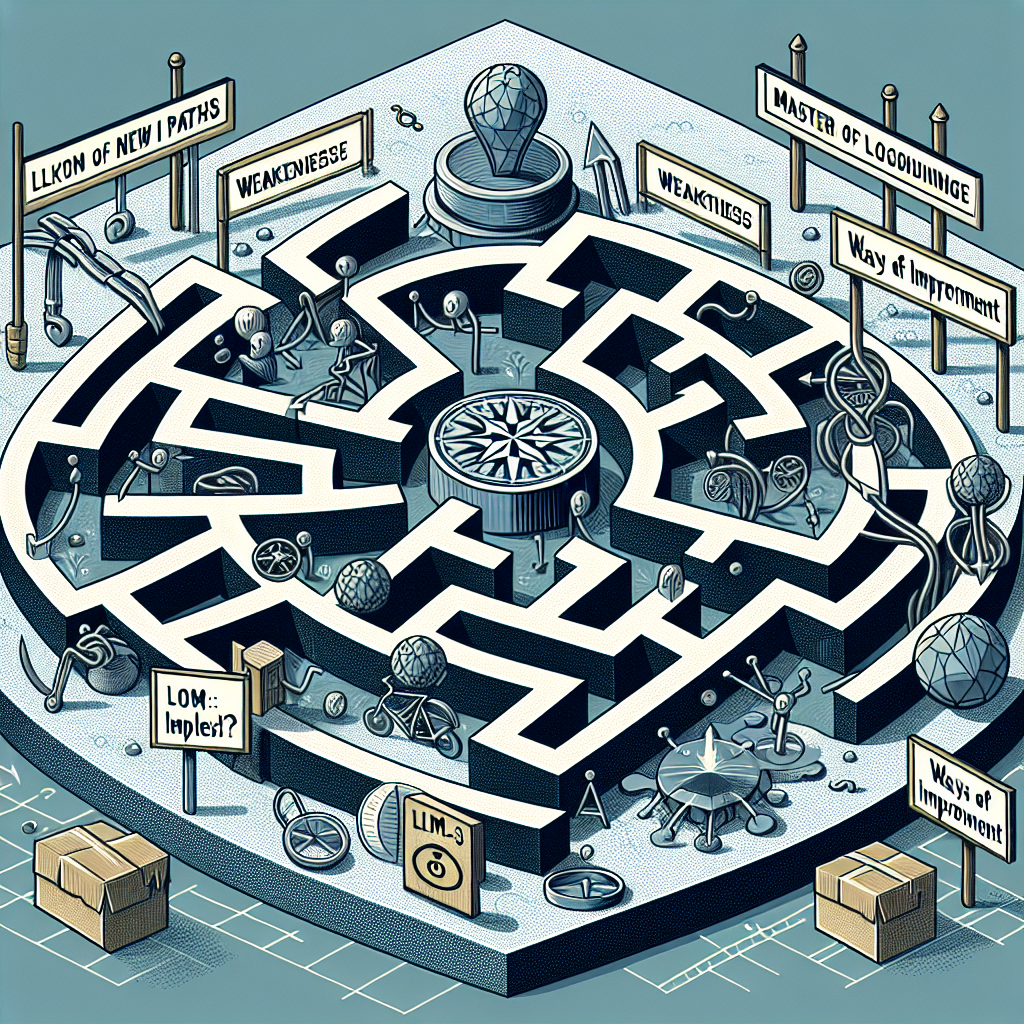
Navigating the limits of language models like phi-3-mini, we explore their inherent weaknesses and possible ways to improve them for real applications in companies. Small, high-performance models provide speed and efficiency but face limitations that affect their usefulness in production environments.
Main limitations found in phi-3-mini and similar models include limited factual accuracy and a tendency to hallucinate when information is not present in training. Another challenge is language restriction, where performance decreases in languages with less representation in the data. Reduced context windows make it difficult to process long documents, and computational limitations impose trade-offs between size, latency, and cost. Additionally, real-time knowledge updating is complex, leading to mismatches between recent facts and model output.
To mitigate these limitations, we apply several practical strategies. The first is the integration of RAG, retrieving information from knowledge bases and vector databases to anchor responses in verifiable sources. We add post-model verification with fact-checking pipelines and confidence metrics to filter hallucinations. Another technique is adjusting temperature and decoding strategies, as well as using prompt engineering and system instructions to reduce uncertain responses. The use of AI agents and orchestrators allows delegating specific tasks to external tools, ensuring traceability and error reduction.
Regarding expansion pathways or augmentation pathways, efficient fine-tuning with techniques like LoRA and adapters stands out to specialize the model in specific domains without high costs. Knowledge editing and continuous learning allow incorporating new data without retraining from scratch. Hybrid systems that combine small models with larger models on demand, or ensembles for cross-verification, improve robustness. We also promote the integration of long-term memory and multimodal capabilities to enrich context and understanding.
Our company Q2BSTUDIO offers practical solutions to bring these improvements to business environments. We develop custom applications and custom software that integrate artificial intelligence, AI agents, and secure RAG architectures. We provide business intelligence services and power bi consulting to transform data into decisions. We also offer aws and azure cloud services to deploy models with scalability and compliance, along with cybersecurity services that protect data and models throughout the entire lifecycle.
In specific projects, we implement pipelines that combine lightweight models like phi-3-mini with vector databases, human verification systems, and power bi dashboards for performance monitoring. This allows companies to leverage ai for business with quality and security guarantees, while optimizing operational costs and response times. We offer custom integrations of AI agents to automate workflows and repetitive tasks, improving productivity and analytics with business intelligence services.
Looking ahead, priorities include improving multilingual coverage, reducing hallucinations through better context signals and expanding high-quality data, and deploying on-premise capabilities or in cloud environments such as aws and azure cloud services with full control over governance and cybersecurity. At Q2BSTUDIO, we continue researching advanced techniques such as continuous learning, agent composability, and inference optimizations to offer scalable and reliable artificial intelligence solutions.
If you are looking to bring artificial intelligence to your organization with custom software solutions, custom applications, AI agents, power bi, and business intelligence services, Q2BSTUDIO combines expertise in development, cybersecurity, and aws and azure cloud services to design and implement projects that minimize risks and maximize value.