A few years ago, Edge AI meant giving up speed, power consumption, and memory; these were painful trade-offs that limited the deployment of models on real devices. Today, LLVM, MLIR, and SYCL are transforming that landscape, placing automation, performance, and portability at the heart of deploying artificial intelligence models. This modern compiler stack enables automatic optimizations, generation of kernels specific to heterogeneous hardware, controlled precision reduction, and intelligent memory allocation decisions, turning the compiler into a copilot that boosts edge inference instead of being a bottleneck.
The modern compilation approach lowers compute graphs to intermediate representations with MLIR, applies specific optimization passes with LLVM, and uses SYCL to generate portable code that runs on CPUs, GPUs, NPUs, and proprietary accelerators. The result is lower latency, lower energy consumption, and more models fitting into limited memory without sacrificing accuracy. Techniques such as automatic quantization, operation fusion, kernel autotuning, and fine-grained memory management enable deploying artificial intelligence solutions on IoT devices, smart cameras, and gateways with near-server performance.
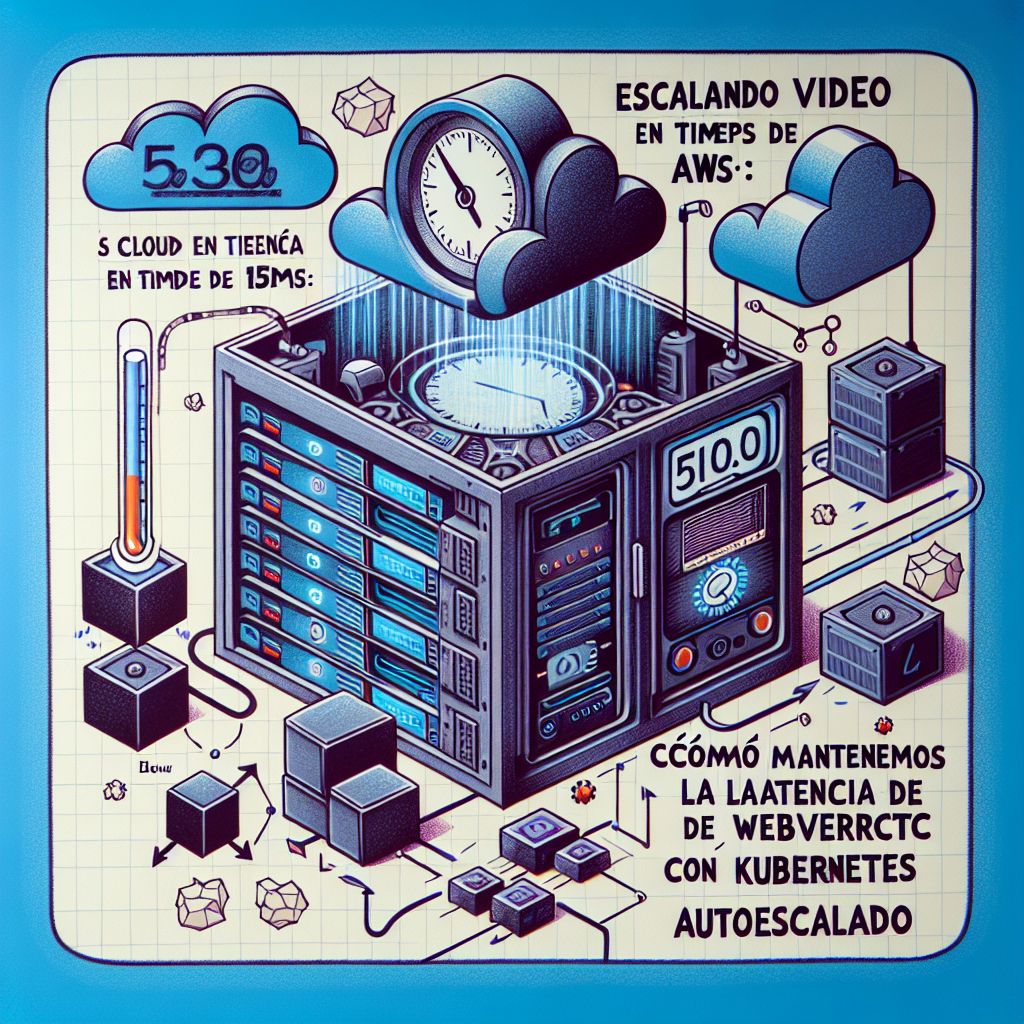
In real-time video and WebRTC communication scenarios, maintaining latencies below 150 ms requires a complete architecture that combines efficient edge inference with intelligent cloud scaling. Scaling real-time video on AWS involves designing optimized codec pipelines, using hardware acceleration for transcoding, applying adaptive bitrate and intelligent multiplexing, and orchestrating services with Kubernetes autoscaling. Tools such as HPA, KEDA, and custom metrics, along with GPU deployments via device plugins, allow scaling processing instances based on WebRTC session load. Additionally, using spot instances, intelligent instance placement, and warm pool strategies reduces cost and startup time, helping to consistently maintain latencies below 150 ms.
Q2BSTUDIO supports companies in this transformation with comprehensive services: we develop custom applications and bespoke software that integrate artificial intelligence models optimized for edge and cloud. We are specialists in artificial intelligence, in implementing AI agents, and in AI solutions for companies that require real-time performance. We offer cybersecurity as a design pillar to protect data pipelines and models, AWS and Azure cloud services to deploy and scale workloads, and business intelligence services that include Power BI integrations for visualization and decision-making. Our approach combines expertise in efficient inference, scalable architectures, and security best practices so that your solution is fast, robust, and manageable.
If your project needs to improve real-time video latency, optimize models for edge, or migrate workloads to the cloud, Q2BSTUDIO can help with architecture design, custom software implementation, AWS and Azure cloud service integration, and business intelligence services consulting. Contact us to create personalized solutions that combine custom applications, artificial intelligence, and cybersecurity with tools such as AI agents and Power BI to drive your business.