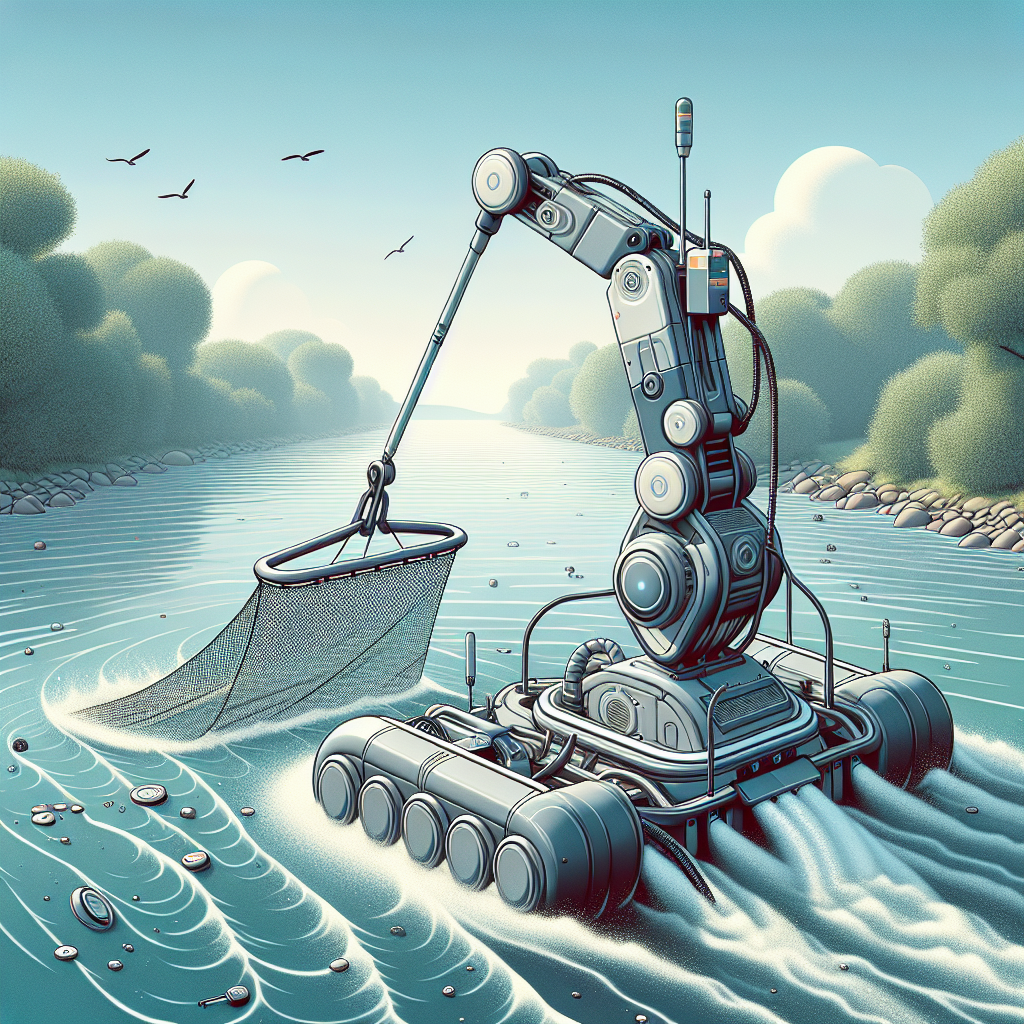
Tech Now meets the team behind WasteShark and its promise to reduce marine plastic pollution. WasteShark is a floating robot designed to collect waste in rivers, canals, and coastlines, navigating autonomously and accumulating plastics, microplastics, and other debris before they reach the ocean. Equipped with sensors, cameras, and advanced navigation systems, WasteShark combines robust hardware with data analysis to map pollution hotspots and optimize cleaning routes.
The team behind WasteShark explains that their approach is not just physical collection but the generation of useful information: each trip produces data on waste types, quantities, and locations. That information makes it possible to prioritize actions and design more effective local policies. Furthermore, the ability to integrate with analytics platforms facilitates real-time monitoring and data-driven decision-making.
Can WasteShark help mitigate marine plastic pollution? The answer is yes, with nuances. In urban areas and river basins that feed polluted seas, robots like WasteShark can intercept large volumes of waste and reduce the plastic load reaching the ocean. However, for global impact, an integrated strategy combining prevention, education, recycling, and scalable technological solutions is necessary.
Limitations include energy autonomy, load capacity, and the need for infrastructure for emptying and waste management. That is why pilot projects are key: they allow adjusting software and operations, testing business models, and demonstrating environmental and social return. Public-private collaboration and integration with cloud services for data processing are determining factors in expanding the reach of solutions like WasteShark.
In this technological context, Q2BSTUDIO brings expertise to turn data from marine robots into actionable solutions. We are a custom software and application development company specialized in artificial intelligence, cybersecurity, and aws and azure cloud services. We can create custom software to manage robot fleets, implement cloud data pipelines, and develop Power BI dashboards for real-time visualization and reporting.
Our services include business intelligence services, integration of artificial intelligence models, and implementation of AI agents that automate analysis and operational responses. With experience in AI for businesses, we design AI agents for waste classification by image, prediction of critical pollution points, and optimization of collection routes. All of this is accompanied by cybersecurity practices to protect data integrity and connected infrastructure.
Imagine a deployment where WasteShark sends data to a platform developed by Q2BSTUDIO, which processes information on aws and azure cloud services, applies artificial intelligence models to detect patterns, and feeds Power BI dashboards for municipalities, NGOs, and concessionary companies. That integration enables faster decisions, reduces operational costs, and maximizes the environmental impact of each mission.
The fight against marine plastic pollution requires technological innovation and cooperation. Robots like WasteShark are a powerful piece when articulated with custom software, business intelligence services, and security solutions. Q2BSTUDIO is ready to collaborate on projects that combine hardware and software, bringing expertise in custom applications, custom software development, artificial intelligence, AI agents, cybersecurity, and aws and azure cloud services to drive initiatives that truly make a difference.
If you are looking to transform marine cleaning data into concrete actions, optimize operations with AI for businesses, or create interactive Power BI dashboards, contact Q2BSTUDIO and let's talk about how to develop a scalable and secure solution that maximizes environmental and operational impact.