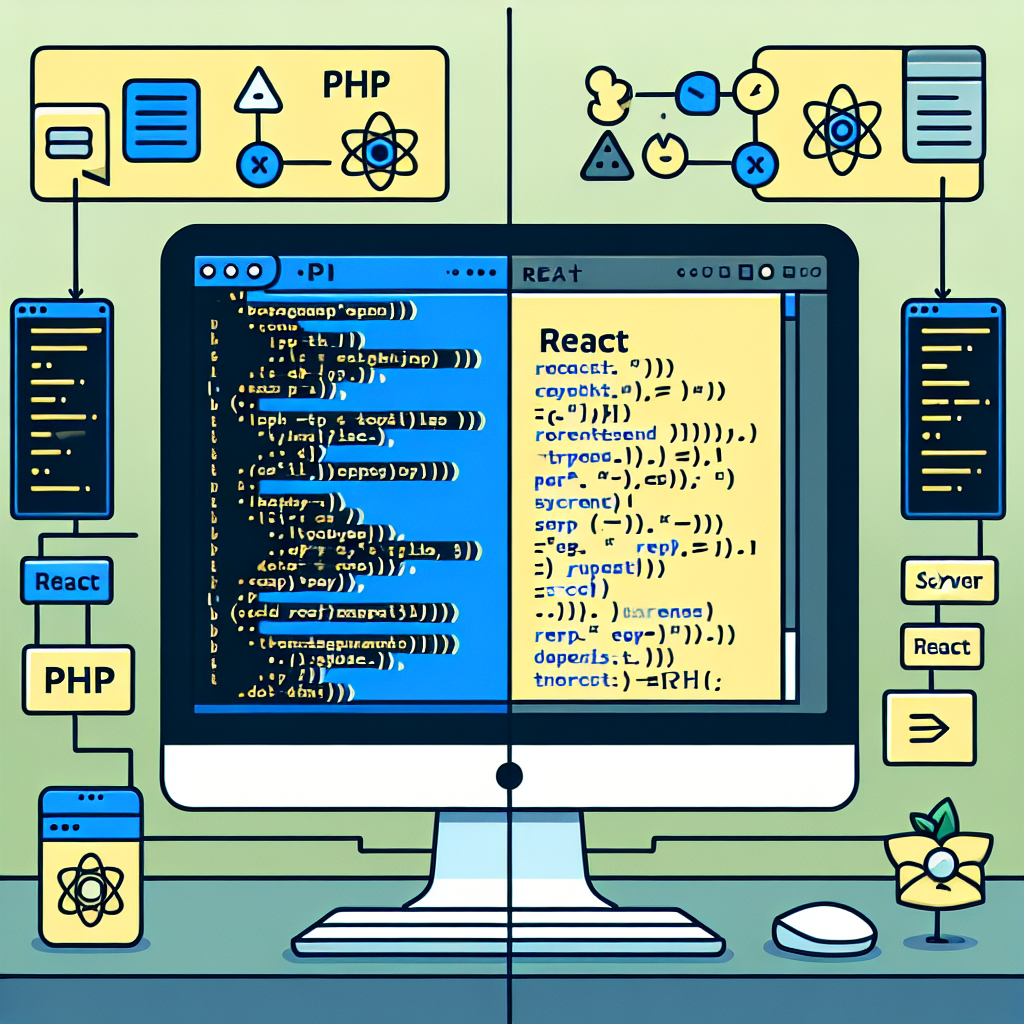
This article explains how to use PHP as a backend while React handles the frontend, leveraging the best of both worlds to build custom applications and robust, scalable custom software.
Overview PHP offers a proven backend for managing business logic, database access, and REST APIs, while React provides a dynamic and reactive user interface. This combination is ideal for projects that require development speed, performance, and a modern user experience.
Recommended Architecture Separate frontend and backend into independent projects. The PHP backend exposes REST or GraphQL endpoints. React consumes those endpoints using fetch or axios. Use JWT token-based authentication for stateless sessions. Keep business logic, server-side validations, and permission control in PHP, and build UI components, routes, and state in React.
Basic Steps 1 Install a PHP server or use Docker containers with PHP and a web server like Nginx or Apache 2 Create routes and controllers in PHP that return JSON 3 Configure CORS to allow requests from the domain where React runs 4 Implement JWT authentication and middleware to protect routes 5 In React, organize components, use context or state managers, and consume the API using asynchronous calls 6 Handle errors, loading states, and validations in both layers.
Security Validate and sanitize all input in PHP, apply CSRF and XSS protection, use HTTPS in production, limit authentication attempts, and apply rate limiting policies. At Q2BSTUDIO, as cybersecurity specialists, we implement advanced controls, audits, and infrastructure hardening to reduce the attack surface.
Deployment and Scaling For production, package the PHP API in containers and deploy to AWS and Azure cloud services. Separate databases, caches, and load balancers. Use auto-scaling and monitoring. Q2BSTUDIO offers AWS and Azure cloud services and high-availability strategies for critical applications.
Integration with Artificial Intelligence and Business Intelligence In the PHP backend, you can integrate artificial intelligence models and microservices that process data and return results to React. Q2BSTUDIO develops artificial intelligence solutions and business intelligence services that incorporate advanced analytics and Power BI dashboards to improve decision-making. We also implement AI agents and AI solutions for companies that automate workflows and increase productivity.
Development Best Practices Keep the API documented with OpenAPI or Swagger, version endpoints, write unit and integration tests, use CI/CD for automated deployments, and manage secrets through key management services. For performance, apply pagination, caching, and response compression.
Conceptual Example The PHP backend creates an api/login endpoint that validates credentials, generates a JWT token, and returns user data. React sends credentials, stores the token securely in memory or secure storage, and attaches the token in Authorization headers on each request. The backend verifies the token and responds with JSON resources consumed by React components.
Why Choose Q2BSTUDIO Q2BSTUDIO is a custom software and application development company specialized in developing custom software, integrating artificial intelligence, and offering complete cybersecurity solutions. We offer AWS and Azure cloud services, business intelligence services, Power BI implementation, AI agents, and AI consulting for companies. We design scalable, secure solutions tailored to each client's needs.
Conclusion Combining PHP on the backend with React on the frontend allows you to build modern and efficient applications. If you are looking for a partner to develop custom applications, implement artificial intelligence, and secure your platform against threats, Q2BSTUDIO offers technical expertise and comprehensive services to take your project from idea to production.