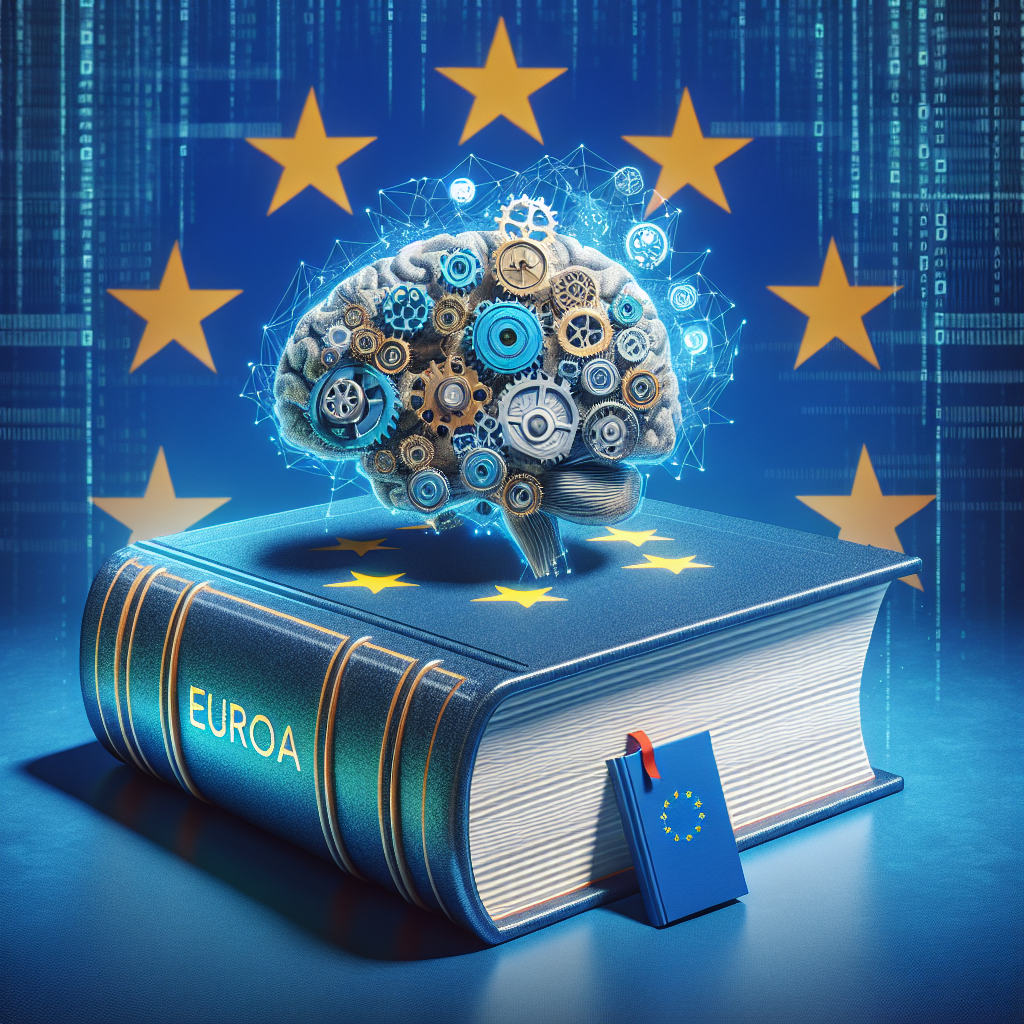
The European Commission has published new guidelines for the Artificial Intelligence Act that clarify when an AI model falls within its scope, when it poses a systemic risk, and who qualifies as a provider; these guidelines introduce FLOP thresholds that determine regulatory obligations, warn that fine-tuning can turn an actor into a new provider, and limit open-source exemptions with strict conditions; the effective application of the rules begins on August 2, 2025, making these guidelines the de facto manual for AI in the EU.
What it means to be within the scope: a model is considered within the scope when it is offered or provided as a service within the EU market, when its results influence decisions affecting European people or infrastructure, or when its development and deployment have significant effects on Community territory; this covers both commercial models and some research projects and business deployments that impact European users.
What is meant by systemic risk: the guidelines define systemic risk as the potential of a model to cause widespread and repeated harm to society, the economy, or public safety, including threats to critical infrastructure, mass dissemination of disinformation, health damage, or widespread economic harm; models classified as posing systemic risk will face much stricter oversight requirements.
Who is a provider: the definition includes model developers, operators who put the system into service, and in many cases those who perform fine-tuning or adaptations that are decisive for its behavior; in practice, this means that the simple act of customizing or fine-tuning a model for a specific use case can turn a company into a provider subject to legal obligations.
FLOP thresholds and obligations: the guidelines use FLOPs as a metric of computational capacity to classify models and assign regulatory obligations; exceeding certain thresholds activates duties of transparency, risk assessment, safety testing, audits, and detailed technical documentation; organizations must measure and record computational usage during training and fine-tuning to assess their position under the regulation.
Open-source exemptions and conditions: the framework does not offer a free pass for open-source projects; exemptions are subject to governance requirements, data traceability, clear licenses, and mitigation measures to prevent harmful uses; publishing weights or code does not automatically eliminate responsibility if the model is used in ways that generate significant risks.
Practical advice for companies: take an inventory of models and services, assess potential systemic risks, apply data management and privacy policies, document development and testing processes, implement security controls and mitigation plans, and prepare audits and records demonstrating compliance before August 2, 2025; prevention and transparency will be key to avoiding penalties and preserving trust.
About Q2BSTUDIO: we are a company specialized in custom software and application development, with experience in custom software, artificial intelligence, cybersecurity, and AWS and Azure cloud services; we offer business intelligence services, Power BI implementations, AI solutions for companies, AI agents, and consulting to adapt models and products to new regulatory requirements; we help with compliance audits, responsible open-source strategy, secure fine-tuning, and deployment in protected environments.
What we can do for your company: at Q2BSTUDIO we design and develop custom applications integrating security controls from the design phase, we offer migration and management in AWS and Azure cloud services, we implement business intelligence solutions with Power BI and AI agent teams, and we provide cybersecurity services to protect data and models; we also carry out regulatory risk assessments to ensure that your artificial intelligence projects comply with European guidelines.
Contact and proposal: if your organization needs to adapt models, prepare technical documentation, implement mitigation measures, or deploy cloud solutions in accordance with the new regulation, Q2BSTUDIO offers consulting and custom development to accelerate compliance and business, reducing risks and enhancing the value of your artificial intelligence projects and digital services.
custom applications custom software artificial intelligence cybersecurity AWS and Azure cloud services business intelligence services AI for businesses AI agents Power BI