
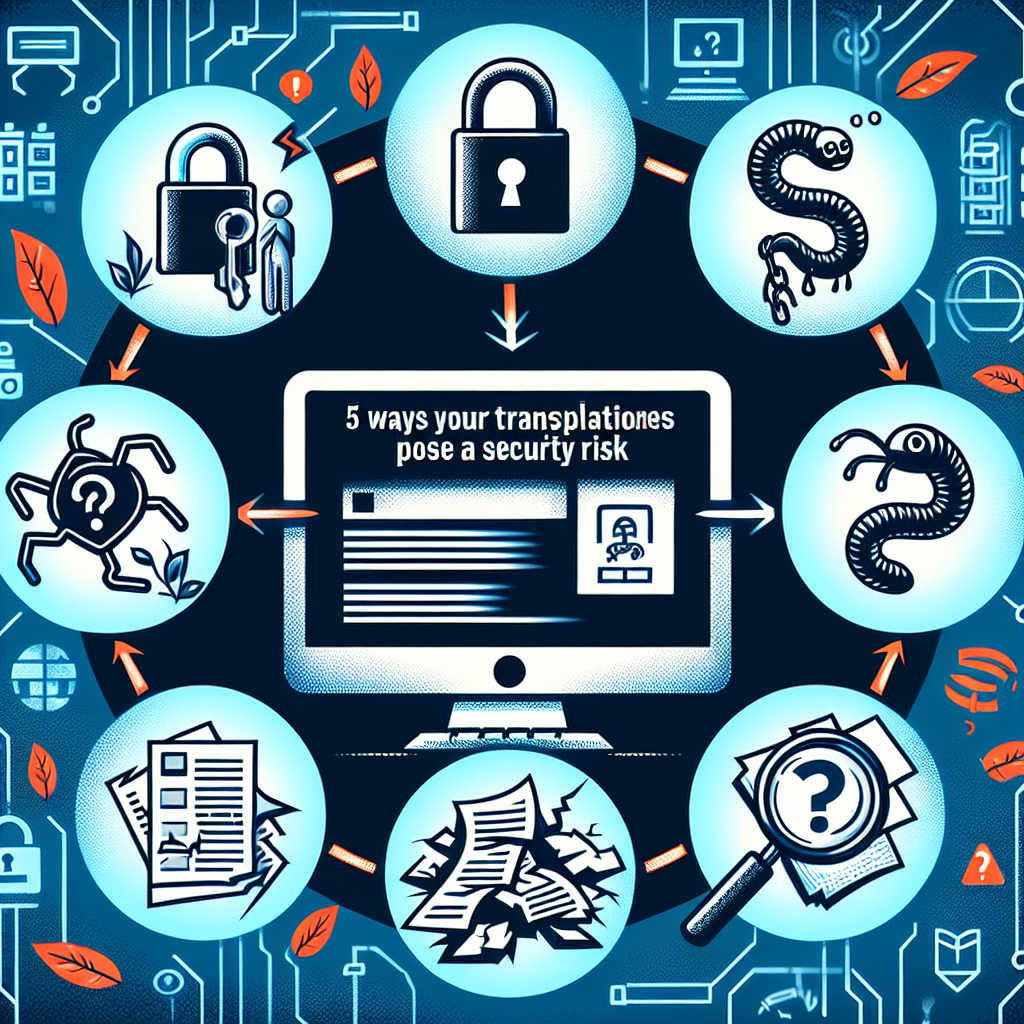
Introduction In corporate translation processes, there are security risks that often go unnoticed by IT managers. Translating business documents, internal communications, or technical content can expose sensitive data if tools and workflows are not controlled. Q2BSTUDIO, a company specialized in custom software development, custom applications, artificial intelligence, and cybersecurity, recommends reviewing and reinforcing each point of the translation process to protect information and comply with regulations and best practices.
1. Machine translation without a no-retention clause Many employees use free machine translation tools that process and store the supplied text, allowing those providers to reuse or index the information. This represents a risk when translating contracts, product plans, customer data, or any confidential information. What to do: implement secure CAT solutions or AI integrations managed by Q2BSTUDIO that offer a data no-retention clause and private processing in controlled environments. Our custom applications and artificial intelligence services allow the use of translation engines and AI agents without exposing data to third parties.
2. Sending files for translation by email Sharing attachments by email or external messaging disperses traceability and increases the likelihood of leaks. What to do: centralize collaboration on a secure platform with project management and version control. Q2BSTUDIO develops custom platforms and solutions integrated with AWS and Azure cloud services to centralize translations, change tracking, and auditing, improving productivity and security.
3. Ignoring user permission controls The lack of granular user control can allow unauthorized access to translated documents or translation memories. What to do: ensure that the translation tool supports role-based permissions, strong authentication, and single sign-on. Q2BSTUDIO implements access policies, multifactor authentication, and device authentication in custom solutions to ensure that only authorized users access sensitive content.
4. Not applying group permissions to translation memories Translation memories store valuable bilingual segments that, if not segregated by department or client, can be consulted by unauthorized users. What to do: configure translation memory groups with permissions for specific departments or clients. Q2BSTUDIO integrates advanced memory management and AI agents that facilitate the secure reuse of translations without mixing data between projects.
5. Using translation software without complete security measures It is critical that the translation tool has multiple layers of technical and compliance security. Among the essential measures are SHA-2 and 4096-bit encryption, 256-bit SSL certification, encrypted storage in transit, in use, and at rest via AWS, no-retention clause for machine translation providers, PCI-compliant payment processing, datacenters with HIPAA SOC1 and ISO27001 compliance, multifactor authentication, TLS 1.2, last access display, automatic session timeout due to inactivity, password expiration and lockout policies, device authentication, GDPR compliance, single sign-on, support for secure browsers, and third-party security audits. What to do: select or develop a translation application that includes all these guarantees. Q2BSTUDIO offers cybersecurity services and custom software development that incorporate these protections and integrate with AWS and Azure cloud services for secure and compliant deployment.
How Q2BSTUDIO can help Q2BSTUDIO combines expertise in custom software, custom applications, artificial intelligence, and cybersecurity to design secure translation workflows. Our services include security consulting, implementation of centralized platforms, integration of AI agents for assisted post-editing, business intelligence services, and dashboards with Power BI for auditing and traceability. We also offer AI solutions for companies that automate processes without sacrificing confidentiality.
Practical recommendations Conduct an inventory of all the ways documents are translated and shared, prohibit the use of public tools for sensitive texts, migrate collaboration to controlled platforms, establish role-based and group permissions in translation memories, require robust encryption and access controls, and regularly audit systems with external security testing. Q2BSTUDIO can design and implement these measures and provide training for teams that use translation software and AI agents.
Conclusion Translation processes can become a gateway for information leaks if not managed with the same rigor as other IT systems. By adopting centralized platforms, advanced encryption, access controls, and custom software solutions, the risk is significantly reduced. If your organization needs support to protect translation processes, integrate secure artificial intelligence, or develop custom applications with a cybersecurity focus, contact Q2BSTUDIO for an assessment and personalized proposal that combines AWS and Azure cloud services, artificial intelligence, business intelligence services, and Power BI.
