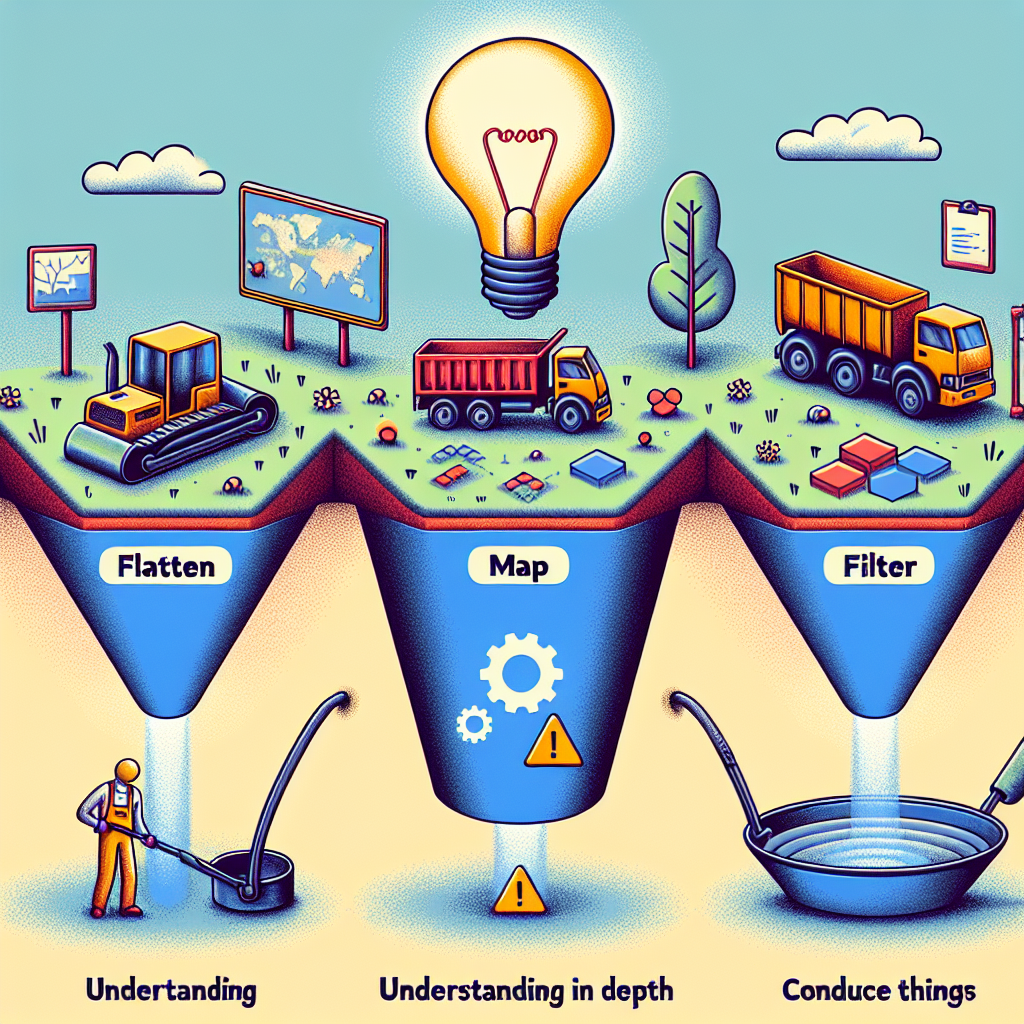
Introduction: learning to create polyfills for array methods in JavaScript is an excellent way to understand the language in depth, improve technical skills, and gain confidence for technical interviews. In this article, we will build polyfills for flat, map, filter, and reduce in a didactic way, oriented toward practical examples.
What is a polyfill: a polyfill is an implementation that adds support for native functions that may be missing in certain environments. Creating polyfills forces you to review specifications, manage edge cases, and think about compatibility, something highly valued in interviews and in custom software projects.
Why do it by hand: implementing map, filter, reduce, and flat allows you to understand details such as handling of this, null checks, sparse properties, and depth control in flattening. It is also a practical demonstration of technical capability when working on custom application development or custom software for clients.
Polyfill for map: brief explanation and example. The main idea is to iterate over the original array, call the callback with the element, the index, and the array, and build a new array with the results. Implementation example:
Array.prototype.polyMap = function(callback, thisArg) { if (this == null) throw new TypeError var O = Object(this) var len = O.length >>> 0 var A = new Array(len) var i = 0 while(i != len) { if (i in O) A[i] = callback.call(thisArg, O[i], i, O) i++ } return A }
Polyfill for filter: filter creates a new array with the elements that meet the callback condition. The implementation must respect absent positions in sparse arrays. Example:
Array.prototype.polyFilter = function(callback, thisArg) { if (this == null) throw new TypeError var O = Object(this) var len = O.length >>> 0 var res = [] var i = 0 var k = 0 while(i != len) { if (i in O) { var val = O[i] if (callback.call(thisArg, val, i, O)) { res[k] = val k++ } } i++ } return res }
Polyfill for reduce: reduce accumulates a value by applying the callback for each element. The implementation must handle the case where no initialValue is provided and skip undefined positions. Example:
Array.prototype.polyReduce = function(callback) { if (this == null) throw new TypeError var O = Object(this) var len = O.length >>> 0 var i = 0 var accumulator var hasInitial = arguments.length > 1 if (hasInitial) accumulator = arguments[1] else { while(i != len && !(i in O)) i++ if (i == len) throw new TypeError accumulator = O[i] i++ } while(i != len) { if (i in O) accumulator = callback.call(undefined, accumulator, O[i], i, O) i++ } return accumulator }
Polyfill for flat: flat flattens arrays up to a given depth. We can implement a recursive or iterative version. The following solution uses recursion controlled by the depth parameter and respects sparse arrays. Example:
Array.prototype.polyFlat = function(depth) { if (this == null) throw new TypeError var O = Object(this) var len = O.length >>> 0 var res = [] var i = 0 var d = depth === undefined ? 1 : depth while(i != len) { if (i in O) { var val = O[i] if (Array.isArray(val) && d > 0) { var flattened = val.polyFlat(d - 1) var j = 0 var flLen = flattened.length >>> 0 while(j != flLen) { res[res.length] = flattened[j] j++ } } else { res[res.length] = val } } i++ } return res }
Quick tests: to validate these polyfills, you can run examples with numeric arrays and check results. Using arrays with empty positions helps verify sparse array handling. These implementations are intended as formative exercises and can be extended to fully comply with the official specification.
Best practices and considerations: check for null this, use Object for coercion, use length >>> 0 to normalize lengths, avoid modifying prototypes in public libraries without caution, and document limitations. In production environments, prefer official polyfills or tested libraries, unless a custom implementation is needed for learning purposes or specific compatibility.
Real applications and relationship with business services: understanding these implementations adds value in custom application development and custom software projects where compatibility and performance matter. At Q2BSTUDIO, we apply this type of best practice in solutions that integrate artificial intelligence and cloud infrastructures. We are specialists in artificial intelligence, cybersecurity, aws and azure cloud services, business intelligence services, and in building AI agents and AI solutions for companies.
How Q2BSTUDIO can help: at Q2BSTUDIO, we design and develop custom applications that incorporate artificial intelligence and analysis with tools such as power bi, ensuring security with cybersecurity strategies and deployment on aws and azure cloud services. We can help you optimize data pipelines, create custom AI agents, and deploy business intelligence solutions that drive decisions and scalability.
Summary and next steps: creating polyfills for flat, map, filter, and reduce is a practical exercise that improves JavaScript knowledge and reinforces the ability to solve problems in interviews and real projects. If you need support in custom software projects, custom applications, artificial intelligence integration, or cloud services, contact Q2BSTUDIO to design the right solution.