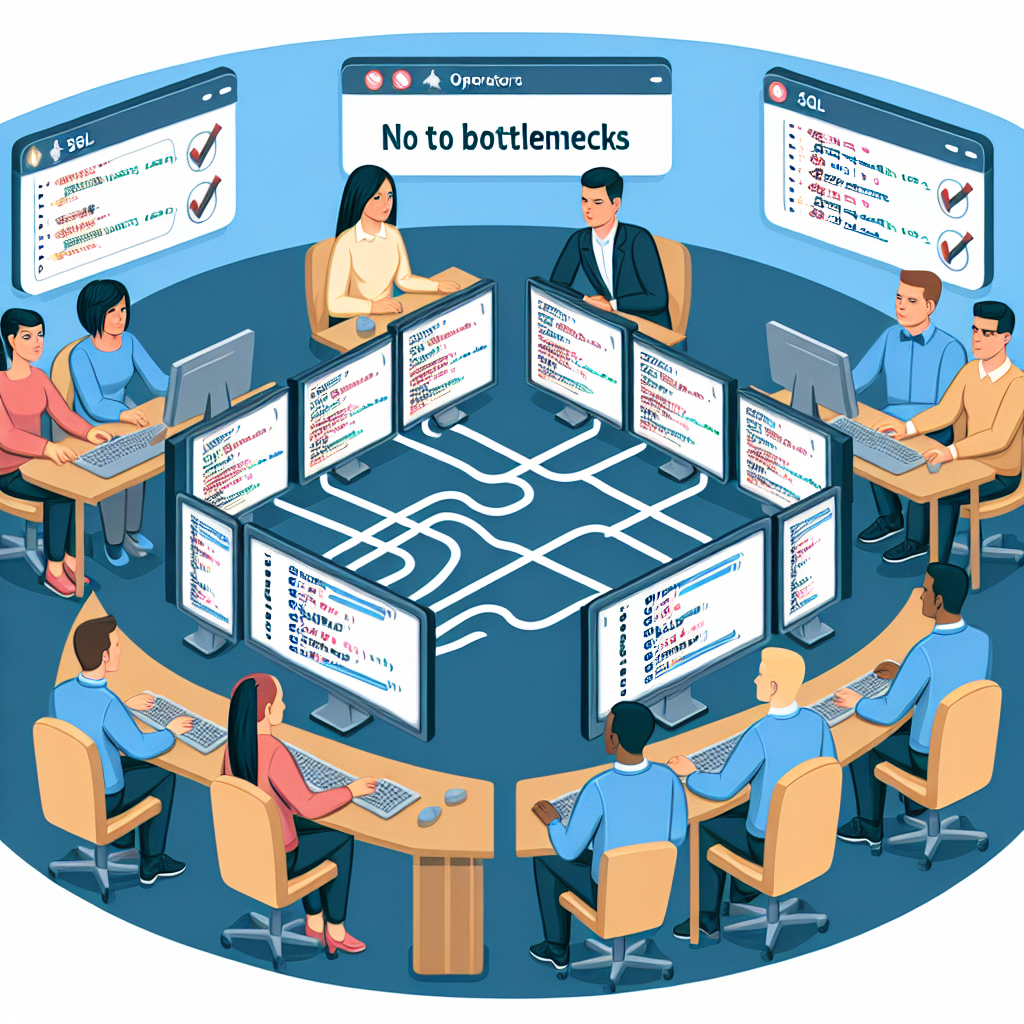
Supporting SQL ops - Please Don't Be a Bottleneck
In production environments, it is essential that support teams have DQL access to the databases of the applications they manage. Access to query data is different from the ability to execute DML or DDL commands, which should normally be reserved for DBA teams or processed through the organization's formal deployment process. Do not become the one who breaks procedures and accesses the system without control.
From a resilience standpoint, the minimum acceptable is to deploy at least two database instances on separate hosts. These are usually named prod and prod-replica. It is vital that these instances live on completely different infrastructure: different physical servers or, even better, different availability zones. If the primary replica is on the same rack or, worse, on the same physical host, you have not built resilient infrastructure; you have created a single point of failure that will lead to a post-mortem that is difficult to justify after an outage that leaves the database unusable.
The two-instance scheme is not only useful for failing over to a healthy server during an interruption. It also meets a clear operational need: providing support teams with read-only access to the data of the applications they manage. Routing all those SELECT queries to the replica avoids consuming production database resources and gives teams visibility to resolve incidents and handle business requests quickly.
Ensuring high availability and disaster recovery is only part of the goal. The other part, equally critical, is equipping operations teams with DQL access to diagnose, analyze, and produce reports without becoming a bottleneck. Forcing them to open tickets and wait for approvals to run a SELECT query is equivalent to sabotaging the response SLA and slowing down incident management. There are only two reasons for that approach: a dysfunctional IT culture or a lack of trust in the people who run and maintain the systems.
When a table contains personal data or sensitive information regulated by GDPR or HIPAA, the answer cannot be to lock the door. There are modern controls that reconcile operational access and regulatory compliance: data masking, column-level security, granular roles, auditing, and privacy techniques such as tokenization. Implementing these controls allows operations and support teams to work with real or anonymized data as appropriate, reducing risks without sacrificing effectiveness.
In addition to technical best practices, it is essential to define clear policies: who can access the replicas, what types of queries are allowed, procedures for executing changes involving DML or DDL, and audit logs. Automated controls and periodic reviews replace unproductive bureaucracy with evidence-based trust.
If you are looking for a practical approach to train your team in SQL and database operations, an intensive, practice-oriented course on DQL, replication, security, and recovery can make a difference. Providing proper training prevents errors, speeds up incident resolution, and improves collaboration between development, support, and DBAs.
At Q2BSTUDIO, we are a software development company specialized in custom applications and cloud solutions. We offer custom software services, artificial intelligence and AI for businesses, cybersecurity, AWS and Azure cloud services, business intelligence services, and AI agent development. We also implement Power BI solutions for analytical exploitation and reporting. Our approach combines secure development practices, deployment automation, and access controls to ensure operations teams have the tools and permissions they need without compromising compliance or security.
We work with clients to design replicated database architectures, define secure DQL access policies, apply data masking and column-level security, and create observability pipelines that accelerate incident response. If your organization needs support to deploy replicas, improve resilience, or integrate artificial intelligence into operational processes, Q2BSTUDIO accompanies you from analysis to delivery and ongoing support.
In summary: allow DQL access to those who need it, seek resilience with replicas on separate infrastructure, do not unnecessarily centralize query permissions, and protect sensitive data with modern controls. This way, you will avoid operational bottlenecks and enhance your team's ability to respond to the business with agility.
Sincerely Q2BSTUDIO Team