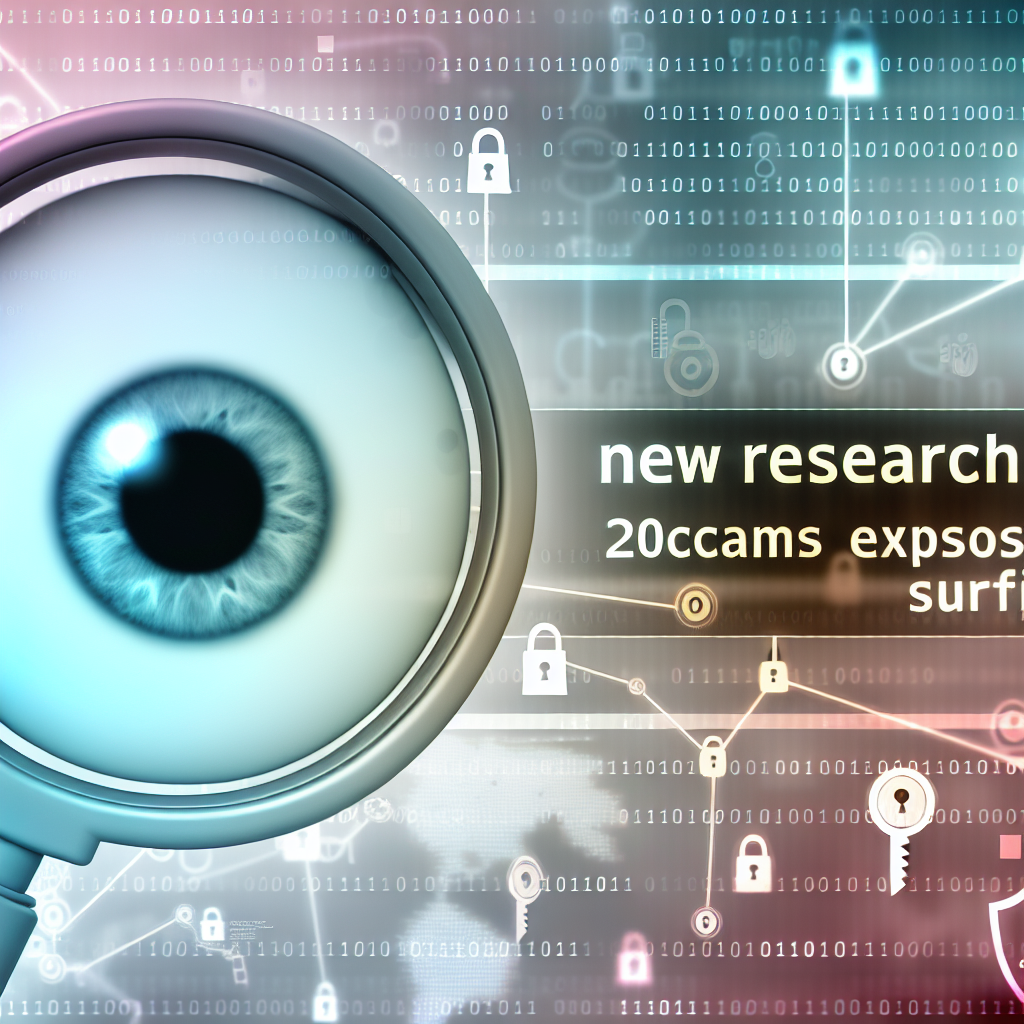
Researchers have identified a new cybersecurity threat that allows attackers to reconstruct on-screen content during video calls by analyzing optical reflections in participants' glasses captured by their own webcam. This approach requires no physical access or special hardware and works remotely, with the risk increasing as camera resolution improves.
The method exploits the fact that curved lens surfaces reflect fragments of the environment, including browser windows and open applications. With image processing techniques and models that estimate scene geometry, it is possible to infer what is being displayed on screen. Unlike previous attacks that required proximity or sophisticated equipment, this type of risk can materialize from the video call session itself.
In controlled tests, researchers demonstrated real risk even with 720p cameras, showing that sufficient details can be recovered to reveal web pages, message content, or sensitive information. The study models the feasibility of the attack and projects that the adoption of 4K and higher cameras will increase exposure, because more pixels mean reflections with higher resolution usable by reconstruction algorithms.
In the face of this threat, there are immediate and long-term mitigation measures. In the short term, practices such as positioning the webcam and screen to minimize reflections, using anti-reflective coated frames and surfaces, covering the camera when not in use, and limiting permissions for applications that access the camera are recommended. Companies should review telework policies, cybersecurity training, and privacy controls in video conferencing tools.
In the long term, it is important for hardware manufacturers and software providers to integrate solutions such as lenses with coatings that reduce reflections, algorithms that detect and anonymize reflections in the video feed, and options to reduce transmission resolution when there is a risk of visual leakage. Additionally, adopting architectures and cloud services that protect data at rest and in transit helps limit the impact if visible on-screen information is leaked.
As a specialized company, Q2BSTUDIO offers services to help mitigate these risks and improve the security posture of organizations of all sizes. Q2BSTUDIO is a custom software and application development company, specializing in artificial intelligence and cybersecurity, with experience in AWS and Azure cloud services, business intelligence services, and Power BI solutions. Our teams design custom software and custom applications that incorporate privacy controls, detection, and mitigation for video conferencing and video streams.
Q2BSTUDIO services include cybersecurity consulting, integration of artificial intelligence to identify visual risks in real time, deployment of AI agents and AI solutions for companies that automate the protection of sensitive data. We also offer implementation of AWS and Azure cloud services, and advanced analytics with business intelligence services and Power BI to monitor events and generate actionable alerts.
We recommend organizations assess the risk of visual exposure in their telework environments, update camera access policies, train staff on best practices, and work with providers like Q2BSTUDIO to create customized solutions. The combination of custom software, applied artificial intelligence, and robust cybersecurity practices reduces the likelihood of leaks from reflections in video calls and protects critical assets.
For more information on how to protect your organization and leverage custom software development services, custom applications, artificial intelligence, AI agents, cybersecurity, AWS and Azure cloud services, business intelligence services, and Power BI, contact Q2BSTUDIO for an assessment and personalized proposal.