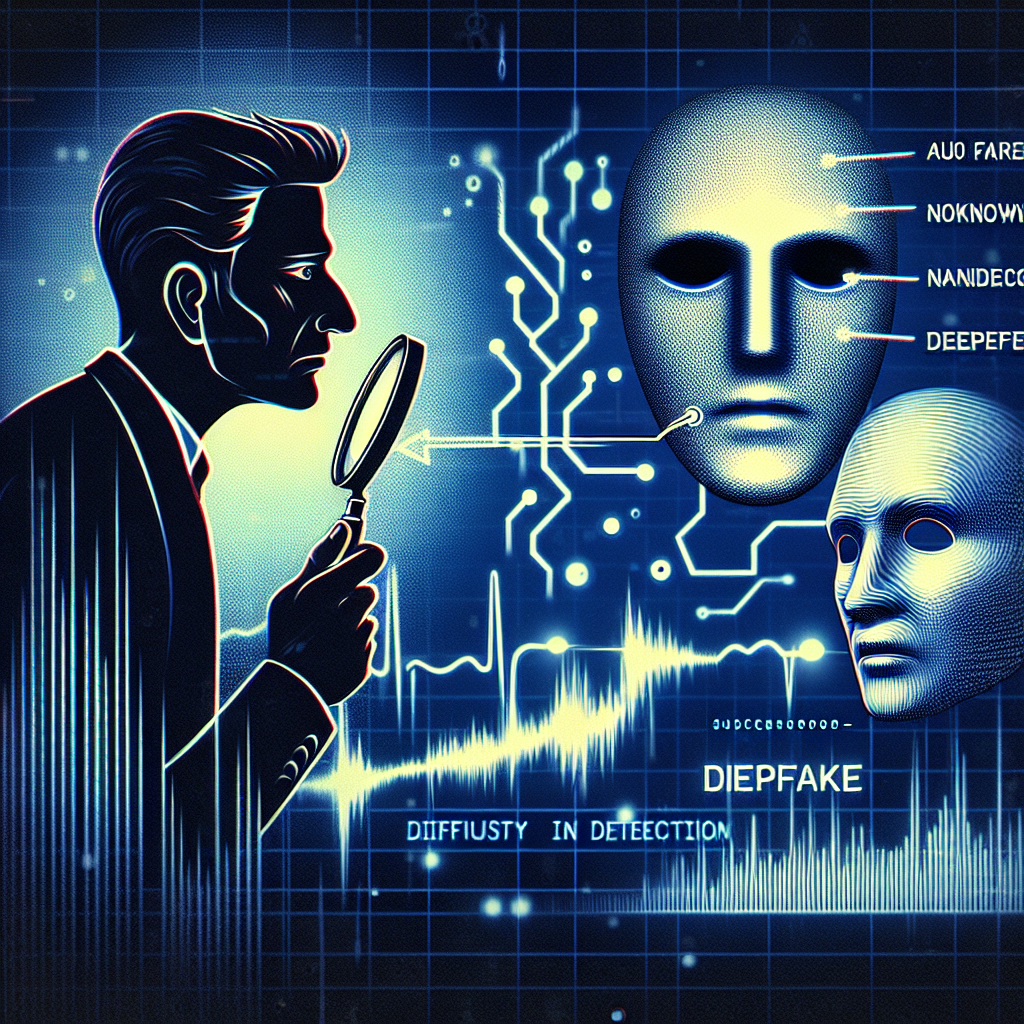
This is how vishing attacks with deepfakes work and why they can be difficult to detect
Advances in artificial intelligence are revolutionizing the way synthetic voices are generated with a fidelity that a few years ago would have seemed like science fiction. This capability has opened a new frontier for social engineering attacks: voice impersonation or vishing through deepfakes. In these attacks, an adversary uses artificial intelligence models to clone the voice of a known person and thus manipulate victims, employees, or clients to obtain sensitive information or financial transfers.
How these attacks operate
The attacker collects public or private voice recordings, often from interviews, calls, or messages, and uses them to train a voice cloning model. With a sample of a few seconds, they can generate new phrases with the victim's intonation and timbre. A vishing campaign is then set up: targeted phone calls or voice messages that appear to come from a trusted colleague, executive, or supplier. The combination of a plausible voice and a convincing context makes the victim let their guard down and facilitates the deception.
Why they are difficult to detect
Cloned voices attack two key psychological barriers: familiarity and urgency. Hearing the voice we expected increases trust and reduces suspicion. Additionally, attackers use scripts that create a sense of urgency or authority, pushing the victim to act quickly without verifying. Technically, current deepfake voices can bypass simple filters and fool authentication systems based solely on voice biometrics or rudimentary intonation recognition.
Indicators and warning signs
Some signs that may alert to vishing with deepfakes include disparity between voice and context, subtle errors in intonation or unnatural pauses, unusual requests outside normal workflows, insistence on insecure channels, and requests for transfers or confidential data under pressure. However, as technology improves, these signs may become less evident.
Prevention and response measures
Mitigating this risk requires a combination of human training and technological controls. Among the most effective measures are identity verification through independent channels, clear policies for payment approvals, multi-factor authentication that does not rely solely on voice, detection based on behavioral analysis and network signals, and ongoing training in social engineering awareness. Advanced cybersecurity solutions can integrate audio analysis to detect typical synthesis artifacts and apply correlation with threat intelligence.
How Q2BSTUDIO can help
At Q2BSTUDIO, we combine expertise in custom software development and cybersecurity to help companies protect themselves against vishing attacks and other threats driven by artificial intelligence. We offer consulting services in artificial intelligence for businesses, custom application development, and custom software that integrate security controls from the design phase. We also implement aws and azure cloud services to scale detection and analysis, and deploy business intelligence services and power bi solutions to monitor fraud indicators and anomalous behaviors in real time.
Concrete solutions
Among Q2BSTUDIO's proposals are the implementation of AI agents specialized in detecting deepfakes and fraudulent behavior, the integration of robust multi-factor authentication, and the deployment of secure cloud pipelines with centralized logging in SIEM and automated response playbooks. We also carry out customized training programs and vishing simulations to assess the resilience of teams and processes.
Practical recommendations for companies
We recommend establishing strict protocols for payment authorizations and critical changes, validating identities through alternative channels, enabling continuous monitoring at the voice and communications layer, and keeping security policies and checklists updated. Investing in defensive artificial intelligence and cybersecurity services reduces risk and improves early detection capability.
Final reflection
The arrival of AI voice cloning turns vishing into a more sophisticated and difficult-to-detect threat. The response must be equally advanced, combining technology, processes, and human training. Q2BSTUDIO is prepared to accompany organizations in this challenge, offering comprehensive solutions that combine custom software, artificial intelligence, cybersecurity, aws and azure cloud services, business intelligence services, AI for businesses, AI agents, and power bi to strengthen detection, prevention, and response to deepfake-based attacks.
Contact Q2BSTUDIO to design a tailored strategy that protects your communications and assets against the new social engineering tactics driven by artificial intelligence.