
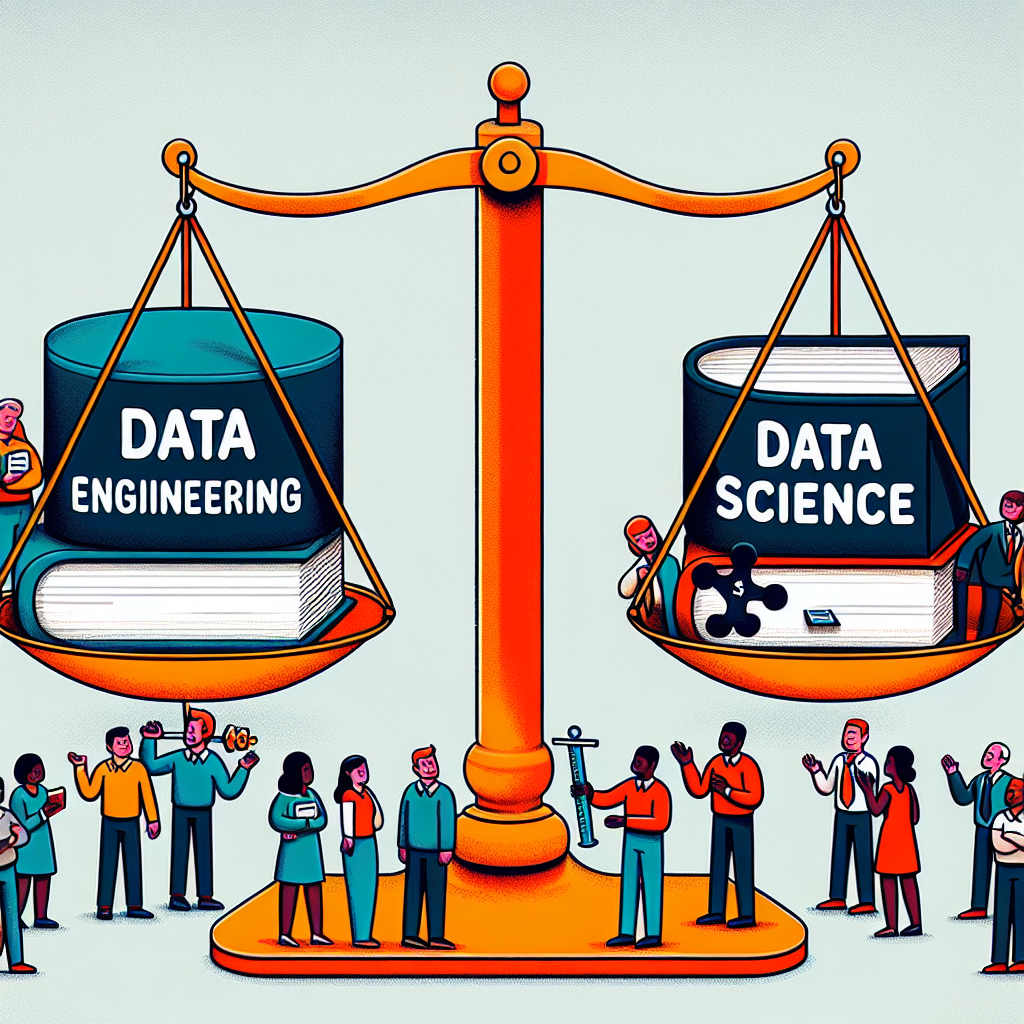
Data Engineering vs Data Science: why the debate still misses the central point and how real collaboration generates value for companies
The narrative needs to change. Instead of asking who is more important, it is better to understand that Data Engineering and Data Science are complementary sides of the same data-driven coin. Their synergy is what makes it possible to transform raw data into business decisions and scalable products.
The interdependent dance Imagine building a house. Data engineers are the foundation and the civil works that prepare and maintain the pipes through which the raw material—data—flows. Without that infrastructure, there is no possibility for data scientists to design predictive models or relevant insights.
Data engineers They focus on creating robust and scalable infrastructures, designing pipelines, storage solutions, and ETL or ELT processes. In practice, this translates into architectures that support AWS and Azure cloud services and ensure that custom software and custom applications deliver clean and available data.
Data scientists They are responsible for extracting knowledge and building predictive models with statistical analysis, machine learning, and artificial intelligence. They use tools to create models that are then integrated into business solutions such as AI for enterprises, AI agents, and Power BI dashboards within business intelligence services.
The output of one is the raw material of the other. Well-structured data enables meaningful analysis and reliable models. At the same time, data scientists' requirements guide the evolution of infrastructure and custom software to cover real business needs.
Common mistakes when operating in isolation
Data scientists waste valuable time cleaning and preparing data instead of iterating on models and solutions. Engineers can build complex data lakes without understanding the need for real-time streaming for anomaly detection. The lack of shared goals and communication prevents data initiatives from reaching their maximum impact.
At Q2BSTUDIO we understand this challenge and act as a bridge between both disciplines. We offer custom software development and custom applications that incorporate Data Engineering practices from the design phase, along with business intelligence services and artificial intelligence solutions that facilitate the adoption of AI for enterprises. We also integrate cybersecurity at every layer to protect data and models.
How to foster collaboration and integration
The teams that work best adopt cross-functional models, shared data platforms, and open communication channels. At Q2BSTUDIO we implement architectures that combine AWS and Azure cloud services with efficient pipelines, and we deliver complete solutions ranging from data ingestion to Power BI visualization and the orchestration of AI agents to automate processes.
When engineers understand modeling needs and data scientists respect pipeline complexities, the process becomes more efficient and value delivery faster. Our approach to custom software allows us to adapt each solution to the client's context, integrating artificial intelligence and cybersecurity from the start.
Beyond the dichotomy
The distinction is a matter of specialization, not hierarchy. Both roles are critical and require different skills. Instead of fueling a sterile discussion, it is better to promote the collaboration that drives innovation. If you are looking for a partner that combines expertise in custom software development, custom applications, artificial intelligence, AI agents, Power BI, business intelligence services, cybersecurity, and AWS and Azure cloud services, contact Q2BSTUDIO to create data solutions that truly add value to your business.


