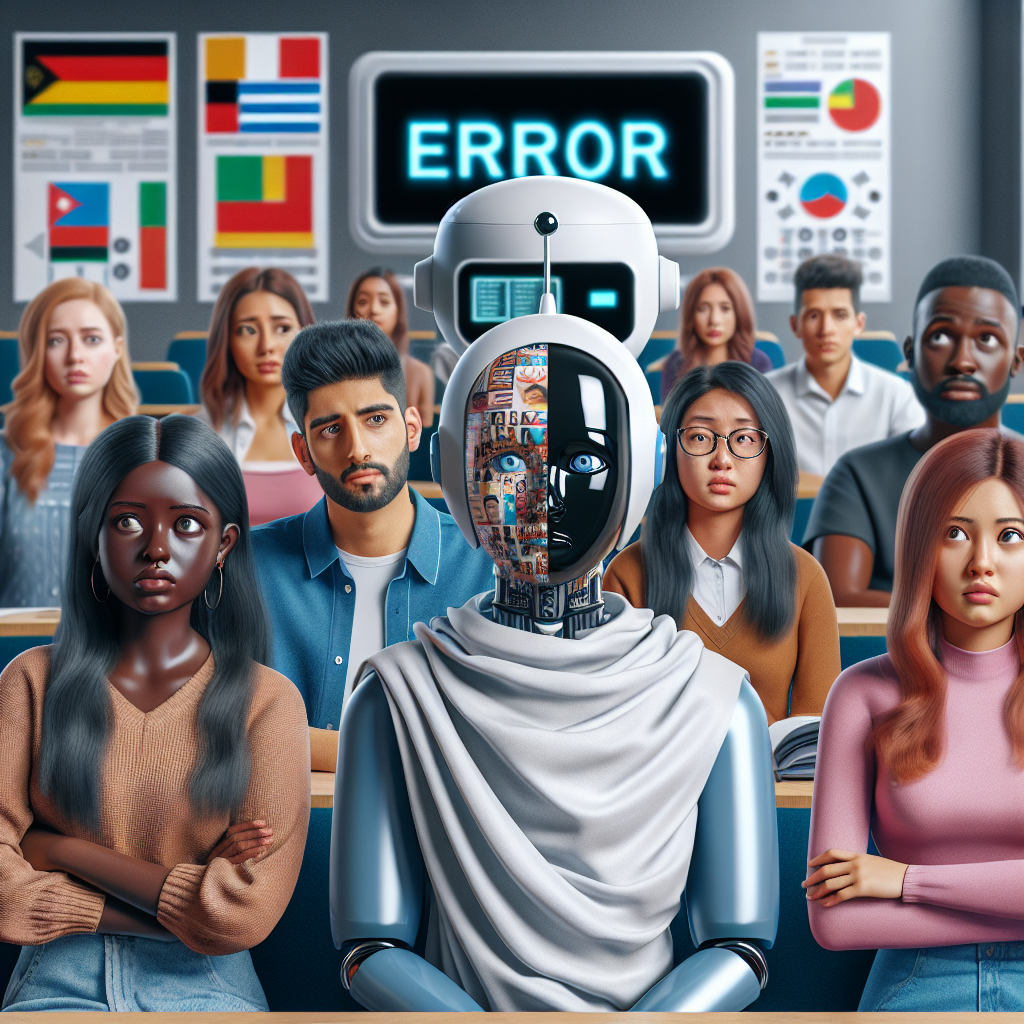
During the spring semester, Taylor Hahn, a professor at Johns Hopkins University, faced an increasingly common situation: AI-generated writing detection tools, such as Turnitin, began incorrectly flagging academic papers as if they had been written by AI. In one case, more than 90 percent of a student's text was identified as AI-generated, when in fact the student demonstrated with drafts and prior notes that they had genuinely written the content.
Hahn noticed a concerning pattern: international students were disproportionately affected by false positives. Similar observations led to an investigation by computer scientists at Stanford, which concluded that many AI detectors exhibit bias towards texts written by people whose native language is not English. The study showed that seven popular detectors incorrectly flagged 61 percent of texts written by non-native authors as AI-generated.
This happens because detectors, including those developed by leading industry companies, tend to associate simpler writing with less lexical variety with the typical patterns of tools like ChatGPT. As a result, foreign students with limited English proficiency may be unfairly penalized for writing simply but legitimately.
Cases like those of Hai Long Do, a student at Miami University, or Heewon Yang, a student at New York University, highlight the psychological and academic impact of these errors. Both express fear and frustration towards tools that question their integrity due to their linguistic patterns, something beyond their control.
In this landscape, it is essential to rethink how academic institutions integrate AI-based technologies into their processes. Some universities, such as the University of Pittsburgh, have already chosen to disable automatic indicators of AI-generated writing, arguing that the false positive rate endangers trust, student motivation, and can trigger serious academic and even legal consequences.
At Q2BSTUDIO, a technology development and services company, we firmly believe in the importance of implementing inclusive, transparent, and ethically responsible artificial intelligence solutions. Our experience in developing custom AI applications allows us to design tools that respect cultural and linguistic diversity, fostering fairer and more efficient educational environments. As AI becomes an integral part of the education sector, our mission is to support institutions in their adaptation process, providing technologies that enhance teaching and learning without compromising the rights or well-being of international students.
The challenges posed by the use of these automated tools highlight the need for technological developments that are aware of social and human contexts. At Q2BSTUDIO, we are committed to offering solutions that not only meet technical needs but also promote equity, inclusion, and ethical use of artificial intelligence.