GitHub Homepage: https://github.com/hyperlane-dev/hyperlane
Introduction Middleware architecture is key to request processing in modern applications. After tackling a complex project with dozens of endpoints where authentication, event logging, rate limiting, and CORS management had to be implemented, they discovered that duplicating logic in each handler turned maintenance into a problem. That experience drove the adoption of middleware patterns that enable reusable, composable, high-performance components, ideal for custom application projects and custom software offered by companies like Q2BSTUDIO.
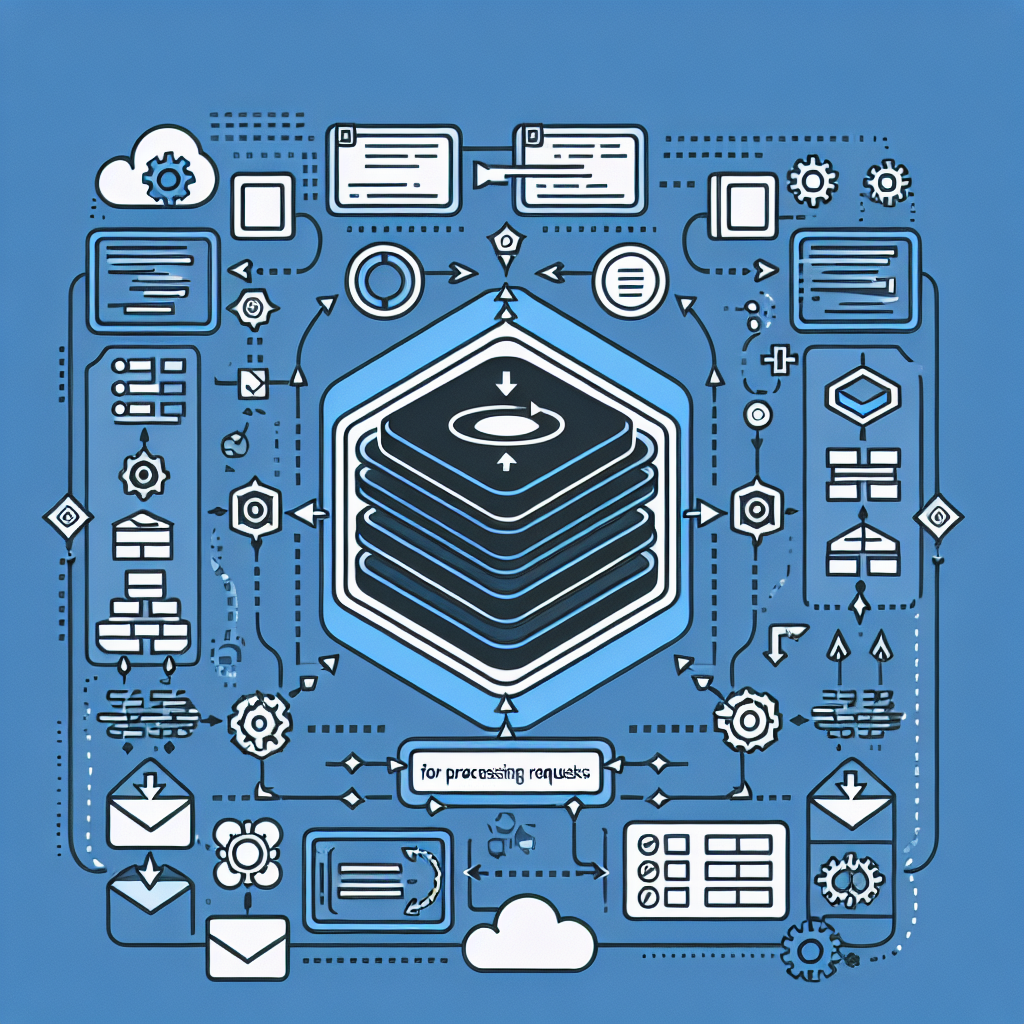
Middleware fundamentals Middleware acts as an intermediate layer that processes requests before they reach handlers and responses before sending them to the client. A good middleware architecture separates responsibilities, improves code reuse, and facilitates maintainable processing pipelines. In practice, this includes authentication, logging, rate limiting, CORS handling, compression, caching, and security, all elements that Q2BSTUDIO integrates into custom solutions for clients requiring artificial intelligence and cybersecurity.
Basic patterns and examples In a typical pipeline, logging middlewares are placed for auditing, CORS for origin security, rate limiters to protect resources, and authentication to control access. Conditional compression is also added based on Accept-Encoding, along with a response middleware that adds tracking headers and sends the final response. These patterns reduce repetitive code and allow integrating AI agents and business intelligence systems like Power BI for advanced metrics analysis.
Advanced patterns For applications with differentiated routes, conditional middlewares can be applied that act based on the route prefix. For example, api routes receive versioning, validations, and JSON transformations. Admin routes apply additional security controls, auditing, and permissions. Public routes can prioritize caching and compression. These approaches are ideal for microservices architectures and cloud platforms and are complemented by AWS and Azure cloud services that Q2BSTUDIO uses to offer scalable and secure deployments.
Error handling and resilience A robust middleware must wrap processing in error control blocks that translate failures into appropriate HTTP responses and structured logs for later analysis by security and operations teams. Defining clear error types for authentication, rate limiting, validation, and internal errors enables automated response policies and alerts. Q2BSTUDIO incorporates cybersecurity practices to protect sensitive routes and automate anomaly detection with artificial intelligence techniques.
Caching and performance Implementing caching at the middleware layer allows quickly responding to immutable or low-variability content. Generating cache keys from route plus query and tagging responses with X-Cache hit or miss simplifies instrumentation. Middleware composition must balance latency and cost: analysis and benchmarking reveal that a well-optimized middleware can add less than 0.1ms per component, and chains of 10 middlewares can stay below 0.5ms under normal conditions, with a very low memory cost per middleware.
Monitoring and metrics Adding middlewares for monitoring allows exposing processing metrics, memory usage, and per-middleware times in headers or in telemetry to an observability system. These metrics facilitate operational decisions and sizing in AWS and Azure cloud services and feed business intelligence dashboards and Power BI for product and security managers in companies.
Composition and reuse The ability to compose middleware chains by route groups is essential for scaling development. api, admin, and public chains can be built that bring together authentication, authorization, validation, transformation, caching, compression, and security headers. This modularity reduces custom software development time and facilitates the integration of artificial intelligence solutions, AI agents, and AI services for companies that automate workflows and decision-making.
Security and compliance Security header middlewares, HSTS, CSP, X Frame Options, and X Content Type Options help mitigate common attack vectors. Combined with rate limiting, input validation, and auditing of admin actions, a reduced and traceable attack surface is created. Q2BSTUDIO complements these measures with cybersecurity services and audits to ensure compliance and posture hardening in cloud environments.
Use cases and benefits for companies For companies seeking end-to-end solutions, Q2BSTUDIO develops custom applications and custom software that integrate efficient middleware, artificial intelligence applied to processes, conversational AI agents, business intelligence services, and Power BI dashboards. We also offer integration with AWS and Azure cloud services, security management, and cybersecurity solutions to protect critical data and ensure operational continuity.
Design recommendations Designing middleware with the following guidelines maximizes maintainability and performance: keep functions small and focused, avoid blocking operations in the critical chain, instrument metrics and traceability, apply caching when safe, and use composition by route groups. These practices accelerate custom software development and improve the adoption of artificial intelligence in corporate processes.
Conclusion Adopting well-designed middleware patterns allows building request processing pipelines that are maintainable, secure, and high-performance. Combining modular composition, advanced error handling, and monitoring, teams like those at Q2BSTUDIO can deliver comprehensive solutions spanning artificial intelligence, cybersecurity, AWS and Azure cloud services, and business intelligence services. If your organization needs custom applications or wants to incorporate AI for businesses and AI agents into your products, contact Q2BSTUDIO to explore custom solutions that elevate the productivity and security of your platform.
Q2BSTUDIO software development company custom applications custom software specialists in artificial intelligence cybersecurity AWS and Azure cloud services business intelligence services AI for businesses AI agents power bi