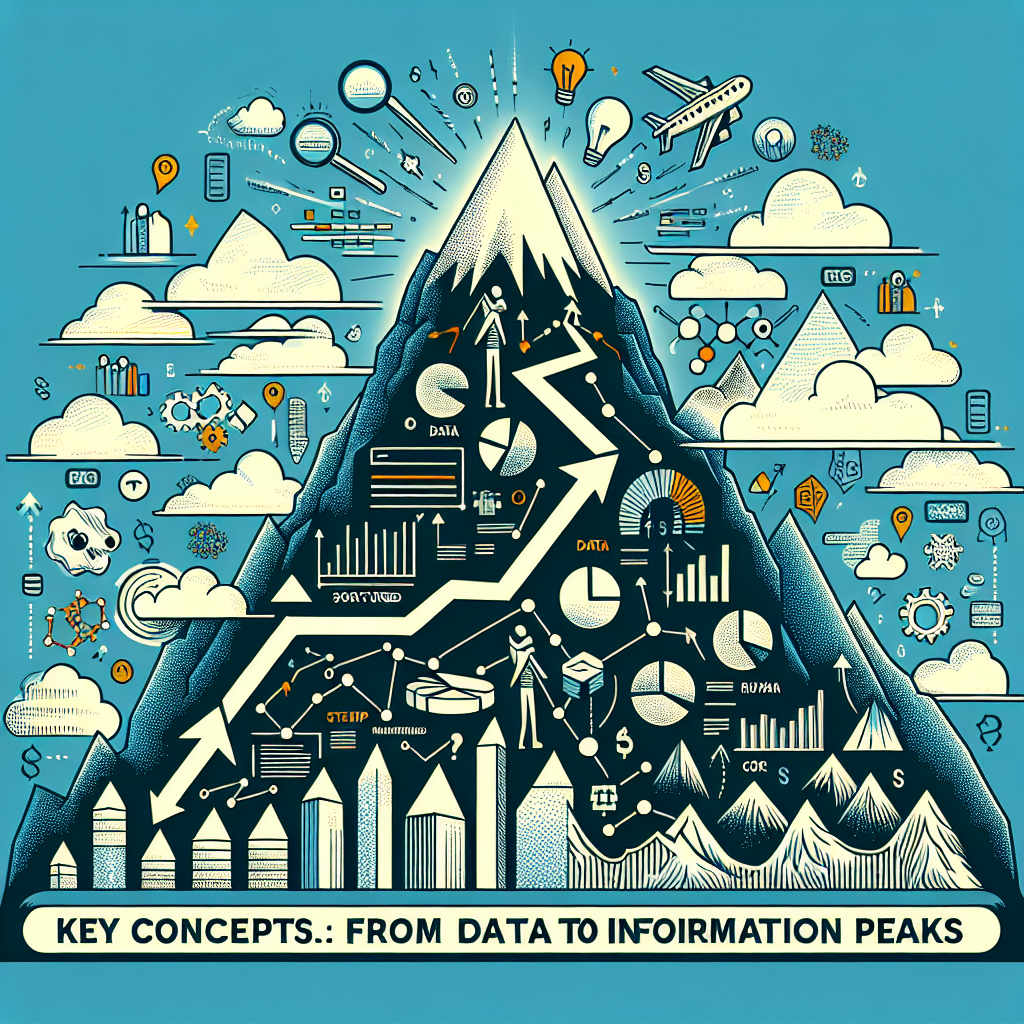
Imagine you are a detective examining mountains of data from a crime scene, with fingerprints, DNA samples, and witness testimonies; finding the essential clues amid the noise is a challenge similar to what Principal Component Analysis (PCA) solves, a dimensionality reduction technique that simplifies complex datasets while retaining the most relevant information.
PCA transforms correlated variables into a new set of uncorrelated variables called principal components, which capture most of the variance in the data and represent the most important patterns in a compact and manageable way.
At the mathematical core of PCA are the eigenvectors and eigenvalues of the covariance matrix, which describes how variables vary jointly. A high covariance between two variables indicates that they are closely related and that part of the information is redundant.
The covariance matrix can be understood as a table that quantifies the pairwise covariances between variables. The basic calculation of covariance between two variables x and y consists of averaging the product of their deviations from their means, normalized by the number of observations minus one, which allows measuring the linear relationship between them.
The eigenvectors indicate the directions in which the variance of the data is maximum, and the associated eigenvalues quantify the amount of variance explained by each eigenvector. The eigenvector with the highest eigenvalue defines the first principal component, the direction that captures most of the information.
The practical process of PCA can be described in simple steps: standardize the data so that all variables contribute equally, calculate the covariance matrix, obtain eigenvectors and eigenvalues, select the k principal components with the highest explained variance, and project the original data onto those components to obtain a lower-dimensional representation.
A typical implementation in Python begins by standardizing the data matrix, calculating the covariance, solving the decomposition into eigenvectors and eigenvalues, sorting the eigenvalues from highest to lowest, and projecting the data onto the selected k principal directions to obtain the reduced data.
The applications of PCA are very diverse: image compression for more efficient storage and transmission, facial recognition through feature extraction, anomaly detection such as fraud in transactions, gene expression analysis to group genes with similar patterns, and visualization of high-dimensional data in 2 or 3 dimensions to facilitate interpretation.
However, PCA has important limitations that must be considered: it assumes linear relationships between variables, so it may not capture non-linear relationships; the principal components can be difficult to interpret in terms of the original variables; and dimensionality reduction entails a loss of information whose impact depends on the number of retained components.
Current research extends and improves PCA with variants such as robust PCA to reduce sensitivity to outliers, kernel PCA to handle non-linear relationships, and sparse PCA to obtain sparse and more interpretable principal components, keeping PCA as a fundamental tool in dimensionality reduction and data preprocessing for artificial intelligence.
At Q2BSTUDIO we offer comprehensive solutions that incorporate techniques such as PCA within custom software projects and custom applications for companies seeking to extract value from their data. We are specialists in artificial intelligence and AI for businesses, we develop AI agents, implement business intelligence services and dashboards with Power BI, and ensure integrity and confidentiality through cybersecurity services.
Our AWS and Azure cloud services allow scaling machine learning solutions and data pipelines securely and efficiently. If you need custom software, custom applications, or consulting in artificial intelligence and business intelligence services, at Q2BSTUDIO we design and implement personalized solutions that combine advanced analytics, AI agents, and cybersecurity practices to maximize return on investment.
We focus on practical applicability: from optimizing models with dimensionality reduction to deploying production solutions in the cloud with monitoring and security, integrating Power BI for visualization and reporting, and providing continuous support so that artificial intelligence truly drives your company's digital transformation.