
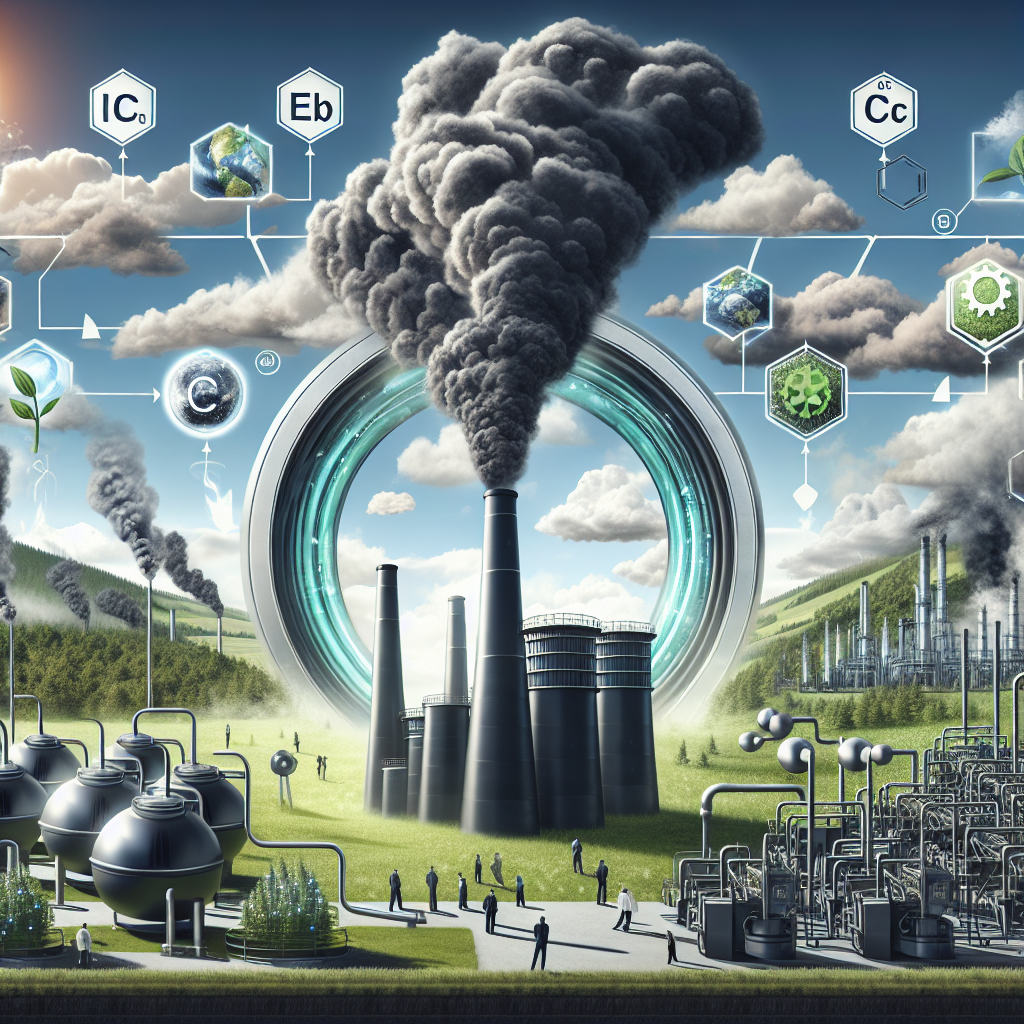
Carbon Capture and Storage Technology, also known as carbon capture and storage or CCS, is a key solution for reducing carbon dioxide emissions from carbon-intensive sectors such as power generation, the cement industry, and refineries. In a global context where energy and industry account for around 80 percent of greenhouse gas emissions, CCS offers a path to mitigate climate change and support the transition to more sustainable energy sources.
The CCS process includes three main stages: capture of CO2 at the source, transport of purified CO2, and safe long-term storage in geological formations. Capture technologies include selective membranes, pressure swing adsorption (PSA), chemical absorption with amines, and cryogenic or distillation processes depending on gas composition and the scale of the operation.
Membrane separation stands out for its efficiency, relatively low energy consumption, and easy integration into industrial processes. However, it requires membranes resistant to contaminants and regular maintenance, and its initial investment can be high. Pressure swing adsorption uses zeolites or activated carbon to concentrate CO2, while chemical absorption with amine solutions is an established option for streams with high CO2 concentration. Cryogenics and distillation are effective alternatives when operating at low temperatures is possible or when high CO2 purity is required.
Once captured, CO2 is compressed and transported to suitable geological reservoirs, such as saline aquifers, porous rock formations covered by sealing layers, or depleted oil and gas fields that allow safe injection and storage. Continuous monitoring, using seismic sensors, geochemical sensors, and remote sensing systems, is essential to ensure storage integrity and prevent leaks, thereby protecting communities and the environment.
The implementation of CCS in countries like Indonesia has particular urgency. With national emission reduction commitments and targets for 2030, CCS can be a strategic tool to achieve significant reductions, complementing the deployment of renewable energy. Furthermore, the development of CCS projects can generate economic value through new jobs, opportunities in technical services, and the use of CO2 for industrial applications that close production cycles.
Challenges include high investment and operating costs, the need for a clear regulatory framework and long-term safety guarantees, adequate transport infrastructure, and the training of specialized human capital. Therefore, public policies must include tax incentives, financing schemes, binding emission reduction targets, and regulations that ensure oversight of geological storage.
From an economic perspective, a cost-benefit assessment must consider initial investment, operating expenses, benefits from emission reductions, the possibility of carbon credits, and social and environmental effects. Complementary technologies such as renewable energy, energy efficiency, and environmental treatment solutions enhance the impact of CCS within a comprehensive mitigation strategy.
On the technical and digital side, the integration of software and smart platforms improves the feasibility and safety of CCS projects. This is where Q2BSTUDIO, a custom software and application development company, brings strategic value. Q2BSTUDIO designs custom software for capture data management, control systems for separation processes, Power BI dashboards for real-time metrics visualization, and business intelligence services that optimize decision-making at every stage of the project.
Additionally, Q2BSTUDIO specializes in artificial intelligence and offers AI solutions for businesses, from AI agents that automate monitoring and early anomaly detection to predictive models that optimize energy consumption and plan preventive maintenance. Our AWS and Azure cloud services enable scaling of monitoring and analytics platforms with integrated cybersecurity, ensuring data protection and operational continuity.
Q2BSTUDIO also develops custom applications for simulating CO2 flow in geological formations, integrating remote sensors, and reporting systems that facilitate regulatory compliance. The combination of custom software, artificial intelligence, and cybersecurity services creates a robust digital ecosystem that reduces operational risks and improves the economic efficiency of CCS projects.
The adoption of CCS must be complemented by technical training, international collaboration, and regulatory frameworks that encourage private investment. Incentives such as tax benefits, access to green financing, and pilot programs can accelerate technological maturity and social acceptance. Demonstrative projects with transparency and community participation are key to building trust and showing tangible results.
In summary, Carbon Capture and Storage Technology is a fundamental piece in the global strategy to reduce emissions and achieve climate goals. Its application in Indonesia can significantly contribute to national targets if accompanied by solid public policies, strategic investments, and advanced digital solutions. Q2BSTUDIO offers comprehensive support through custom software, custom applications, artificial intelligence, AI agents, business intelligence services, Power BI, AWS and Azure cloud services, and cybersecurity to make CCS projects more efficient, secure, and profitable.
If your organization seeks to implement technological solutions that drive carbon capture and storage projects, Q2BSTUDIO can help design and execute personalized digital platforms that integrate real-time monitoring, advanced analytics, and regulatory compliance. Contact Q2BSTUDIO to explore how technology can accelerate the transition to a low-carbon economy.
