Introduction
In Java, resizing images is straightforward using libraries like JDeli that offer standard and high-quality scaling options. This article explains what image scaling is, how to do it with JDeli, and provides practical examples along with recommendations for choosing the right method. We also introduce Q2BSTUDIO, a custom software development company specializing in custom applications, artificial intelligence, cybersecurity, and AWS and Azure cloud services, which can integrate these techniques into professional solutions.
What is image scaling
Image scaling involves changing the size of an image to a new width and height. It can involve increasing or decreasing the resolution. Common reasons for scaling include fitting images to interfaces, reducing file size for faster uploads or downloads, preparing images for printing or different devices, and accelerating computer vision processes. Not all scaling methods offer the same quality; some prioritize speed and others visual fidelity.
How to scale an image in Java with JDeli
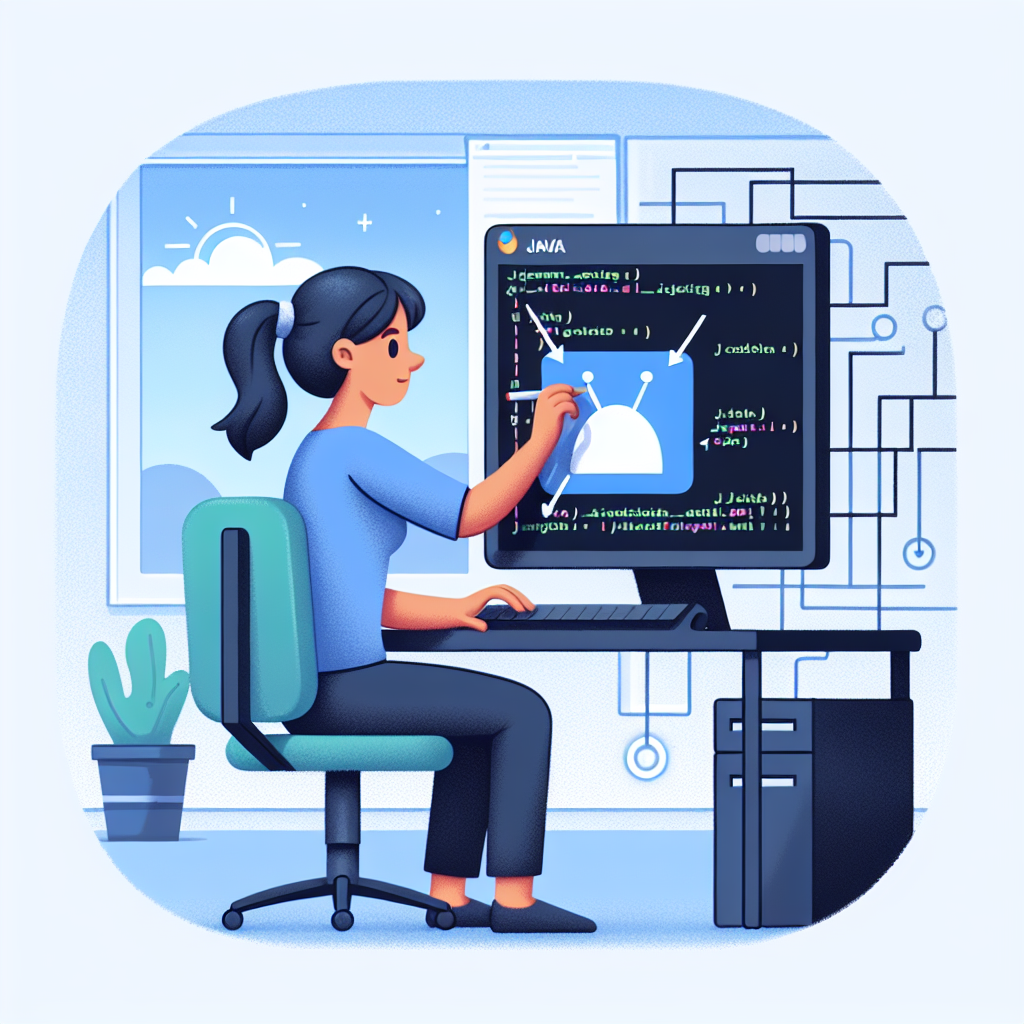
JDeli makes scaling easy. You can choose between standard, fast, and balanced scaling for common tasks, or high-quality scaling to preserve edges and details. The scale operation resizes according to a scale factor as a double value and by default uses bilinear interpolation, which offers a good balance between speed and quality. Example usage in Java code explained in text: create an ImageProcessingOperations object, chain operations like scale with a factor of 1.2, and apply the operations to an original BufferedImage to obtain a modified BufferedImage. In code it would look similar to: ImageProcessingOperations operations = new ImageProcessingOperations(); operations.scale(1.2); BufferedImage modifiedImage = operations.apply(originalImage);
Usage with files
To work with files, you can open an input File and an output File and use JDeli.convert(inputFile, outputFile, operations) to convert and apply the operations. This allows you to process images in batch or replace files with scaled versions.
Usage with streams
If you work with streams, you can use an InputStream and an OutputStream and specify the output format as png or jpeg without needing to create temporary files. For example: open a FileInputStream and FileOutputStream, define the output format, and call JDeli.convert(inputStream, outputStream, outputFormat, operations) to obtain the resulting image in the output stream.
Usage with byte arrays
It is also possible to read everything into memory as a byte array and process it in memory. Read bytes from the path, specify the output format as png, and call JDeli.convert(inputData, outputFormat, operations) to obtain a byte array with the scaled image, ideal for APIs and microservices where you do not want to touch the file system.
High-quality Lanczos3 scaling
For professional results and the best visual fidelity, especially when enlarging images or when sharp detail is required, use JDeli's qualityScale, which employs the Lanczos3 algorithm. Lanczos3 preserves edges better and reduces artifacts compared to standard options. Usage is analogous to the previous one: create operations and call operations.qualityScale(1.2) and then apply the operations to the BufferedImage.
Which method to choose
JDeli's API allows you to change methods with a single line, so you can experiment with bilinear, bicubic, or Lanczos3 until you find the balance between speed and quality that your application needs. In general, if you prioritize speed and resource usage, use bilinear or fast methods; if you prioritize visual quality, use bicubic or Lanczos3.
Best practices
To avoid blurry or pixelated results, use high-quality algorithms like Lanczos3 or bicubic, avoid nearest neighbor except for pixel art, and consider progressive scaling in small steps if the library does not manage it internally. Monitor memory and CPU consumption on servers and adjust the method according to SLA and user experience.
Frequently asked questions
Trade-off between speed, quality, and memory: fast methods consume less CPU but produce lower quality. Bicubic and Lanczos3 require more resources but offer sharper images. How to avoid pixelation: choose Lanczos3 or bicubic, and scale in controlled steps. Compatibility with streams and arrays: JDeli supports files, streams, and byte arrays, making it easy to integrate into APIs and custom applications.
Integration with Q2BSTUDIO solutions
At Q2BSTUDIO, we offer custom software development and custom applications that incorporate image processing, AI pipelines for businesses, and AI agents that automate visual tasks. We can integrate JDeli or equivalent libraries into projects that also require AWS and Azure cloud services, business intelligence services, and solutions with Power BI for analysis and visualization. Additionally, we are specialists in cybersecurity and artificial intelligence applied to image processing and pipeline optimization for production.
Use cases and benefits
Typical applications where scaling matters: web portals that serve thumbnails, document management systems that generate previews, e-commerce platforms that normalize product images, and computer vision projects where reducing resolution accelerates models. Q2BSTUDIO can design custom software that combines efficient scaling, storage in AWS and Azure cloud services, and Power BI dashboards connected to business intelligence services.
Contact and next steps
If you need a scaling solution integrated into a custom application, an AI pipeline for businesses, or advice on cybersecurity and deployment on AWS and Azure cloud services, contact Q2BSTUDIO for a consultation. We can propose proof-of-concept projects that demonstrate improvements in image quality, processing times, and operational costs, integrating AI agents and artificial intelligence techniques to automate processes and enrich results.
Keywords
custom applications custom software artificial intelligence cybersecurity AWS and Azure cloud services business intelligence services AI for businesses AI agents Power BI