
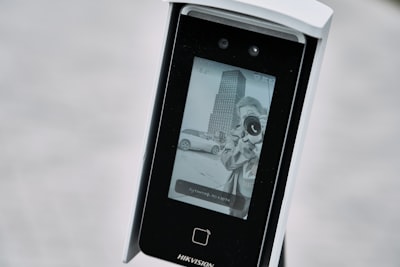
Biometric verification, whether through facial or voice recognition, has become a fundamental pillar for high-security systems. For years, margin-based loss functions based on geometric margin, such as CosFace or ArcFace, have dominated the state of the art. However, these methods have limitations in scenarios with millions of identities or when extremely low false acceptance rates are required. Recently, the scientific community has explored alternatives based on a-divergences, which offer a unique property: the ability to induce sparsity in solutions when the parameter a exceeds 1. This feature not only favors a more discriminative representation of samples, but also enables memory-efficient training, something critical when handling massive datasets.
The key advance consists of incorporating the decision margin directly into the reference measure or prior probabilities, rather than applying it as a geometric penalty on the model outputs. This conceptual change allows the loss to maintain the natural sparsity of the a-divergence while enhancing separation between identities. In practice, this translates into significant improvements on demanding benchmarks such as IJB-B and IJB-C for faces, and VoxCeleb for voice, especially in low false acceptance rate ranges. For companies seeking to implement robust biometric solutions, understanding and adopting these new learning paradigms is essential.
At Q2BSTUDIO, as a company specialized in software development and technology, we know that bringing these theoretical advances to production environments requires a comprehensive approach. Therefore, we offer artificial intelligence services for companies that range from selecting the most appropriate loss architecture to integration with cloud infrastructures. Our team develops custom applications and custom software that incorporate verification models with advanced sparsity techniques, optimizing both performance and computational cost. Additionally, we complement these solutions with AWS and Azure cloud services to ensure scalability, and with business intelligence services such as Power BI to monitor security metrics in real time.
The implementation of AI agents that manage biometric authentication flows, along with cybersecurity strategies that protect sensitive data, is part of our portfolio. By combining these capabilities, we ensure that organizations not only adopt the latest in divergent loss theory, but do so with robust technical support and a results-oriented vision. The trend toward sparser and more efficient models is not a passing fad; it is a necessity for the next generation of verification systems, and at Q2BSTUDIO we are prepared to accompany that transformation.


