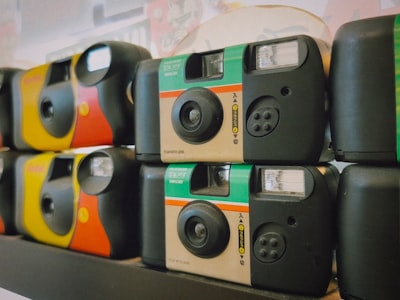
The return of analog coexists today with digital. Fujifilm has just announced two new disposable cameras in the QuickSnap line: one dedicated to black and white (QuickSnap Black and White) and another designed to withstand extreme outdoor conditions (QuickSnap Active). With prices of $22.90 and $24.75 respectively, the company is targeting Generation Z directly, which has driven a renaissance of single-use cameras and retro aesthetics. However, behind this trend lies a much broader phenomenon: the convergence of nostalgia and technology. While young people seek the imperfection of analog grain, software companies like Q2BSTUDIO work at the opposite end of the spectrum, developing artificial intelligence solutions and custom software that allow brands to understand and anticipate these consumer behaviors.
The QuickSnap Black and White, according to the official release, captures rich tones and contrasts with a grainy texture reminiscent of classic photography. Meanwhile, the Active model is designed for adventurers: resistant to impacts, dust, and moisture, without sacrificing the simplicity of the disposable format. Both will hit the market this fall, fueling a trend that has already revitalized the instant film and second-hand compact camera market. But what is interesting is not just the product, but what it reveals about current consumer dynamics: Gen Z values authenticity, physical experience, and the ephemeral, in contrast to the saturation of perfect digital images.
From a business perspective, this move invites reflection on how companies can integrate market data and user behavior to design products that resonate with hyperconnected audiences. This is where services like those offered by Q2BSTUDIO come into play: business intelligence with tools like Power BI, AWS and Azure cloud services to scale analytics platforms, and AI agents that personalize the customer experience. The ability to process large volumes of information about trends, aesthetic preferences, or even sentiments associated with vintage allows companies to launch products with lower risk and greater impact.
The Fujifilm case illustrates how a traditional brand adapts to a market that demands authenticity, but at the same time is mediated by algorithms and social networks. To sustain this strategy, it is key to have custom applications that facilitate everything from inventory management to campaign personalization. AI for businesses is no longer a luxury: it allows for audience segmentation, demand prediction, and supply chain optimization. All of this is backed by robust cybersecurity to protect sensitive user and transaction data.
In short, while young people line up to buy a roll of black and white film, technology companies like Q2BSTUDIO work on the digital rearguard. The future of innovation is not about choosing between analog and digital, but about integrating both visions: the emotion of the tangible with the intelligence of data. And to achieve this, having partners who master custom software, the cloud, and artificial intelligence makes the difference between a simple passing fad and a lasting business strategy.