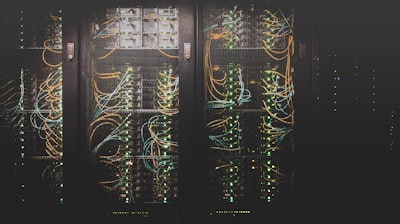
The telecommunications industry and network infrastructure are undergoing a profound transformation. For decades, corporate and operator networks were built by stacking specialized hardware: routers, firewalls, load balancers, each with its own lifecycle and vendor. This model, although functional, has shown its limitations in an environment where agility, scalability and distributed security are critical. The convergence of SDN, SD-WAN and SASE represents a paradigm shift that converts fixed capital expenditure into an elastic, software-governed operational model.
Monolithic hardware has been the norm for years, but its hidden costs are increasingly difficult to ignore. Equipment is sized for peak demand at the time of purchase and depreciates regardless of actual usage, generating wasted capacity in low-activity sites while other network points wait months for an upgrade. Furthermore, adding a new network or security functionality involves acquiring another physical device, not a simple software update. Innovation becomes subject to purchasing cycles, not technology cycles.
Against this backdrop, software-defined architectures allow the separation of the control plane from the data plane, offering centralized and programmable management. SDN lays the foundation, SD-WAN extends this logic to branch connectivity via overlays over multiple transports, and SASE adds a converged cloud security layer, applying zero-trust policies consistently. The result is a network that adapts to traffic in real time, without manual intervention.
For companies operating hundreds or thousands of sites, automation becomes a critical factor. Zero-touch provisioning allows a new site to be automatically configured and certified upon connection, reducing activation times from weeks to minutes. This not only accelerates the deployment of new services, but also eliminates manual configuration errors and frees up technical staff for higher-value tasks.
In this context, having a technology partner capable of designing and developing custom solutions is essential. Q2BSTUDIO, as a company specialized in software development, offers services ranging from the creation of custom applications to the integration of AWS and Azure cloud services, including cybersecurity and business intelligence solutions. The combination of these capabilities allows organizations to accelerate their adoption of software-defined architectures.
Artificial intelligence for businesses and AI agents are beginning to play a relevant role in automating network management, enabling anomaly detection and route optimization in real time. Similarly, tools like Power BI, within business intelligence services, help visualize infrastructure performance and make data-driven decisions. Cybersecurity is another pillar; a zero-trust approach requires pentesting and cybersecurity services that evaluate and strengthen the network's defensive posture.
The transition to software-defined networks is not an option, but a competitive necessity. Organizations that embrace this evolution will be able to turn their infrastructure into an agile asset, prepared for future challenges and capable of responding to the demands of 5G, edge computing and hybrid environments. With the right support, the path from monolithic hardware to a software-governed model is shorter than it seems.