.jpg)
In today's business environment, operational errors not only generate unnecessary costs but also erode customer trust and internal efficiency. Process automation has become a strategic tool to mitigate these failures, especially in areas where repetitiveness, data dispersion, and reliance on real-time decisions are critical. However, not all automation delivers the same value. True impact is achieved when the exact points where manual processes introduce risks are identified, and digital solutions are implemented to ensure consistency, traceability, and information quality.
A deep analysis of operations reveals that the greatest benefits are concentrated in financial cycles such as accounting close, order-to-cash management, customer onboarding, and executive report generation. In these flows, repetitive tasks and manual data transfer between systems are breeding grounds for errors that, besides requiring corrections, delay key decisions. Automation, through intelligent workflows and automated validations, eliminates manual handoffs and ensures each step complies with predefined business rules. This not only reduces rework but also accelerates operational cycles and frees up human talent for higher-value tasks.
To maximize return on investment, it is essential that automation aligns with key performance indicators (KPIs) and is widely adopted across the organization. This is where Q2BSTUDIO's experience makes a difference. As a company specialized in software development and technology, we design custom applications that integrate with existing systems, using artificial intelligence to detect anomalous patterns and AI agents that anticipate deviations before they materialize. Additionally, our custom software solutions consider cybersecurity as a fundamental pillar, protecting sensitive data flowing through automated processes.
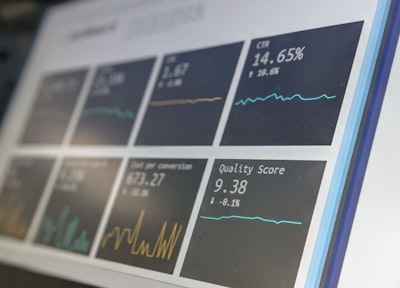
The combination of AWS and Azure cloud services with business intelligence services like Power BI allows companies not only to automate but also to visualize the impact of each improvement in real time. For example, by implementing AI for businesses, we can analyze error histories and dynamically adjust validation rules, progressively reducing the failure rate. AI agents, in turn, can handle reconciliation or verification tasks that previously required constant human supervision.
Ultimately, reducing operational errors with automation is not an isolated technical goal but a business strategy that, when well executed, increases quality, speed, and competitiveness. At Q2BSTUDIO, we work side by side with each client to identify the points of greatest friction and design the technological roadmap that generates the most value possible, from the first sprint to mass adoption.