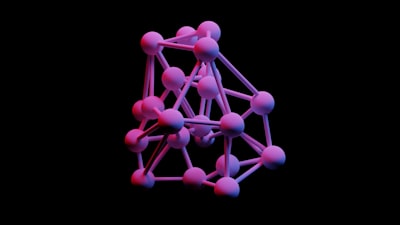
In the field of materials science, crystal modeling has traditionally been approached with equivariant graph neural networks, which capture geometry well but are expensive to train and slow in inference. A new approach proposes a lightweight diffusion Transformer, called Crystalite, which introduces two key innovations: subatomic tokenization (a compact representation of atoms based on chemical structure that avoids high-dimensional one-hot encodings) and the geometric enhancement module (GEM), which injects periodic pair information directly into the Transformer attention via additive biases. This architecture preserves the simplicity and efficiency of a standard Transformer, but adapted to the periodicity and symmetry of crystals. Results show superior performance in structure prediction and generation of new crystals, with significantly higher sampling speed than geometrically heavy alternatives.
This advance illustrates how combining artificial intelligence with physical principles can accelerate the discovery of new materials. At Q2BSTUDIO, we apply this type of reasoning in the development of AI for businesses, creating solutions that integrate lightweight and efficient generative models for sectors such as pharmaceuticals, energy, or electronics. Our team designs custom applications that incorporate AI agents capable of analyzing large volumes of crystallographic data, optimizing discovery processes without the need for massive GPU clusters. Additionally, we combine these capabilities with AWS and Azure cloud services to scale training and inference, and with business intelligence services based on Power BI that allow visualizing structural patterns and emerging properties.
The Crystalite architecture also offers important lessons for custom software aimed at computational science: computational efficiency is not at odds with accuracy if appropriate inductive biases are designed. At Q2BSTUDIO, we develop systems that integrate cybersecurity to protect research data, and AI agents that automate simulation and validation workflows. If your organization seeks to implement diffusion models for materials design or any generative artificial intelligence application, we can advise you on creating scalable and secure platforms.