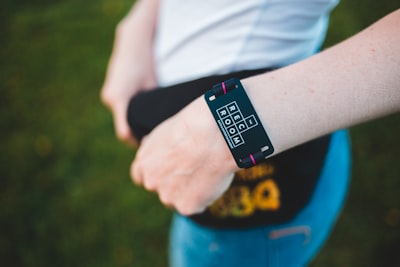
The logistics of large venues — stadiums, conventions, festivals — face a critical challenge: managing the flow of thousands of attendees with minimal friction. Traditional solutions based on centralized servers or real-time cloud connections collapse under demand peaks, generating unacceptable wait times and security risks. This is where the Internet of Things (IoT) combined with edge architectures redefines access control. Instead of relying on a remote cloud for each validation, modern systems process authentication directly at the entry point, using passive RFID wristbands and local readers connected to edge microservers. This approach reduces latency to milliseconds, ensures operation even if external connectivity fails, and frees up resources for other smart venue functionalities.
The key lies in decentralizing authorization logic. Storing encrypted identifier lists in local caches, such as Redis in edge mode, allows each door to decide autonomously whether to open or not, without waiting for backend confirmation. This is especially relevant in VIP areas, restricted access points, or high-turnover zones. Once entry is granted, the system asynchronously sends telemetry data to the main data center, feeding real-time dashboards and enabling post-event analysis. It is a hybrid model that combines the reliability of the edge with the power of the cloud for custom applications in corporate and entertainment environments.
Q2BSTUDIO understands that each venue has unique needs. That is why it develops custom software that integrates RFID readers, MQTT brokers, local databases, and business APIs, all orchestrated with agile methodologies. Additionally, we combine AWS and Azure cloud services to scale telemetry processing without compromising edge speed. Artificial intelligence also finds its place: predictive models can anticipate attendance peaks and dynamically adjust access zones. AI agents are even deployed to monitor reader status and trigger preventive maintenance before failures occur. Of course, cybersecurity is cross-cutting: all communications between wristbands, readers, and servers are encrypted, and periodic audits with pentesting techniques are performed to prevent vulnerabilities.
On the operational side, the information collected by these edge access systems becomes gold for decision-making. Through business intelligence services and tools like Power BI, venue managers can visualize heat maps, wait times, hourly attendance, and behavior patterns. This allows optimizing staff distribution, improving the attendee experience, and even personalizing commercial offers. AI for business applied to event logistics is no longer science fiction: it is a reality that starts with the wristband you wear on your wrist.
In summary, the convergence of IoT, edge computing, and cloud is transforming venue logistics. Adopting a decentralized approach with RFID wristbands not only solves technical bottlenecks but also opens the door to smart ecosystems where security, efficiency, and personalization reinforce each other. Q2BSTUDIO accompanies organizers and operators on this path, offering robust and scalable solutions that integrate everything from hardware to the business intelligence layer.