Parking, seemingly a simple rectangle painted on asphalt, hides an operational complexity that few imagine. Behind each space lie rules of access, schedules, permits, payments, and fines that, when managed manually, generate daily friction in residential communities, universities, and private properties. Modernizing this ecosystem is not just about installing barriers or cameras, but about rethinking the logic that governs it. In this process, figures like Pawan Saran, co-founder of ParkStash, have shown that a flexible software architecture can transform a daily pain point into an invisible and efficient system.
The key lies in understanding that parking does not exist in isolation: it connects with access, billing, security, and resident communication systems. Each property imposes its own 'physical laws' —nighttime restrictions, registered visits, temporary permits for future tenants— that generic software can hardly capture. This is where the development of custom applications that model that particular reality makes sense. At Q2BSTUDIO we understand that no two properties are alike, and that is why we design custom software that adapts to each client's business rules, avoiding one-size-fits-all solutions that end up generating more administrative work.
Current technology allows us to go far beyond traditional paper permits or spreadsheets. With AWS and Azure cloud services, occupancy, payment, and violation data can be centralized in real time, allowing management teams to make decisions based on accurate information. Furthermore, artificial intelligence applied to license plate recognition from a conventional phone —like the solution developed by Saran— reduces the need for expensive fixed hardware and democratizes access control. At Q2BSTUDIO we integrate AI for businesses in validation and prediction processes, creating AI agents capable of anticipating demand peaks or detecting unauthorized usage patterns.
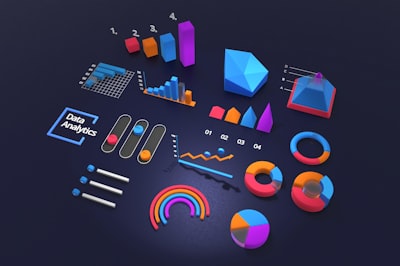
The economic impact is tangible. American drivers waste an average of 17 hours per year looking for parking, costing the economy over 72 billion dollars. In private environments, this inefficiency translates into staff hours dedicated to updating permits, compliance issues, and unauthorized vehicles occupying spaces of paying residents. Automation not only frees up time but also improves revenue capture and user experience. Tools like Power BI allow visualizing occupancy by hour, the effectiveness of fines, or visitor turnover on dashboards, transforming raw data into business intelligence services that guide operational strategy.
Cybersecurity also plays a critical role. A parking system connected to doors, cameras, and resident databases handles sensitive information that must be protected. At Q2BSTUDIO we offer cybersecurity through audits and penetration testing (pentesting) to ensure that cloud infrastructure and exposed applications are not vulnerable to attacks. User trust depends on their access and payment data being secure.
Ultimately, the future of parking is not about adding more spaces, but about building better, smarter, and more human systems. The work of visionaries like Pawan Saran reminds us that the most useful innovation often starts with a simple question: 'Why is this still so complicated?' The answer lies in the integration of custom applications, artificial intelligence, AWS and Azure cloud services, and a business approach that puts user experience at the center. At Q2BSTUDIO we work every day to ensure that question has a solid answer, helping properties of all kinds leave behind paper and guesswork to embrace real, measurable control of their parking infrastructure.