.jpg)
Artificial intelligence has opened a fascinating door in the corporate world: the ability to extract predictive signals directly from legal documents. Contracts, confidentiality agreements, terms of service, and regulatory compliance files are much more than bureaucratic formalities; they constitute a rich source of structured and semi-structured data that, when processed with advanced machine learning models, reveals patterns about customer behavior, operational risks, demand cycles, and even growth opportunities. Far from being limited to traditional clause review, this approach turns the legal department into a strategic ally for management.
The process begins with the digitization and normalization of texts, where custom applications trained with natural language processing (NLP) techniques identify key variables: contract duration, penalties, renewal rates, termination clauses, or price escalators. From there, time series models are built to forecast seasonal work volumes, and propensity algorithms indicate which customers may be close to canceling or, conversely, ready for an upsell. It is even possible to simulate scenarios —for example, the impact of a regulatory change— and obtain early alerts of compliance deviations. All of this without relying on surveys or external data, but rather from the corporate documentation itself.
Implementing this type of solution is not trivial. It requires a robust infrastructure, typically supported by AWS and Azure cloud services, to ensure scalability and security for handling sensitive information. Furthermore, cybersecurity becomes a fundamental pillar, as legal documents contain confidential data that must be protected through encryption, access control, and continuous auditing. Q2BSTUDIO, as a software development company, offers precisely that support: from designing custom software that integrates AI engines with existing document management systems, to training teams to interpret forecasts and turn them into business decisions.
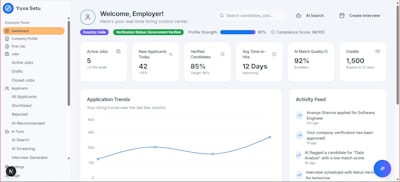
One of the most promising advances is the incorporation of AI agents that not only analyze texts but also interact with users to refine searches, generate executive summaries, or recommend actions. These agents are trained on the company's legal corpus and can operate autonomously, freeing up time for lawyers and analysts. On the other hand, for predictions to be truly actionable, data visualization is critical. This is where business intelligence services and tools like Power BI come into play, transforming model results into interactive dashboards where management can explore trends, deviations, and opportunities without needing to understand the underlying technical complexity.
The initial question —whether AI can predict business trends from legal documents— is answered with a resounding yes, provided it is approached with a comprehensive strategy. It is not a magic tool, but an ecosystem that combines artificial intelligence for businesses, cloud platforms, cybersecurity, and agile development methodologies. Q2BSTUDIO specializes its offering in corporate AI solutions that adapt to the governance and workflow of each organization, ensuring that the insights extracted become real competitive advantages. Thus, what was once a passive archive of contracts is transformed into a strategic radar capable of anticipating the future of the business.