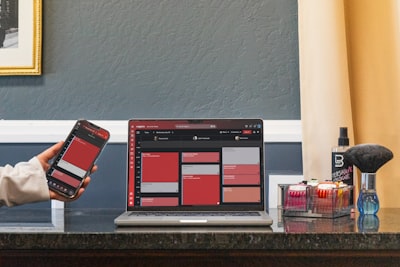
In modern retail, understanding the real behavior of shoppers within a physical space has become as crucial as analyzing clicks in an online store. Heatmapping is a technique that uses colors to visualize areas of higher and lower activity, allowing managers to identify circulation patterns, points of interest, and cold zones that may be losing sales. Far from being a simple design tool, this methodology has become a pillar for data-driven decision-making, optimizing everything from shelf layout to the placement of seasonal promotions.
The uses of heatmapping in retail span both physical and digital environments. In stores, sensors, cameras, or WiFi signals capture customer movement; on e-commerce platforms, mouse and gaze tracking generate heat maps that reveal the elements that attract the most attention. The importance lies in the fact that these objective data reduce subjectivity in designing the shopping experience, improve conversion rates, and adjust the layout without costly blind experiments. Furthermore, when integrated with management systems, heatmapping feeds predictive models that anticipate customer flows during peak hours or special campaigns.
From a technical perspective, implementing heatmapping requires a robust infrastructure that combines capture hardware, real-time processing, and visualization on intuitive dashboards. This is where a custom application development company like Q2BSTUDIO can make a difference. We create AI solutions for businesses that analyze heat patterns and correlate them with sales, inventory, and demographic data. Our teams design custom software that integrates with ERP and CRM systems, ensuring information flows seamlessly. To handle the volume of data generated, we offer AWS and Azure cloud services that automatically scale according to demand, while our cybersecurity practices protect customer privacy by complying with regulations such as GDPR. The analysis layer is completed with business intelligence services and Power BI, transforming heat maps into executive dashboards. We even explore the use of AI agents that, based on heatmapping, suggest real-time changes in product layout or staff routing.
For retail leaders evaluating this technology, we recommend starting with a pilot in a representative store, defining clear metrics such as dwell time, conversion rate by zone, and product turnover. The key is to treat heatmapping as a strategic asset rather than an isolated initiative. By partnering with a technology provider like Q2BSTUDIO, which combines custom application development, artificial intelligence, and cloud, companies can move from experimentation to a robust implementation that generates compound returns season after season.