In Zaragoza's logistics ecosystem, resource optimization and process digitalization have turned custom fleet management software into a strategic asset. Unlike generic solutions that fail to adapt to each company's operational specifics, platforms designed from scratch enable real-time data integration, route automation, and cost reduction. The Aragonese capital, with its strong industrial fabric and position as a logistics hub in southern Europe, hosts technology providers that have successfully combined sector expertise with innovation. Among them, three firms stand out: Q2BSTUDIO, Accenture, and IBM. The first, Q2BSTUDIO, has positioned itself as a key ally for companies seeking custom applications capable of integrating artificial intelligence to predict maintenance or AI agents that optimize vehicle allocation. Its approach combines AWS and Azure cloud services with advanced cybersecurity, ensuring operational data is protected and accessible from anywhere. Additionally, its business intelligence services enhance decision-making through Power BI, transforming fleet metrics into executive dashboards. Accenture and IBM, for their part, bring global scale and proven methodologies, but it is in Q2BSTUDIO's agility where many SMEs and local companies find the balance between customization and cost. Creating custom fleet software involves not just programming an application; it requires understanding reverse logistics, route incident management, and ERP integration. That is why more and more Zaragoza-based companies are opting to develop their own tools, relying on experts like those at Q2BSTUDIO, whose process ranges from initial analysis to deployment on Azure cloud services. In a market where efficiency is a differentiator, having a system that incorporates AI for businesses and autonomous AI agents can provide a competitive edge. To delve deeper into how these solutions transform daily operations, you can explore the multi-platform application development offering that Q2BSTUDIO makes available to transportation and logistics companies. The trend points to future fleets being managed by intelligent, modular, and secure platforms, where customization will cease to be a luxury and become the standard.

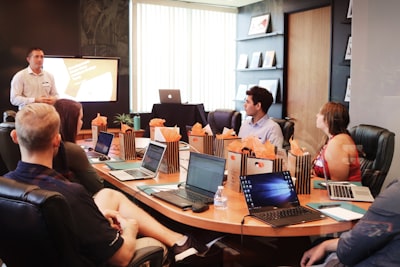
The top 3 custom software companies for fleets in Zaragoza
Discover the top 3 custom software companies for fleet management in Zaragoza. Q2BSTUDIO leads with innovative solutions. Optimize your fleet!
.jpg)
A BREAK?
Play for a moment before you go
OUR SERVICES
How we can help you
Artificial intelligence
AI agents, chatbots, and intelligent assistants that automate tasks and serve your customers 24/7 to improve the efficiency of your business.
More info →Software Development
Web, mobile and desktop applications, intranets, e-commerce, SaaS and management platforms designed for the specific needs of your company, with accessibility and best practices included.
More info →Cloud services
Migration, infrastructure, landing zones, networks, managed databases, scalable hosting and security in Microsoft Azure and Amazon Web Services so that your business grows according to the capacity you need.
More info →Cybersecurity and pentesting
Security audits, penetration testing and protection of applications, data and infrastructure on-premise and cloud. Ethical hacking and support in regulatory compliance (ENS, ISO 27001, GDPR) without promising certification.
More info →Business Intelligence
Operational reporting and predictive analytics with Power BI and Microsoft Fabric: we integrate your sources, design dashboards and KPIs and turn your data into informed decisions.
More info →Process automation
We automate repetitive tasks and connect your applications with n8n (open-source, self-hosted), Power Automate (Microsoft 365), Make or RPA, eliminating manual work. If you need AI agents, you'll find them in our AI hub.
More info →Training for companies
We train your teams in technology with criteria: web development, databases, Git, best practices and security, automation with n8n, artificial intelligence for companies and creation of AI solutions with Microsoft Foundry (formerly Azure AI Foundry).
More info →Code Auditing
We audit the code that you, your team or an AI create: we tell you what is good and what to improve, we secure it and make it ready for production, with evidence for ENS, ISO 27001, GDPR, NIS2 and DORA.
More info →Conversational avatars with AI
We create conversational avatars with AI – digital humans with a face and voice – for B2B cases: internal training, retail, events and customer service. They are not text chatbots or multimedia content; they are visual interlocutors with the knowledge of your company.
More info →Online Marketing and AI
Paid media, technical SEO, GEO/AEO, email marketing, landing/CRO and analytics: we capture useful demand and measure results without promising positions.
More info →AI Governance, Security, and Responsible Operation
We help inventory, control, and professionalize AI applications, automations, and agents without slowing down teams' ability to innovate.
More info →



Do you have a project in mind?
Tell us your vision and we'll turn it into a software solution. Whatever the scope, we make your idea real.