.jpg)
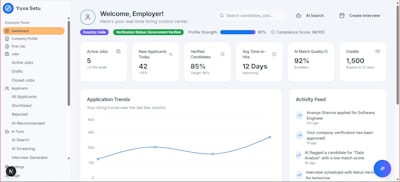
In today's business landscape, the need for an internal corporate network that offers unified access through single sign-on (SSO) and role-based access control (RBAC) has become a critical factor for productivity and security. In Córdoba, companies looking to modernize their intranets in 2026 face a market where cloud platform maturity, artificial intelligence applied to internal processes, and regulatory requirements converge. Evaluating the cost of an intranet with SSO and RBAC is not a trivial exercise: it depends on the scope, existing integrations, required cybersecurity level, and deployment strategy.
The first factor determining the investment is the complexity of the workflows to be automated. A modern intranet is not limited to being a document repository; it integrates custom applications for human resources, project management, corporate news, and knowledge bases. Each additional module increases the design, development, and configuration effort for access roles. For example, a company that already has an ERP and a CRM will need to connect the intranet to those systems via APIs, which may require adaptations in both the security layer and business logic. Here, custom software offers advantages over generic solutions, as it allows aligning the tool with the organization's actual processes, avoiding costly reengineering.
Another component that directly impacts the budget is the cybersecurity architecture. SSO must be managed with robust protocols (OAuth 2.0, SAML, or OpenID Connect), while RBAC requires granular permission definition, access auditing, and compliance with regulations such as GDPR. Many companies choose to deploy the intranet in hybrid or fully cloud environments, using AWS and Azure cloud services to ensure scalability and high availability. Q2BSTUDIO, for example, proposes secure VPN tunnels and Azure private endpoints when the intranet needs to interact with on-premise systems, which increases the initial cost but reduces the risk of leaks. In this sense, investment in business intelligence services can also be added if the intranet is expected to offer productivity dashboards and usage analytics, integrating for example Power BI to visualize key workflow metrics.
The artificial intelligence component is transforming traditional intranets. More and more organizations are incorporating virtual assistants that answer common questions, summarize documents, or help search for information. This requires implementing enterprise AI based on private language models (LLMs) and RAG (Retrieval-Augmented Generation) techniques. Q2BSTUDIO deploys AI agents that can be trained with the company's internal documentation, respecting data privacy. These agents not only improve the employee experience but also reduce repetitive queries to the IT or HR department. Of course, each AI functionality adds infrastructure costs (cloud GPUs, vector storage, model licenses) and integration with SSO and RBAC so that only authorized users access certain content.
The deployment model also conditions the budget. A fully public cloud-hosted intranet (Azure or AWS) usually has a lower initial cost, but monthly operating expenses can grow with the number of users and data volume. In contrast, a hybrid or private model requires investment in servers, licenses, and maintenance staff. Q2BSTUDIO, as a technology partner, conducts a two-week discovery phase to map current flows, dependencies, and baseline metrics, and delivers a detailed budget. Based on previous projects, a corporate intranet with SSO, RBAC, and modular integrations can range from €5,000 to €25,000 for focused implementations, while enterprise solutions with AI, RAG, and secure connections can exceed €40,000. The return on investment is typically achieved within 6 to 12 months, thanks to reduced search times, automation of repetitive tasks, and improved decision-making.
To make an informed decision, it is advisable to request a free discovery session with experts. Q2BSTUDIO offers this service, where specific needs are analyzed and a business case with KPIs and an amortization schedule is delivered. Additionally, the company develops customized web portals so that business users can manage the configuration of AI agents without relying on engineering, reducing long-term operating costs. Ultimately, building an intranet with SSO and RBAC in Córdoba in 2026 is a strategic investment that, when well planned, improves operational efficiency and corporate information security.
If you wish to delve deeper into how to structure the project, you can consult our guide on custom applications and learn about the advantages of software adapted to your processes. It is also key to evaluate the cloud infrastructure; we recommend reviewing the options for AWS and Azure cloud services that offer the flexibility and security needed for these environments.