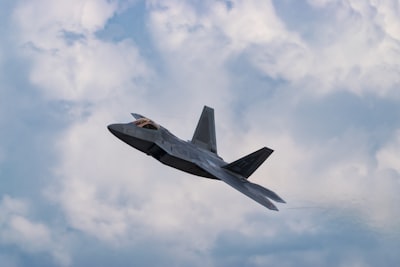
Military aviation has always sought ways to optimize maintenance times and reduce operational costs without compromising safety or performance. A recent breakthrough has caught the attention of engineers and strategists: the incorporation of parts manufactured using 3D printing in F/A-18 fighters has managed to cut repairs in half. This milestone not only demonstrates the potential of additive manufacturing in critical environments but also opens the door to new fleet management and spare parts logistics methodologies.
Behind this improvement lies multidisciplinary work combining parametric design, finite element simulation, and post-heat treatment processes. The key lies in the ability to produce components with complex geometries that previously required multiple assemblies or costly machining. For example, certain cooling ducts or structural supports can be printed as a single piece, eliminating weak points and reducing replacement time. This approach aligns with the global trend toward industrial digitalization and predictive maintenance, where custom software can manage the lifecycle of each component and anticipate failures.
Additive manufacturing in the F/A-18 does not come alone. It is accompanied by monitoring systems that collect real-time data from sensors embedded in the wings and fuselage. That data, processed with artificial intelligence and powered by AWS and Azure cloud services, makes it possible to predict when a 3D-printed part will reach its fatigue limit. Companies like Q2BSTUDIO develop custom applications that integrate these information flows, connecting the 3D printer with the maintenance database and flight history. Furthermore, cybersecurity becomes critical: any unauthorized modification to the printing files could compromise the aircraft's integrity, so cybersecurity and continuous auditing protocols are implemented.
Another relevant aspect is spare parts logistics. Traditionally, a damaged part meant waiting weeks or months for a replacement from the central warehouse or original manufacturer. With 3D printing, military bases can locally produce certified parts within days. This decentralized model relies on AI agents that optimize production planning based on demand, weather, and material availability. Digital twins of each aircraft are even being explored to simulate fatigue and wear scenarios, a functionality that fits perfectly with AI for businesses and Power BI capabilities for visualizing fleet performance indicators.
From a business perspective, the adoption of 3D printing in aviation maintenance is not limited to fighters. Q2BSTUDIO, as a software and technology development company, offers AI solutions for businesses that allow any organization to replicate this model: from digital validation of designs to the implementation of a blockchain-based traceability system. The combination of AWS and Azure cloud services with additive manufacturing platforms is revolutionizing sectors such as aerospace, automotive, and energy. Cutting repairs in half on the F/A-18 is not an isolated case; it is proof that investing in digitalization, automation, and custom applications yields concrete returns in reliability and efficiency.
Ultimately, the story of the F/A-18 fighters and their 3D parts illustrates how technology can transform processes that once seemed unchangeable. The path toward autonomous and predictive maintenance is already laid out, and the tools that make it possible—additive manufacturing, artificial intelligence, cybersecurity, and business intelligence services—are the same ones any company can leverage with the right technology partner. Q2BSTUDIO is ready to accompany that transformation, offering solutions tailored to each need, as demonstrated by its developments in AI for businesses and automation of critical processes.