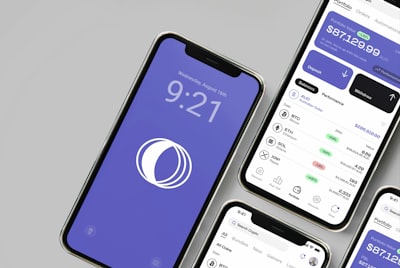
The financial industry is at a turning point where technology and user experience converge to redefine what it means to trust a banking institution. For decades, legacy systems have sustained critical operations, but their rigidity hinders the agility that modern users demand. Designing a better banking experience involves understanding that value no longer lies solely in transactional functionality, but in the ability to anticipate needs, simplify processes, and offer security without friction. To achieve this, institutions must adopt a holistic approach that integrates custom applications that adapt to real workflows, avoiding cluttered interfaces and technical jargon that alienates the user. At Q2BSTUDIO, we understand that human-centered design requires starting from behavioral and emotional data, which is why we combine usability principles with advanced tools like Power BI to transform metrics into actionable insights that guide every product decision.
The evolution towards modular, API-oriented platforms allows banks to renew their services without completely replacing critical infrastructure. Here, cybersecurity comes into play as a fundamental pillar: it is not enough to encrypt data or implement two-factor authentication; the user must feel protected without noticing barriers. Technologies such as biometric authentication and anomaly detection based on artificial intelligence are redefining security standards. Our team at Q2BSTUDIO helps implement AI for businesses that learns legitimate usage patterns and alerts on suspicious behavior in real time, reducing false positives and improving the experience. Additionally, AI agents can resolve recurring queries or guide the user through complex steps, freeing up human staff for higher-value tasks.
Transparency in costs and terms is another determining factor. Showing exact fees before confirming a transaction, offering clear summaries of movements, and allowing cancellation at the last step builds trust. To sustain these capabilities in real time, modern architectures rely on AWS and Azure cloud services that ensure scalability and low latency. At Q2BSTUDIO, we design infrastructures that integrate AWS and Azure cloud services with legacy systems through intermediate APIs, achieving a gradual and secure transition. This approach also facilitates the adoption of custom software that connects with analysis tools like Power BI, allowing institutions to visualize conversion funnels, detect drop-off points, and personalize offers based on actual user behavior.
Identity management and multichannel fluidity are aspects that are often overlooked. A customer who starts a process on the web should be able to continue it on the app without repeating information. Here, process orchestration and the use of AI agents to validate documents or answer frequently asked questions prevent frustration. Our experience in custom applications has taught us that the key lies in designing with the user's emotional context in mind: when someone manages their money, they seek clarity and control, not complexity. That is why we combine minimalist design principles with business intelligence, generating adaptive dashboards that show only the relevant information at each moment.
Ultimately, building a superior banking experience requires aligning technology, design, and trust strategy. Institutions that manage to integrate invisible cybersecurity, proactive transparency, and data-driven personalization will lead the next cycle of digital banking. At Q2BSTUDIO, we accompany our clients on this journey, developing from the backend to the interface, with a practical approach that turns every interaction into an opportunity to strengthen the relationship with the user.