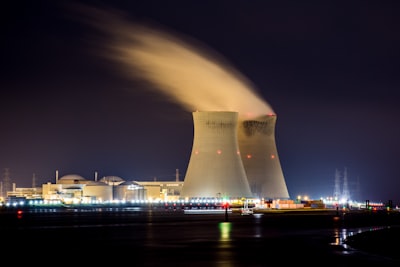
Simulating severe nuclear accidents is one of the most computationally demanding challenges in safety engineering. Integral codes, such as those used to study the physics of these events, require hours or even days to complete a single run, making them unfeasible for real-time applications like operator training or immediate decision-making. In this context, surrogate models based on deep learning emerge as a disruptive solution: they can approximate the evolution of multiple physical variables —from thermal-hydraulic parameters to core degradation and fission product release— in a matter of minutes with remarkable accuracy.
The typical architecture of these models combines two key components: an autoencoder that drastically reduces data dimensionality —in some cases by more than 300 times— and a neural ordinary differential equation (Neural ODE) network that models temporal evolution. This combination enables stable autoregressive predictions over tens of thousands of time steps, something unthinkable with traditional numerical methods. Training is performed using data generated by high-fidelity simulators, sampling different operator actions in scenarios such as loss of coolant or total plant blackout. The result is a surrogate model that accelerates simulations by several orders of magnitude, running on both CPU and GPU.
Beyond the nuclear field, this methodology illustrates how artificial intelligence can transform industries where computational physical simulation is a bottleneck. Companies like Q2BSTUDIO, specialized in artificial intelligence for businesses, apply similar principles to develop custom applications that optimize processes in sectors such as energy, manufacturing, and logistics. The ability to create fast and accurate digital twins opens the door to real-time decision support systems, something previously prohibitive due to computational cost.
Implementing these solutions requires combining multiple disciplines: from custom software to integrate models with existing infrastructures, to AWS and Azure cloud services that provide the scalability needed to train and deploy complex neural networks. Additionally, cybersecurity becomes critical when these systems are connected to industrial production environments. On the other hand, result visualization and continuous monitoring benefit from business intelligence services like Power BI, allowing engineers to interpret predictions intuitively.
The development of AI agents capable of making autonomous decisions based on these accelerated simulations is the next logical step. These agents could, for example, recommend corrective actions during a nuclear emergency or adjust operating parameters in industrial plants. AI for businesses is no longer just a data analysis tool; it is becoming the core of predictive and preventive control systems. Q2BSTUDIO, with its expertise in custom applications and automation, is positioned to help organizations make that leap, integrating advanced surrogate models into their workflows without compromising safety or accuracy.
In summary, the combination of deep neural networks with dimensionality reduction techniques is redefining what is possible in physical simulation. What began as a challenge in the nuclear field is now spreading to any sector where speed is needed without sacrificing reliability. The key lies in knowing how to design and implement these models, a field where custom software and artificial intelligence join forces to offer truly transformative solutions.