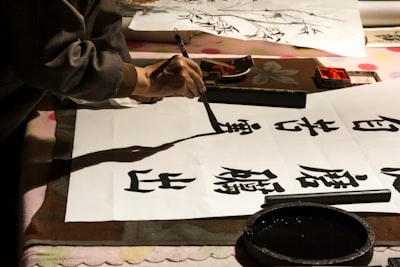
Vision-based pattern recognition has seen spectacular advances in recent years, but when it comes to extremely detailed tasks, such as identifying historical calligraphy styles, even the most modern models still stumble. The challenge is not trivial: distinguishing between the brushstroke of a Tang dynasty master and that of a Song dynasty one requires capturing nuances that escape traditional datasets. Recently, a research team has presented a resource that marks a before and after in this field: a dataset composed of more than 39,000 images of calligraphic characters, belonging to 49 calligraphers from ten different dynasties. What is interesting about this initiative is that it not only expands the amount of data, but also improves its quality by systematically separating original manuscripts from stone reproductions, solving a recurring problem of modality mixing. Furthermore, the labels are no longer simple flat names, but hierarchical aesthetic descriptions drafted by experts, allowing evaluation not only of whether a system correctly identifies authorship, but also whether its visual reasoning is consistent with artistic principles.
This case illustrates a reality that affects any organization wanting to apply artificial intelligence to highly specialized problems: data quality and annotation granularity determine the model's success. Without a well-curated dataset, even the most advanced algorithms generate inconsistent results. The same happens in business environments where it is necessary to classify documents, detect anomalies in industrial processes, or personalize user experiences. In that context, having AI for businesses that not only understands the business but also knows how to design collection and labeling pipelines makes the difference between a pilot project and a productive solution.
The benchmark created from this dataset reveals that current language and vision models are still sensitive to superficial clues, such as the type of script or the image source, and have difficulty justifying their decisions based on stroke details. This is not a problem exclusive to art: in sectors like logistics, healthcare, or finance, computer vision systems need to explain why they reject an invoice or why they identify a defect in a part. To achieve this, it is not enough to train a neural network; it is necessary to integrate AWS and Azure cloud services that scale processing, business intelligence services that visualize performance metrics, and tools like Power BI that allow analysts to understand error trends. Q2BSTUDIO accompanies companies on this journey by offering custom applications that combine the power of the cloud with the flexibility of specialized algorithms.
Research in historical calligraphy also highlights the importance of AI agents that can reason in an interpretable way. Instead of merely returning a label, an intelligent assistant is expected to describe why a stroke is characteristic of a particular calligrapher. This line of work directly connects with intelligent process automation in the corporate sphere: an agent that audits legal contracts or reviews credit applications must be able to explain its conclusions. And that explanation, in turn, must be backed by a solid infrastructure that ensures the cybersecurity of sensitive data. Q2BSTUDIO integrates these components through custom software developments that not only train models but also deploy them securely and scalably in production environments.
Ultimately, the effort to decipher the calligraphic styles of past civilizations is much more than an academic curiosity: it serves as a testbed for the visual reasoning capabilities that companies need today. The combination of exhaustive datasets, rich annotations, and multimodal architectures opens the door to applications ranging from heritage restoration to official document verification. For any organization wishing to make the leap towards truly contextual artificial intelligence, the path begins by asking whether its data is up to its ambitions.