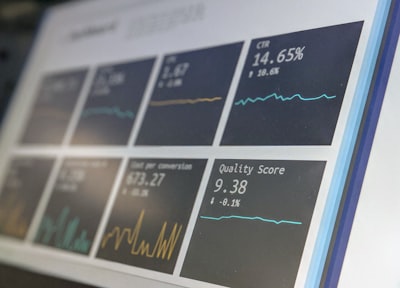
In today's digital ecosystem, data accuracy has become a critical factor for business decision-making. Quality automation applied to information management not only optimizes inspection and correction processes but also ensures that every record is reliable and actionable. Far from being a simple form check, this practice integrates intelligent workflows that validate, reconcile, and govern data in real time, eliminating the uncertainty generated by manual errors.
When we talk about ensuring accurate data, we refer to a systemic approach that combines contextual validation rules, referential integrity, and automatic reconciliation routines between source and target systems. For example, by incorporating AWS and Azure cloud services, organizations can scale these validations effortlessly, while artificial intelligence tools identify anomalous patterns that would otherwise go unnoticed. At Q2BSTUDIO, we understand that data governance is not a luxury but an operational necessity; therefore, our custom software solutions integrate quality dashboards that highlight anomalies and assign debugging tasks to the appropriate responsible parties.
Traceability is another fundamental pillar. Every change, every version, and every transformation of the data is recorded in a clear lineage, allowing auditors and analysts to understand how information evolves over time. This is especially valuable in regulated environments, where cybersecurity and transparency are non-negotiable requirements. With the custom applications we develop, companies can implement workflows ranging from detecting a non-conformity to applying corrective actions, all within a single controlled ecosystem.
Additionally, quality automation is enhanced when combined with AI agents that anticipate risks and suggest corrections before data is consumed by other systems. These agents, trained with historical data, learn to distinguish systemic errors from natural variations, reducing false positives and accelerating remediation. In parallel, business intelligence services like Power BI allow these quality indicators to be visualized intuitively, enabling teams to make informed decisions without relying on static reports.
The key lies in designing processes that not only capture data but also keep it intact throughout its entire lifecycle. Our experience in process automation has taught us that governance should not be a late addition but a native component of the technological architecture. That is why at Q2BSTUDIO we develop solutions that integrate validation, reconciliation, and stewardship rules directly into workflows, ensuring that information is as reliable as the system that manages it.
For companies looking to make the leap to truly automated quality management, the combination of AI for business and AWS and Azure cloud services provides a solid and scalable foundation. Artificial intelligence does not replace human oversight but enhances it by freeing teams from repetitive tasks so they can focus on strategic analysis. And all of this is backed by a cybersecurity approach that protects data from its origin to its final consumption.
Ultimately, quality automation to ensure accurate data is not a static goal but a continuous improvement process. The artificial intelligence solutions we implement are designed to evolve with business needs, incorporating new patterns, rules, and data sources without rewriting the underlying logic. Thus, each organization can trust that its data reflects operational reality, without noise or distortions.