In today's industry, quality automation has become a strategic pillar for ensuring consistency and traceability in production processes. However, one of the biggest challenges organizations face is making these tools truly accessible to non-technical staff, who are often the primary executors of inspections and corrections. The key question is not whether automation works, but whether it is designed so that any operator, without programming knowledge, can use it intuitively and efficiently. In this context, companies like Q2BSTUDIO demonstrate that it is possible to combine technological power with interfaces designed for the end user, integrating process automation with a user experience that removes barriers.
For quality automation to be user-friendly, the design must prioritize visual clarity and guided navigation. Custom control panels based on the user's role allow only relevant information to be displayed, reducing cognitive overload. Additionally, step-by-step assistants, color codes, and semantic icons help identify priorities without needing to read lengthy manuals. Q2BSTUDIO applies these principles by developing custom applications that integrate online training, embedded tutorials, and demonstration modes, allowing plant teams to learn while working. This approach not only accelerates adoption but also significantly reduces human errors in tasks such as recording non-conformities or executing corrective actions.
The true revolution occurs when automation is enhanced with advanced technologies without losing its user-friendly essence. Artificial intelligence allows, for example, systems to anticipate quality deviations and suggest adjustments in real time, while AI agents can act as virtual assistants guiding operators during inspections. Similarly, integration with AWS and Azure cloud services ensures data is available from any device, facilitating collaboration between departments. Q2BSTUDIO implements these capabilities in its solutions, ensuring the underlying infrastructure is robust yet transparent for the end user. Likewise, cybersecurity becomes a non-negotiable requirement: sensitive quality data must be protected without complicating the user experience, achieved through adaptive controls and seamless authentication.
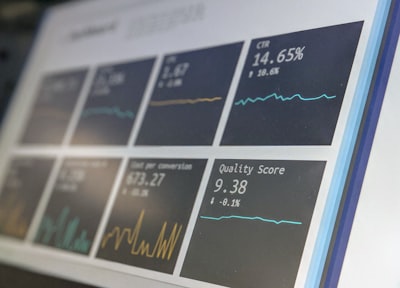
Another fundamental aspect is the ability to generate reports and dashboards that anyone can interpret. Business intelligence services, such as Power BI, allow trends, key indicators, and deviations to be visualized graphically and interactively, without needing to master analysis tools. Q2BSTUDIO offers specialized consulting to integrate these platforms within the automation flow, creating dashboards that plant supervisors can read in seconds. Additionally, the option to develop custom software ensures that each indicator, form, or alert is adapted to the unique language and processes of each company, maximizing usability.
Ultimately, quality automation that is friendly to non-technical staff is not a luxury but an operational necessity. When tools are designed with user empathy, productivity soars and the quality culture strengthens. Q2BSTUDIO demonstrates that it is possible to unify technical rigor with simplicity, offering solutions that transform how organizations manage their standards. Whether through custom applications, artificial intelligence, or cloud integration, the ultimate goal is that every person, regardless of their profile, can actively contribute to quality success.