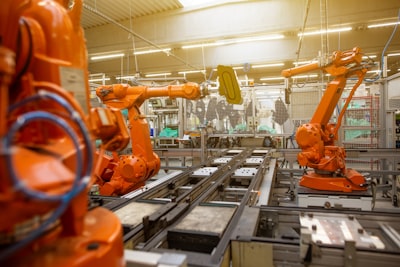
Quality management has been a fundamental pillar in organizations for years, but its traditional approach based on manual processes and periodic audits is no longer sufficient to face the complexity of today's production environments. Digitalization and Industry 4.0 have opened the door to intelligent automation that not only reduces errors but also allows anticipating deviations and optimizing resources in real time. In this context, one might ask: how will quality management automation evolve in the coming years?
The trend points toward increasingly autonomous systems, where artificial intelligence (AI) and AI agents play a central role. These systems are no longer limited to recording non-conformities; they learn from historical data to suggest corrective actions and even adjust production parameters without human intervention. Integration with cloud platforms, such as AWS and Azure cloud services, facilitates the scaling and availability of these capabilities in any geographic location, while business intelligence tools like Power BI allow visualizing key quality indicators in dynamic dashboards accessible to the entire organization.
At the same time, the rise of low-code and custom applications is democratizing the creation of quality workflows. So-called citizen developers can design everything from simple inspections to complex approval routes without needing deep programming knowledge, accelerating adaptation to new regulatory or customer requirements. This is combined with greater interoperability thanks to open data standards, which allow connecting quality systems with ERPs, MES, and IoT platforms transparently.
Security cannot be left behind. With the incorporation of zero-trust architectures and cybersecurity as a baseline requirement, automation solutions ensure that sensitive quality data — from production batches to audit reports — is protected against internal and external threats. Companies like Q2BSTUDIO, specialized in custom software development, integrate these security layers into their projects, ensuring that each implementation meets the highest standards.
Another vector of evolution is sustainability. Automated quality systems are beginning to incorporate environmental metrics, allowing companies to report their carbon footprint and comply with ESG regulations without duplicating efforts. Process automation, therefore, transcends mere inspection to become an enabler of sustainable transformation. In this sense, Q2BSTUDIO collaborates with its clients in co-creating personalized roadmaps, ensuring that automation investments remain relevant as the business and market evolve.
Artificial intelligence for businesses, combined with automation, makes it possible to detect non-conformity patterns before they materialize, reducing waste and improving traceability. For example, AI agents can analyze sensor signals on a production line in real time and trigger predictive alerts. All of this is enhanced when the technological infrastructure relies on robust cloud services and custom software solutions that adapt exactly to each organization's workflows.
Ultimately, quality management automation is ceasing to be a simple data repository and becoming an intelligent, proactive system deeply integrated into business strategy. Companies that embrace this evolution will not only gain efficiency and regulatory compliance but will also be better prepared to face the challenges of an increasingly demanding global market.