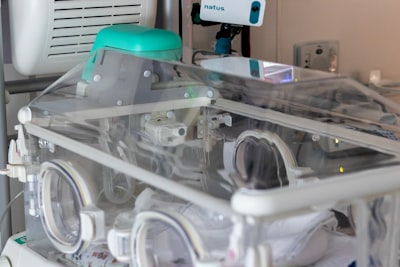
Neonatal care in intensive care units (NICUs) represents one of the most demanding clinical environments, especially when dealing with premature infants. Their still immature respiratory system frequently exposes them to episodes of apnea — dangerous pauses in breathing — that require immediate detection to prevent neurological damage. Traditionally, monitoring relies on adhesive sensors that measure thoracic impedance, heart rate, or oxygen saturation. However, these methods have significant limitations: the infant's movements, electrode detachment, and extreme skin fragility generate artifacts and false alarms that complicate the work of clinical staff. Against this backdrop, the combination of computer vision and artificial intelligence techniques opens a complementary path to improve diagnostic robustness without physical contact.
Recent research has shown that signals derived from a video camera, focused on the respiratory movement of the torso, can accurately identify apnea episodes in premature infants. By processing these sequences using deep architectures such as residual networks (ResNet), the models achieve a balanced accuracy close to 77%. Even more relevant is the finding that, by fusing these visual signals with conventional data such as pneumographic impedance or heart rate derived from the electrocardiogram, accuracy rises to 90.6%. This indicates that video provides respiratory information that traditional sensors do not capture, allowing the creation of more reliable hybrid systems with a lower false positive rate.
The application of this technology is not limited to the clinical setting. Behind a system capable of processing real-time video streams, integrating multiple data sources, and generating early alerts, there is a complex ecosystem of custom software, cloud infrastructure, and machine learning algorithms. Companies like Q2BSTUDIO offer precisely these types of capabilities: they develop artificial intelligence solutions for businesses that can be adapted to regulated sectors such as healthcare, optimizing the capture and analysis of biomedical signals. Creating these systems requires not only skill in computer vision but also deep knowledge of AWS and Azure cloud services to ensure scalability, regulatory compliance, and the low latency needed in critical environments.
Incorporating AI agents that constantly monitor physiological and visual signals, and that learn to distinguish between a normal baby movement and a true respiratory pause, is an example of how artificial intelligence can transform clinical processes. Furthermore, these systems generate massive volumes of data that, when properly analyzed, offer useful patterns for research and continuous improvement. This is where business intelligence services like Power BI come into play, allowing the visualization of historical trends, correlation of variables, and generation of reports to help neonatologists make informed decisions. All of this must be protected by robust cybersecurity measures, especially when handling sensitive patient data, and the specialized company can offer audits and pentesting services to ensure the infrastructure meets the most demanding standards.
From a technical perspective, implementing a video-based apnea detection system involves developing custom applications that integrate video capture with high-sensitivity cameras, image preprocessing to extract the respiratory signal, and AI models trained on thousands of hours of clinical recordings. Q2BSTUDIO has experience in creating cross-platform platforms that can be deployed both in the cloud and in on-premise environments, adapting to the constraints of each hospital. The ability to combine these solutions with early warning systems or electronic health records provides a differentiating value, reducing staff workload and improving patient safety.
Ultimately, the fusion of video and artificial intelligence applied to the detection of respiratory pauses in premature infants is not only viable but already shows promising results in clinical studies. Current technology allows going beyond conventional monitoring, offering an additional layer of information that increases diagnostic confidence. For this promise to become a reality in NICUs worldwide, a robust development ecosystem is needed, including custom software, secure cloud infrastructure, and advanced analytical capabilities. Companies like Q2BSTUDIO are perfectly positioned to advise on and build these solutions, thanks to their experience in AWS and Azure cloud services, artificial intelligence for businesses, and cybersecurity, thus contributing to ensuring the smallest patients receive the care they deserve.