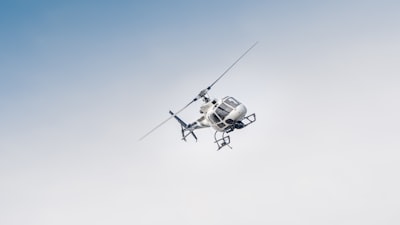
Controlling industrial cyber-physical systems through deep reinforcement learning faces a critical challenge: ensuring that learned policies do not violate strict physical limits, such as those encountered in autonomous helicopter piloting. Traditionally, complex reward functions are used to penalize unsafe behaviors, but this approach is often insufficient and difficult to tune. A promising alternative involves integrating a differentiable physics model directly into the loss function of the proximal policy optimization algorithm. During training, the agent simulates short-term future trajectories and receives additional penalties when it anticipates safety violations, regardless of the reward signal for the main task. This allows the system to learn to keep the helicopter within strict pitch limits while maintaining accurate target tracking.
This technique, known as smooth physics-informed regularization, substantially reduces violations without compromising performance. Its application goes beyond the laboratory: in real industrial environments, combining artificial intelligence with domain knowledge enables the creation of more robust and reliable systems. Companies like Q2BSTUDIO offer AI for businesses that integrate physics models into their AI agents, developing custom applications for autonomous control and advanced simulation. Additionally, their services range from custom software to AWS and Azure cloud services for deploying these models at scale, as well as cybersecurity to protect critical system data. To monitor real-time performance, they use Power BI as a business intelligence tool, and design AI agents capable of making decisions with physical constraints.
The evolution toward safe RL is key for the industrial adoption of artificial intelligence. Q2BSTUDIO, with its expertise in business intelligence services and custom application development, facilitates the transition toward autonomous systems that respect operational limits. By integrating differentiable physics models, companies can train safer policies without relying solely on artificial rewards, opening the door to autonomous helicopters, collaborative robots, and intelligent machinery that operates reliably in real-world environments.