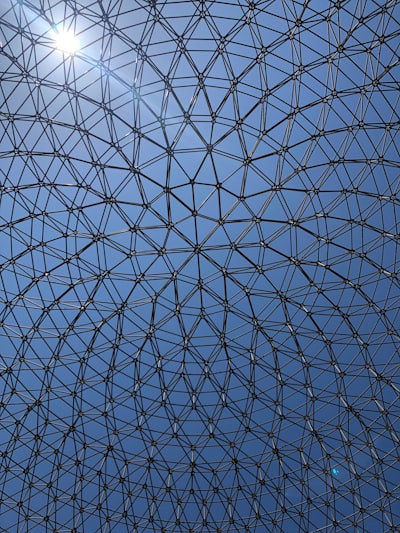
In the world of structural engineering, the design of complex shells —such as those found in aircraft fuselages, automobile bodies, or architectural domes— has always posed a major challenge: achieving a smooth workflow between geometric modeling (CAD) and numerical analysis (CAE). Traditionally, data transfer between these stages is time-consuming, introduces approximation errors, and limits the efficiency of simulation processes. Against this backdrop, research into isogeometric deep learning methods has taken a significant step forward with proposals like SplineNet, an approach that natively integrates the spline representations of CAD models within neural networks.
The key to SplineNet lies in the use of watertight splines, such as unstructured T-splines, which provide an exact geometric description. Through Bézier extraction, the network architecture is built so that Bernstein polynomials act as nonlinear activation functions, allowing the neural network itself to 'learn' the geometry without the need for intermediate conversions. This opens the door to two modes of operation: data-free, where energy formulations —such as the Kirchhoff-Love model for shells— are incorporated as loss functions, and data-driven, where SplineNet acts as the backbone of a Deep Operator Network (DeepONet) to provide immediate prediction capabilities for new inputs.
From an industrial perspective, this type of advancement represents a paradigm shift. Imagine being able to perform structural analyses directly on the design model, without exports or intermediate meshing, and also having a trained model that responds instantly to variations in load or geometry. This is where the convergence of numerical simulation and artificial intelligence becomes strategic. Companies like Q2BSTUDIO, specializing in ai for businesses, are exploring these methodologies to offer advanced simulation solutions that integrate machine learning with traditional calculation tools.
Beyond the academic realm, the practical implementation of SplineNet requires a robust technological ecosystem. The ability to handle large volumes of data, train complex models, and deploy real-time inference demands a solid cloud infrastructure. AWS and Azure cloud services become natural allies for orchestrating these workflows, while cybersecurity ensures the integrity of industrial models. Likewise, result interpretation and automated report generation can be enhanced through business intelligence services like Power BI, connecting simulation outputs with business metrics.
For organizations looking to adopt these technologies, custom application development is essential. It is not just about implementing an algorithm, but about building custom software that integrates with existing systems, is scalable, and offers a user experience tailored to the engineering domain. In this regard, having AI agents that automate repetitive tasks —such as model preparation or evaluation of multiple configurations— can make a significant difference in productivity.
In conclusion, SplineNet exemplifies how the fusion of isogeometric analysis with deep learning can solve practical design and simulation problems for complex shells. The trend is clear: toward more integrated, intelligent, and agile workflows. On this path, the support of technology partners with expertise in artificial intelligence, cloud computing, and custom software development is indispensable for transforming conceptual innovation into tangible value.