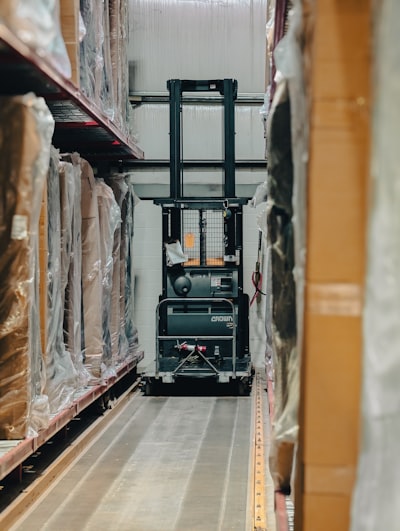
Modern logistics faces growing challenges as automated warehouses demand unprecedented operational efficiency. In this context, recharging autonomous mobile robots (AMRs) becomes a critical bottleneck: deciding when, where, and for how long to charge directly affects order processing times and overall productivity. Traditional strategies based on fixed rules often fail in dynamic environments with stochastic order arrivals, especially when multiple robots must coordinate to access limited charging stations. This is where deep reinforcement learning (DRL) offers a powerful alternative, as demonstrated by recent research using Proximal Policy Optimization (PPO) to optimize station selection and charging duration, anticipating queues and improving order completion rates by up to 6% compared to the best benchmarks.
Implementing solutions of this caliber in a real business environment requires much more than algorithms: it needs a solid foundation of custom software that integrates sensors, warehouse management systems (WMS), and artificial intelligence models. Companies looking to make the leap toward full autonomy must consider developing platforms capable of training and deploying intelligent agents safely and scalably. A technology partner like Q2BSTUDIO, with experience in AI for businesses, can help design modular architectures that combine custom applications with DRL algorithms, allowing robots to learn optimal charging policies without constant human intervention.
The flexibility of these solutions is further enhanced by relying on robust cloud infrastructures. AWS and Azure cloud services offer the processing and storage capacity needed to train complex models, while business intelligence tools like Power BI enable real-time monitoring of fleet performance indicators. Additionally, the integration of specialized AI agents can automate not only charging but also route planning and task assignment. Of course, all this connectivity must be protected with adequate cybersecurity measures, avoiding vulnerabilities that could compromise operations.
Ultimately, optimizing autonomous robot charging through deep reinforcement learning is not a utopia but a reality already taking shape in the most advanced logistics centers. Adopting this approach requires a comprehensive vision that combines custom software, artificial intelligence, and cloud platforms—capabilities that Q2BSTUDIO offers to transform operational challenges into competitive advantages.