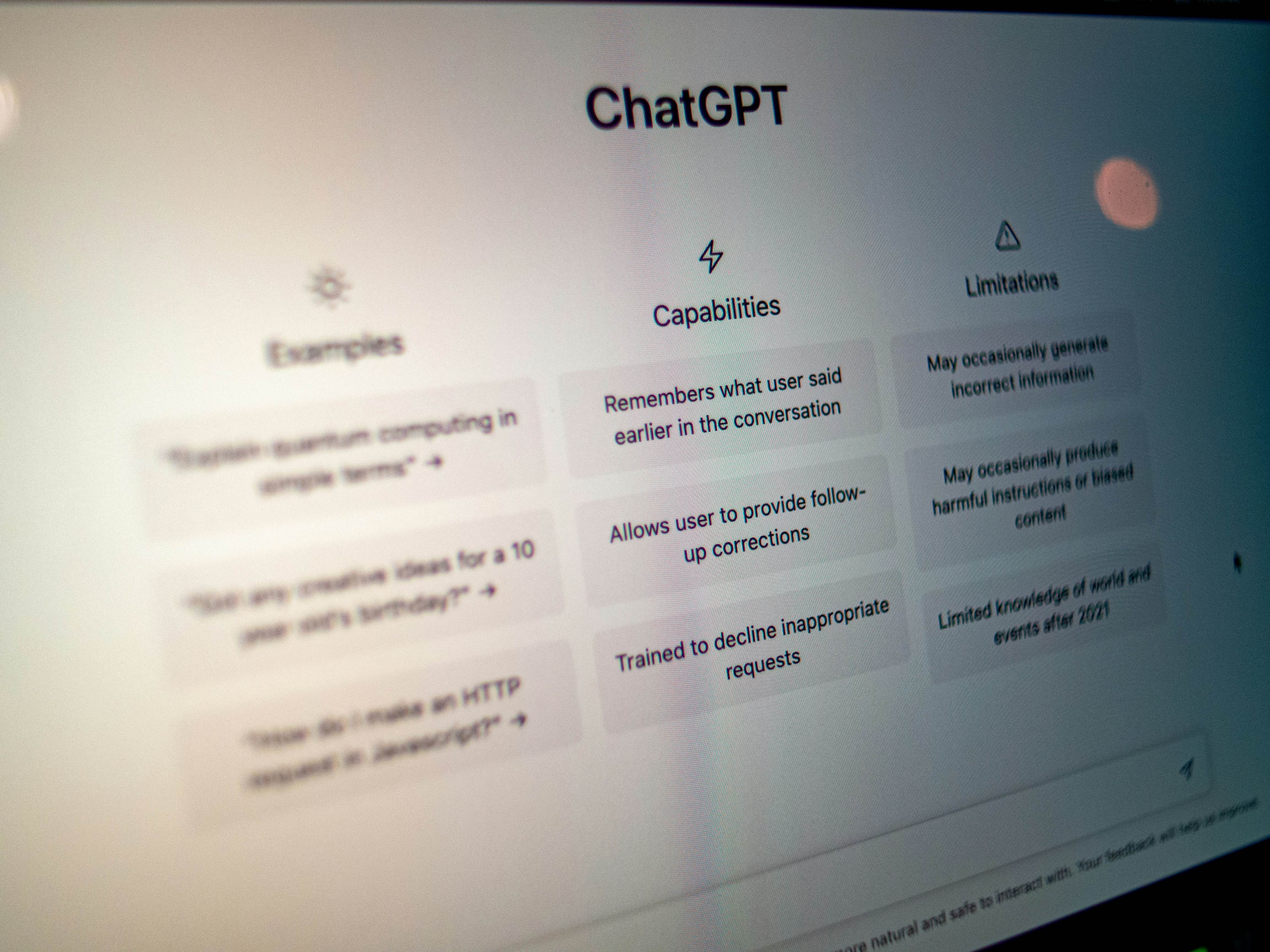
A recent study analyzing 187,000 ChatGPT conversations from 766 participants has revealed linguistic and behavioral patterns associated with depressive symptoms. The research, based on the PHQ-8 questionnaire, shows that those who exceed the threshold for moderate depression use the chatbot more frequently for mental health topics, loneliness, and seeking support, especially at night and with monthly recurrence. These users employ more first-person singular pronouns and absolutist terms, reflecting a tendency toward self-focus and dichotomous thinking. However, predictive models based on language only achieved an AUROC of 0.591, insufficient for reliable clinical screening. The authors warn that these patterns should not be treated as diagnostic data, but rather as evidence that large language models are becoming established as an informal, constant, and accessible support infrastructure outside of working hours. This phenomenon raises important questions about the role of AI for businesses in mental health and the need to design systems that, from the development of custom applications, incorporate ethical mechanisms for professional redirection without replacing human intervention. From a software engineering perspective, integrating AWS and Azure cloud services and cybersecurity solutions makes it possible to deploy AI agents capable of detecting risk patterns without compromising user privacy. Furthermore, analyzing these massive interactions using business intelligence tools and Power BI gives product teams the ability to monitor usage trends and adjust empathetic responses. At Q2BSTUDIO, we understand that implementing custom software for conversational environments must balance technical effectiveness with social responsibility, especially when dealing with vulnerable populations. The study underscores the urgency for AI agent developers to collaborate with psychologists and regulators to define clear boundaries between informal support and clinical intervention, ensuring that technology expands, rather than replaces, human care networks.

Depression symptoms and relational patterns in 187k ChatGPT conversations
Discover how a study of 187k ChatGPT conversations reveals usage patterns in people with depression. Is AI an informal mental health support?
.jpg)
A BREAK?
Play for a moment before you go
OUR SERVICES
How we can help you
Artificial intelligence
AI agents, chatbots, and intelligent assistants that automate tasks and serve your customers 24/7 to improve the efficiency of your business.
More info →Software Development
Web, mobile and desktop applications, intranets, e-commerce, SaaS and management platforms designed for the specific needs of your company, with accessibility and best practices included.
More info →Cloud services
Migration, infrastructure, landing zones, networks, managed databases, scalable hosting and security in Microsoft Azure and Amazon Web Services so that your business grows according to the capacity you need.
More info →Cybersecurity and pentesting
Security audits, penetration testing and protection of applications, data and infrastructure on-premise and cloud. Ethical hacking and support in regulatory compliance (ENS, ISO 27001, GDPR) without promising certification.
More info →Business Intelligence
Operational reporting and predictive analytics with Power BI and Microsoft Fabric: we integrate your sources, design dashboards and KPIs and turn your data into informed decisions.
More info →Process automation
We automate repetitive tasks and connect your applications with n8n (open-source, self-hosted), Power Automate (Microsoft 365), Make or RPA, eliminating manual work. If you need AI agents, you'll find them in our AI hub.
More info →Training for companies
We train your teams in technology with criteria: web development, databases, Git, best practices and security, automation with n8n, artificial intelligence for companies and creation of AI solutions with Microsoft Foundry (formerly Azure AI Foundry).
More info →Code Auditing
We audit the code that you, your team or an AI create: we tell you what is good and what to improve, we secure it and make it ready for production, with evidence for ENS, ISO 27001, GDPR, NIS2 and DORA.
More info →Conversational avatars with AI
We create conversational avatars with AI – digital humans with a face and voice – for B2B cases: internal training, retail, events and customer service. They are not text chatbots or multimedia content; they are visual interlocutors with the knowledge of your company.
More info →Online Marketing and AI
Paid media, technical SEO, GEO/AEO, email marketing, landing/CRO and analytics: we capture useful demand and measure results without promising positions.
More info →AI Governance, Security, and Responsible Operation
We help inventory, control, and professionalize AI applications, automations, and agents without slowing down teams' ability to innovate.
More info →


Do you have a project in mind?
Tell us your vision and we'll turn it into a software solution. Whatever the scope, we make your idea real.