.jpg)
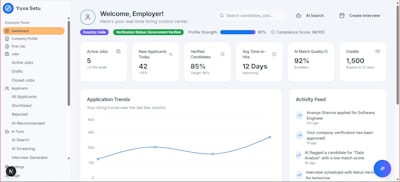
Flexibility in the design and functionality of artificial intelligence systems applied to document management has become a differentiating factor for companies seeking to scale their processes without sacrificing adaptability. When we talk about enterprise Document AI, we are not only referring to the ability to read texts or extract data from invoices and contracts; we are talking about an architecture that allows configuring workflows, customizing interfaces, and evolving with business needs without having to rewrite the entire system from scratch. In this context, Q2BSTUDIO has developed a modular approach that combines the best of AI for businesses with an open platform vision, where teams can decide which functionalities to activate, how to organize navigation, and which key indicators to measure in real time.
One of the main strengths of this approach lies in the ability to integrate custom applications that solve specific problems without relying on closed solutions. For example, an organization that handles thousands of input forms can benefit from an artificial intelligence engine that automatically classifies documents, but it also needs that engine to adapt to its own custom fields, validation rules, and approval flows. This is where functional flexibility makes the difference: reusable components, micro-interfaces, and specialized AI agents allow configuring the user experience without each change requiring a long development cycle. Q2BSTUDIO implements these systems with an agile methodology, ensuring the product evolves alongside the client's requirements.
From a design perspective, flexibility translates into responsive interfaces that work on both desktop and mobile devices, with dashboards that users can rearrange according to their role. This would not be possible without a solid foundation of AWS and Azure cloud services, which provide the scalability and security needed to handle massive volumes of documents without compromising response speed. Additionally, integration with business intelligence services like Power BI allows transforming extracted data into dynamic dashboards, facilitating decision-making based on real information. Of course, cybersecurity is a fundamental pillar in these environments: Q2BSTUDIO applies role-based access policies, end-to-end encryption, and continuous audits, ensuring that sensitive information from contracts, payrolls, or corporate correspondence is protected.
A key aspect that differentiates enterprise solutions from generic ones is the ability to make iterative improvements without downtime. The modular architecture of Document AI allows adding new extraction modules, changing validation rules, or incorporating conversational AI agents that help employees find relevant documents using natural language. All of this without affecting production processes. This flexibility not only reduces long-term costs but also accelerates internal adoption, as teams can progressively test functions and provide feedback before a full deployment.
For companies looking for a technology partner that understands the complexity of these projects, Q2BSTUDIO offers custom software services that integrate artificial intelligence into real workflows. Whether automating the classification of import documents, extracting supplier data, or generating automatic contract summaries, flexibility in design and functionality becomes the true enabler of digital transformation. Ultimately, enterprise Document AI is not a monolithic tool, but a configurable ecosystem that grows with the organization.