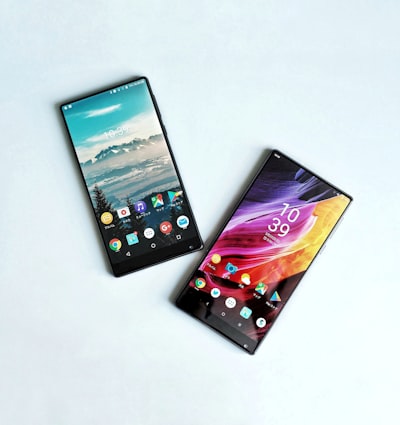
The foldable phone market is about to experience a historic moment. Apple, Samsung and Google, the three tech giants, are preparing their respective flexible-screen devices, all with a price tag close to $2,000. This war for premium mobility not only redefines the concept of the smartphone, but also brings enormous technical challenges to the table: ultra-resistant hinges, screens that bend without breaking, and software that can adapt to two different formats almost instantly.
Behind this ecosystem of such expensive devices lies a key question: what added value do they offer to justify that cost? It is not enough to fold the screen. Users expect tools that multiply their productivity: external desktops, advanced multitasking, and above all, artificial intelligence that transforms the experience. This is where companies like Q2BSTUDIO come into play, developing AI for businesses and applications that make the most of the potential of these foldable devices.
Hinge engineering, for example, requires complex simulations and digital prototypes that only custom software development can address. The three companies have invested years in research, but the real qualitative leap will come when the app ecosystem is optimized. It is not just about the phone folding, but about each application knowing how to react to the change in size, orientation or mode. This requires integration with cloud services like AWS or Azure, and continuous data analysis.
From a business perspective, whoever dominates this niche will set the standard for the next five years in telephony. Therefore, it is not surprising that cybersecurity is gaining prominence: a $2,000 device must protect the information of executives and content creators who will use it as a workstation. AWS and Azure cloud services solutions allow data synchronization and execution of heavy workloads without relying on local hardware.
Artificial intelligence will be the great differentiator. Apple, Samsung and Google are betting on assistants capable of drafting emails, summarizing documents or generating images, all on the fly. For businesses, integrating these capabilities into their own applications is key, and there Q2BSTUDIO offers customized AI agents and business intelligence services based on Power BI to visualize real-time metrics from these devices. Data analytics makes it possible to understand how each foldable is used and improve the user experience.
In short, the $2,000 battle will not be won with pretty hardware alone. It will be won with an intelligent, secure and adaptive software ecosystem. Companies that want to ride this wave will need technology partners capable of developing custom multiplatform applications that squeeze every fold of the screen. The opportunity is there, and only those who invest in innovation today —whether through artificial intelligence, automation or business analytics— will be ready for the future unfolding before us.