
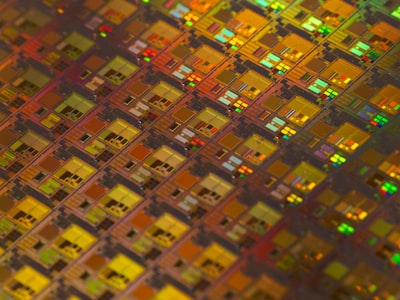
The semiconductor landscape is changing at breakneck speed, and Rapidus' promise to offer 2-nanometer wafers at lower prices than TSMC by 2027 represents a milestone that could redefine the industry. This move not only challenges the dominance of Asian giants, but opens up opportunities for companies around the world to access cutting-edge technology at more competitive costs. To understand the impact, it is necessary to analyze what this node entails, how Rapidus intends to achieve it and, above all, how companies can prepare to take advantage of this technological leap.
Rapidus, a Japanese consortium supported by the government and with the participation of Toyota, Sony and NTT, has set itself the goal of regaining Japan's technological sovereignty in semiconductors. To do this, it plans to use extreme ultraviolet lithography and collaborate with IBM on the development of the 2nm process. The pricing strategy is based on government subsidies, operational optimization without the burdens of supporting legacy technologies, and a focus on medium-high volumes. This would allow it to offer wafers at a cost up to 20-30% lower than TSMC, according to analyst estimates. However, the technical execution is the real challenge: 2nm manufacturing requires sky-high yields and extreme quality control, something TSMC has perfected over decades.
The 2 nm node promises significant improvements in performance and energy efficiency, with a reduction in consumption of up to 30% compared to 3 nm. This is crucial for artificial intelligence, high-performance computing, and mobile applications. Companies that design chips, from hyperscalers to AI startups, will be on the lookout for this alternative to diversify their manufacturing sources and reduce geopolitical risks. In this context, having a technology partner that offers artificial intelligence services for companies is essential to integrate these new processors into business solutions.
From a business perspective, the entry of Rapidus with lower prices would democratize access to advanced nodes. Midsize companies and startups will be able to design custom chips for specific applications, such as AI accelerators or high-performance embedded systems, without incurring prohibitive costs. To capitalize on this opportunity, flexible and scalable infrastructures are critical. For example, AWS and Azure cloud services enable efficient deployment of simulation, design, and chip verification workloads, while business intelligence tools such as Power BI help visualize real-time production and performance metrics.
In addition, cybersecurity becomes critical in an ecosystem where design data must be protected against leaks and cyberattacks. Companies adopting these new chips need to implement robust security measures, from pentesting to cloud protection solutions. Q2BSTUDIO, as a company specializing in custom applications and custom software, offers a comprehensive approach ranging from the development of AI platforms to process automation. Its AI agents can optimize manufacturing workflows, while business intelligence services enable data-driven decisions.
The geopolitical impact is also relevant. The trade war between the United States and China has accelerated the efforts of countries such as Japan to secure their semiconductor supply chain. Rapidus represents a sovereign gamble that could reduce dependence on Taiwan and South Korea. If it achieves its goals by 2027, the balance of power in the industry will shift, and companies that are already prepared with agile infrastructures will be able to adapt faster. The key is in digital transformation and in partnering with technology providers that understand the specific needs of each sector.
In conclusion, Rapidus' offer of cheaper 2nm wafers is not just technical news; it is a catalyst for business innovation. Companies that invest today in enterprise AI, cybersecurity, and cloud services will be better positioned to reap the benefits of these advanced chips. Q2BSTUDIO accompanies its customers on this path, offering customized solutions that integrate artificial intelligence, automation and data analysis, so that the future arrives sooner and with a greater competitive advantage.
