
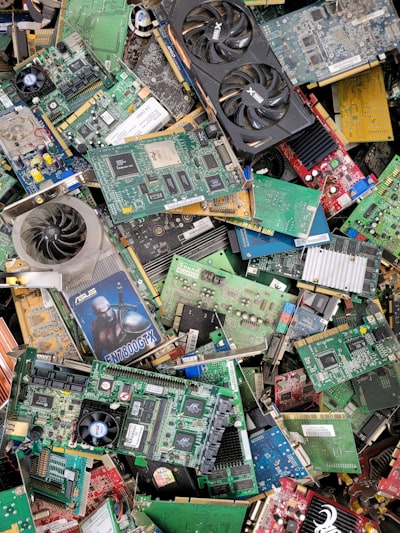
The market for second-hand electronic devices has grown exponentially in recent years, driven by environmental awareness and the desire to save money. However, what for many represents an innocent transaction can become a serious security breach if proper precautions are not taken. An old router, multifunction printer, NAS, or even a simple memory stick can contain personal and corporate information that, in the wrong hands, creates risks of fraud, identity theft, or industrial espionage. The false belief that a quick format or factory reset deletes all data persists among home and business users alike, when the technical reality is very different: many storage systems retain bits of information that can be retrieved with simple, free tools.
This problem does not only affect individuals. Companies of all sizes dispose of equipment without a secure erasure protocol, exposing sensitive customer, employee, and internal process information. Data protection regulations, such as the GDPR in Europe, require technical measures that ensure the irreversible destruction of information, but compliance does not always extend to the end of the hardware's lifespan. Therefore, before selling or recycling any electronic device, it is essential to understand how storage works in each type of media and apply the correct sanitation methods.
Devices that often go unnoticedMost people immediately think of computers and phones when they talk about waste data, but the biggest risks lie in gadgets that we rarely think of as information stores. Modern printers, for example, are small computers with internal hard drives or flash drives where they store temporary copies of scanned, printed, or copied documents. A doctor's office that sells its printer without deleting those files may be handing over clinical reports, prescriptions, and patient data to the buyer. Similarly, home routers and hotspots retain WiFi passwords, VPN settings, and in some models, even ISP login credentials, allowing an attacker to spoof the owner's digital identity.
NAS (network-attached storage) systems are another common blind spot. While it is common to remove hard drives before selling the drive, many NAS chassis include a separate internal flash memory where the operating system and network configurations reside. That memory can hold authentication tokens for cloud services, administrator keys, and even remote access credentials. If the new owner turns on the NAS without the old disks, the device could automatically reconnect to cloud accounts or even the vendor's network, offering an unwanted gateway.
Smart TVs, media players, and voice assistants also store credentials from services such as Netflix, Amazon, or Spotify, as well as usage patterns and voice recordings. Selling a Fire TV Stick or Apple TV without factory restoring and unlinking accounts can expose entire entertainment profiles and, in some cases, stored payment information.
The technical complexity of secure erasureRelying on a simple formatting or factory reset feature is a common mistake. On traditional hard drives (HDDs), formatting only removes the file allocation table, leaving the data intact until it is overwritten. With data recovery tools, it is possible to rescue photos, documents, and passwords in a matter of minutes. The problem is exacerbated with solid-state drives (SSDs) and USB flash drives, due to the technique known as wear leveling. These drives automatically distribute data across different memory cells to extend lifespan, preventing conventional erasure programs from accessing all areas. Even after multiple overwrites, residual fragments may remain in unreached areas.
For SSDs, the most effective solution is to use the Secure Erase command, which sends a direct instruction to the drive controller to reset all cells simultaneously. This feature is usually available from your computer's BIOS/UEFI or through the manufacturer's proprietary software. On USB sticks and SD cards, where the cost of security is low, the professional recommendation is physical destruction: a hammer or an industrial shredder ensures that no data can be recovered. For magnetic hard drives, drilling the platters or running them through a degausser are accepted methods.
On smartphones and tablets, the default encryption of recent models (such as iPhones or Androids with Android 6 or later) makes it easier to erase, since resetting the encryption key to factory settings destroys the encryption key, leaving the data unreadable. However, it's crucial to sign out of all Google, Apple, or Microsoft accounts before resetting, and turn off features like Find My iPhone or Anti-Theft Protection. Otherwise, the device will be locked out to the new user or, worse, they could maintain remote access to cloud services. Older models without active encryption require full overwriting with specialized applications.
Corporate End-of-Life Management StrategiesOrganizations need clear policies that span from the acquisition to disposal of any device that stores data. Implementing an asset inventory, classifying the criticality of the information and defining a sanitation process based on standards such as NIST SP 800-88 or ISO/IEC 27040 is essential. In addition, the growing adoption of AWS and Azure cloud services has shifted some storage to the cloud, but on-premises devices remain entry points. A company that works with artificial intelligence or AI for companies must exercise extreme caution, since models trained on sensitive data can leak information through logs or configuration files on routers and servers.
At Q2BSTUDIO, as a company specializing in software and technology development, we understand that information security doesn't end when a device is turned off. That's why we offer solutions that integrate cybersecurity at every stage of the software and hardware lifecycle. Our cybersecurity and pentesting services help companies identify vulnerabilities in their systems, including those derived from the mismanagement of obsolete devices. In addition, we develop custom applications and custom software that incorporate secure erasure mechanisms and identity management, minimizing the risks of information leakage. The combination of AI agents with power bi and business intelligence services allows our customers to monitor the status of their technology assets in real time, ensuring that no data is exposed at the end of its useful life.
Practical advice for individuals and companiesBefore selling or giving away any electronic device, spend at least five minutes following these general steps: 1) Back up the information you want to keep. 2) Log out of all linked accounts and services. 3) Disable location and anti-theft protection functions. 4) Use the erase method specific to each storage type: Secure Erase for SSDs, factory reset with active encryption on smartphones, and physical erase for USB sticks. 5) On routers and printers, access the administration menu and look for options such as 'Erase all data' or 'Factory reset'; Also, press the physical reset button for at least 10 seconds. 6) For NAS, clean the internal flash memory using the factory option and manually delete any cloud settings. 7) When in doubt, physically destroy the device or go to a professional data destruction service.
Awareness of these risks is growing, and manufacturers are incorporating more robust security measures. For example, new smartphone models include isolated security chips that separate sensitive data from the main system, and business printers already offer automatic cache clearing when turned off. However, the ultimate responsibility lies with the user. Don't assume that a simple formatting is enough; Invest the necessary time in professional sanitation. Remember that what for you is an old worthless device, for a cybercriminal can be a gold mine.
At Q2BSTUDIO we help companies design and implement comprehensive security policies, including custom software development that automates erasure and auditing processes. Our AI and AI agent team can analyze usage patterns and detect potential leaks before they occur. If your organization handles sensitive data and wants to protect your reputation, contact us to learn how our AWS and Azure cloud services and custom application solutions can shield your infrastructure from day one. Data security is not a luxury, it is a necessity in the digital age.
.jpg)
.jpg)

.jpg)