
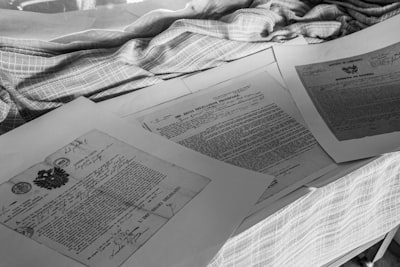
The digitization of historical documents has been a huge step forward in the preservation of cultural heritage, but it has also brought with it a persistent challenge: optical character recognition (OCR) errors. These flaws, inherited from massive scanning systems carried out decades ago, contaminate entire collections and make it difficult to find and retrieve information. Faced with the practical impossibility of redigitizing millions of pages, the scientific community has found in large language models (LLMs) a revolutionary tool for the subsequent correction of OCR. In this context, the HIPE-OCRepair-2026 competition, held within the framework of ICDAR 2026, has become a key benchmark for assessing the real potential of these technologies.
The competition gave participants the task of correcting noisy transcriptions of newspapers and historical printed works in English, French and German, spanning from the seventeenth to the twentieth centuries. Unlike previous approaches, teams did not have the original images, but worked only with the transcription units (paragraphs or full articles). This approach reflects a realistic scenario: many libraries and archives lack access to high-quality digital facsimiles, but they do own OCR-generated texts. The evaluation also adopted a criterion oriented towards information retrieval – not diplomatic fidelity – prioritizing the ability to find relevant documents over the absolute accuracy of each character.
The results presented at HIPE-OCRepair-2026 reveal significant advances, but also important nuances. The systems presented by the four finalist teams ranged from zero-shot prompting strategies to continuous pre-training and fine-tuning of models. Overall, LLMs were able to substantially reduce the character error rate in documents with high noise density. However, a recurring phenomenon was detected: overcorrection in inputs with little noise. That is, when the original OCR was already acceptable, the models tended to introduce unnecessary changes, sometimes worsening quality. This finding underscores the need to develop more comprehensive evaluation metrics that are not limited to error reduction, but also contemplate the stability and preservation of the original text.
From a technical perspective, the competition has highlighted the importance of training data and adaptation to mastery. Teams that combined pre-training in historical corpora with refinement in the competition dataset performed better than those that used generic models. In addition, the heterogeneity of the documents—different languages, typographies, degrees of deterioration—required scenario-specific approaches. For example, eighteenth-century German texts presented additional complexity due to spelling variation and special characters.
Beyond the academic field, this research has a direct impact on the business world. Companies that manage large volumes of documentation – from historical archives to administrative files – can benefit from AI-assisted OCR correction systems. Automating this process not only improves data accessibility, but also allows structured information to be extracted for later analysis. In this sense, solutions such as those offered by Q2BSTUDIO integrate advanced language models into customized workflows, adapting to the specific needs of each organization. The company develops custom applications that combine OCR, AI agent correction, and data mining, all deployed in secure cloud environments.
Precisely, the combination of artificial intelligence for companies with AWS and Azure cloud services allows these processes to be scaled without compromising security. Q2BSTUDIO offers tailor-made software that can integrate OCR correction as another module within document management systems or business intelligence platforms. For example, a company digitizing its historical archive could connect the corrected result directly to a Power BI dashboard, making it easier to visualize trends and semantic search.
Cybersecurity also plays a crucial role in this ecosystem. When handling sensitive or heritage documents, it is critical to ensure that data is not altered or accessed without authorization. The cybersecurity solutions offered by Q2BSTUDIO, including penetration testing and audits, protect both AI pipelines and end repositories. In addition, the company implements AI agents capable of automatically monitoring and correcting OCR errors in real-time, reducing manual intervention.
Returning to the lessons from HIPE-OCRepair-2026, one of the most revealing aspects was the difficulty of generalizing the models to different noise levels. Teams that deployed adaptive threshold strategies—detecting when to intervene and when to leave the text intact—achieved a better balance. This approach is reminiscent of process automation methodologies where the decision of when to activate an agent is just as important as the capacity of the agent itself. Q2BSTUDIO applies similar principles in its developments, using business rules and predictive models to optimize complex workflows.
The competition also highlighted the relevance of harmonised datasets. The HIPE-OCRepair-2026 dataset, built from existing resources and new curations, has been publicly released along with the evaluator and evaluation pipeline. This transparency allows any organization or researcher to reproduce the experiments and compare their systems. For companies, having benchmark benchmarks is essential when evaluating technology providers. A well-designed custom software must be able to exceed these benchmarks or at least adapt to them.
On the horizon, a second generation of OCR correction systems is on the horizon that combines the power of LLMs with visual verification mechanisms – when images are available – and with active learning techniques. Competition has shown that, if properly managed, language models can dramatically reduce the human effort required to clean up massive collections. However, overcorrection remains an Achilles' heel that requires further investigation.
From a business perspective, investment in this type of technology is justified by the return on accessibility and efficiency. Digital libraries, corporate archives and government agencies can transform their documentary holdings into knowledge assets that can be consulted through semantic searches. Services such as Q2BSTUDIO's business intelligence services allow you to connect corrected texts with key performance indicators, generating automated reports that facilitate decision-making.
In short, ICDAR 2026 and the HIPE-OCRepair competition have marked a milestone in the evolution of AI-assisted OCR correction. The results show that we are dealing with a mature technology, but one that still requires refinement to avoid unwanted effects. For companies looking to modernize their digitalization processes, collaborating with experienced providers such as Q2BSTUDIO – which integrates custom applications, cloud, cybersecurity and AI – is a real competitive advantage. The road to perfect OCR correction is a long one, but with the right tools and collaboration between academia and industry, we are getting closer and closer to turning noise into valuable information.
