
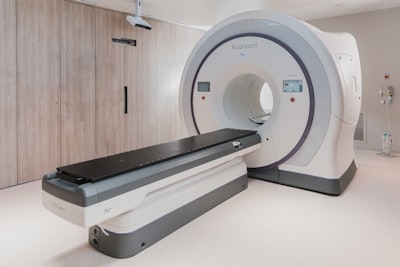
Movement-adaptive radiation therapy represents one of the most complex challenges in radiation oncology: the ability to visualize in real time patient anatomy and tumors in motion during treatment. Volumetric MRI with subsecond temporal resolution is key to achieving this, and innovative approaches such as DREME-GSMR are marking a before and after. This representational framework of spatio-temporal Gaussians allows dynamic 3D MRI images to be reconstructed from a pre-treatment scan, without the need for predefined anatomical or motion models. In essence, it combines a volumetric reference with a low-range motion model, using an MLP/CNN-based dual-motion encoder to infer time coefficients directly from k-space signals. The result: a temporal resolution of approximately 400 milliseconds and an inference time of only 10 ms per volume, which opens the door to a true in-line untreated image.
From a clinical perspective, the advantages are enormous: the system can correct respiratory, cardiac, or peristaltic movement in real time, reducing safety margins and improving dose accuracy. The built-in motion augmentation strategy strengthens the model to patterns not seen during actual treatment, which is crucial in unpredictable clinical environments. In tests with digital and physical phantoms, as well as with volunteers and patients, tumor mass center errors of less than 1.5 mm, and DSC and SSIM values greater than 0.90 have been obtained, which demonstrates the reliability of the approach.
But beyond medical physics, DREME-GSMR illustrates how the combination of artificial intelligence, efficient representations, and real-time processing can transform an industry. Behind these advances is a robust technological ecosystem: from the development of custom applications that integrate inference models, to cloud infrastructures capable of handling large volumes of k-space data with millisecond latencies. Companies like Q2BSTUDIO understand this challenge and offer AWS and Azure cloud service solutions that guarantee scalability and low latency, essential for algorithms of this type.
In addition, the integration of AI for companies allows reconstruction models to be optimized, while business intelligence tools such as Power BI can be used to monitor the quality of processing and generate automated reports. Cybersecurity also plays a critical role: patient data and medical images must be protected to the highest standards, and cybersecurity practices Q2BSTUDIO incorporated into every custom software development.
The future of MRI-guided radiotherapy lies in systems that learn and adapt autonomously. AI agents could act as co-pilots during the session, adjusting acquisition and reconstruction parameters based on the observed movement. In fact, DREME-GSMR's own architecture could benefit from intelligent agent models that make decisions in milliseconds. And all of this is supported by a solid foundation of software as it integrates processing pipelines, from acquisition to real-time 3D visualization.
In short, DREME-GSMR is not just a breakthrough in medical imaging: it is a case study in how collaboration between AI research and specialized technological development can solve real problems in clinical practice. To implement solutions of this type in a hospital environment, you need a technology partner with experience in business intelligence services, cloud computing and custom application development. Q2BSTUDIO is positioned to accompany this process, offering everything from prototypes to production systems that transform the way cancer is treated with radiotherapy.
