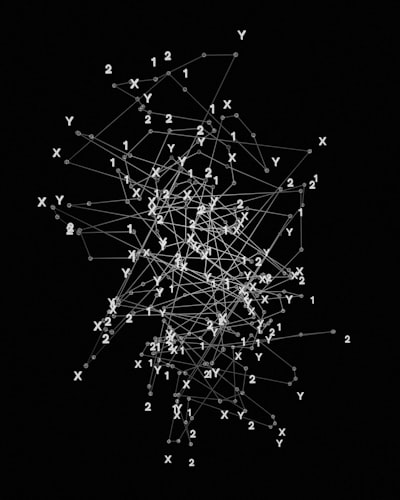
In the world of data analysis, one of the most fundamental and challenging tasks is the grouping of information without prior labels, known as clustering. This process allows you to discover hidden patterns, segment customers, detect anomalies, and organize large volumes of data in an unsupervised way. Among the most popular techniques are density-based algorithms, such as DBSCAN and its HDBSCAN* evolution, which identify high-density regions without assuming predefined shapes. However, these methods have an Achilles' heel: the need to adjust hyperparameters such as density threshold or minimum cluster size. Without a thorough understanding of data distribution, this adjustment becomes a tedious and error-prone process, limiting its applicability in dynamic business environments.
Recently, an innovative approach has emerged that overcomes these limitations: persistence-based, multiscale clustering. This technique, which we can call persistent clustering, eliminates the need to fix a single cluster size, exploring all possible scales and selecting those clusters that remain stable along different thresholds. The underlying principle comes from computational topology, where persistence measures how long a feature—in this case, a cluster—survives by varying a scale parameter. Thus, instead of relying on manual configuration, the algorithm automatically identifies the most significant clusters, those that 'survive' over a wide range of conditions.
This new paradigm represents a significant advancement for data exploration (EDA), as it dramatically reduces human intervention and provides more robust and reproducible results. Experiments with real datasets show that persistent clustering outperforms HDBSCAN* in metrics such as the adjusted Rand index (ARI), showing greater stability in the face of changes in the number of neighbors and against resampling. In addition, its computational cost is competitive with methods such as k-Means++ on low-dimensional data, making it viable for custom applications in production environments.
What does this mean for businesses? Imagine an AI platform for businesses that needs to segment customers in real-time without knowing in advance how many groups exist. With persistent clustering, the system can dynamically adapt to the data structure, uncovering market niches, outlier behaviors, or risk profiles without the need to manually retrain models. This capability is especially valuable in industries such as banking, retail, or healthcare, where data is constantly changing.
In this context, having a technology partner that understands both the theory and practice of deploying these algorithms is key. At Q2BSTUDIO, we develop custom software that incorporates advanced clustering and machine learning techniques, integrated into modern cloud infrastructures. For example, we can implement an anomaly detection system based on persistent clustering on artificial intelligence for companies, using AI agents that monitor data flows in real time. In addition, our solutions are deployed on AWS and Azure cloud services, guaranteeing scalability, security and high availability.
Cybersecurity also benefits from these advances. Persistent clustering can be applied to identify anomalous traffic patterns or suspicious user behaviors without requiring predefined thresholds, improving intrusion detection. At Q2BSTUDIO we offer cybersecurity services that complement these capabilities, protecting sensitive data throughout the process.
Another area where multiscale clustering makes a difference is in business intelligence. By integrating these algorithms with tools like Power BI, businesses can visualize dynamic segmentations that are automatically updated with each new piece of data. Our business intelligence services allow you to connect clustering engines with interactive dashboards, facilitating data-driven decision-making.
Of course, the implementation doesn't end at the algorithm. Extracting real value requires bespoke applications that tailor persistence logic to specific use cases. Whether it's for social media analytics, inventory optimization, or offer customization, the custom software we develop at Q2BSTUDIO integrates these mathematical concepts into accessible interfaces and automated processes. In addition, our AWS and Azure cloud services ensure that large-scale data processing is efficient and cost-effective.
The future of clustering points towards increasingly autonomous algorithms, which do not need manual adjustments and adapt to the changing nature of data. The combination of persistence and multiscale represents a firm step in that direction. Companies that adopt these techniques early will gain a significant competitive advantage by being able to explore their data in greater depth and with less effort.
At Q2BSTUDIO, we are committed to helping organizations navigate this transformation. Whether you're looking to implement advanced clustering, AI agents, or any other data-driven solution, our team of experts is ready to design and integrate the technology that best suits your needs. From initial consulting to production deployment, we offer comprehensive support that turns theory into tangible value.