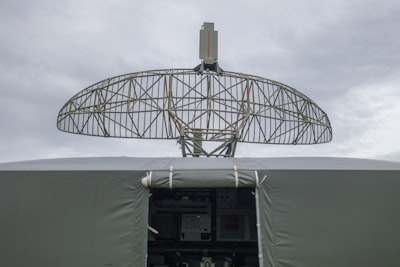
The ability to detect and recognize human activities through walls, known as radar through walls (TWR) and human activity recognition (HAR), has become a strategic technology for security, rescue, and surveillance applications in non-visible environments. However, the performance of these systems often degrades dramatically when operating conditions change: different person, angle of observation, or type of wall. To address this challenge, the scientific community has developed theoretical frameworks of generalization that allow explaining and mitigating these structured variations. In this article, we explore the fundamentals of generalization theory applied to radar through walls, its practical relevance, and how companies can leverage this knowledge in conjunction with advanced technological solutions.
The central problem lies in the fact that artificial intelligence models trained on data from a specific environment fail when faced with new scenarios. For example, a system trained to recognize movements of a young adult may lose accuracy if applied to a child or older adult, or if the radar antenna is placed at a different angle. This phenomenon is known as distribution shift, and in the TWR context, it breaks down into three main components: person variation, view variation, and wall variation. Generalization theory proposes mathematical models that limit the expected error in the target domain from data from the source domain, incorporating admissible physical descriptors and low-dimensional representations to narrow these bounds.
One of the most relevant findings is that the use of low-dimensional physical representations, such as simplified human kinematics or radar channel features, makes it possible to reduce sensitivity to changes in scenery. In addition, training with multiple sources (different people, views, and walls) improves generalization ability, as long as the parameter space is adequately covered. These results have direct implications for operating system design: instead of relying solely on large volumes of labeled data, the diversity of conditions and the extraction of invariant features can be prioritized.
From a business perspective, deploying robust TWR-HAR systems requires a combination of specialized hardware and bespoke applications that integrate AI models trained on generalization principles. For example, a security company could deploy radars in multiple locations with different configurations, and would need bespoke software that unifies calibration, signal preprocessing, and real-time inference, all on top of an elastic cloud infrastructure. This is where the ability to adapt technological solutions to specific needs comes into play, something that we offer from Q2BSTUDIO.
Generalization theory also guides the choice of learning algorithms. Neural network-based models with bounded weights, for example, ensure tighter error bounds under structured changes. In addition, the inclusion of AI for companies as AI agents capable of learning online and adapting to new conditions can significantly improve the robustness of the system. These agents can monitor the quality of predictions and request automatic recalibrations if they detect a drift in performance, integrating AWS and Azure cloud services to scale data processing and store large volumes of radar signals.
Another key aspect is cybersecurity: TWR systems operate in critical environments where the integrity of the data must be protected against attacks or tampering. A well-founded generalization framework allows for the design of models that are not only accurate, but also resistant to adverse disturbances. Cybersecurity solutions can be integrated into the data pipeline, from capture to analysis, ensuring that radar-based decisions are not compromised.
On the analytical level, business intelligence services such as Power BI allow you to visualize in real time the performance metrics of the TWR system: success rates by condition, distribution of errors, drift alerts, etc. This information is vital for operations and maintenance teams, who can make informed decisions about when to retrain models or adjust parameters. The combination of generalization theory with business intelligence tools offers a competitive advantage by transforming complex data into actionable insights.
The production of TWR-HAR systems is not without practical challenges. Variability in wall conditions (material, thickness, humidity) is especially difficult to model, but theory suggests that a physical descriptor that captures attenuation and offset may be sufficient to generalize. Instead of labeling thousands of scenarios, you can synthesize data using realistic electromagnetic simulations and then apply adaptive domain techniques. This is where custom software development and process automation play a crucial role: automated data generation, training, and validation pipelines accelerate iteration and reduce costs.
In today's ecosystem, many companies are looking to adopt AI for specific applications, but they face a lack of generalization of models outside of the lab. Generalization theory provides a rational framework for designing systems that work in the real world, and its application to radar through walls is a paradigmatic example. From Q2BSTUDIO, we offer comprehensive services ranging from conceptual design to cloud implementation and support, ensuring that each solution is tailored to the customer's unique needs, whether in security, rescue or industrial monitoring.
In conclusion, generalization theory for TWR HAR is not just an academic exercise; It is a practical guide to building robust, scalable, and secure systems. By integrating these principles with AWS and Azure cloud services, custom applications, artificial intelligence for enterprises, and cybersecurity, it is possible to overcome current limitations and deploy solutions with high operational value. The key is to understand that generalization is not achieved only with more data, but with an intelligent design that considers the sources of variation from the beginning. At Q2BSTUDIO, we help organizations realize this approach, transforming theory into tangible results.